Quick Answer
The year 2026 has two Blue Moons, depending on which definition you use. The calendrical Blue Moon falls on May 31, 2026, as the second full moon inside a single calendar month. The seasonal Blue Moon falls on August 27, 2026, as the third full moon in a four moon summer season.
Neither moon will look literally blue. The name refers to the rarity of the timing, not the colour. The moon only takes on a physical bluish tint after large volcanic eruptions or major wildfires inject specific particle sizes into the upper atmosphere.
The Two Definitions of a Blue Moon
Modern astronomy and folklore preserve two distinct rules for what counts as a Blue Moon. 2026 is unusual because it triggers both within the same calendar year.
The calendrical Blue Moon
This is the popular modern definition: the second full moon in a single calendar month. It happens because a full lunar synodic cycle (from one full moon to the next) lasts 29.53 days, which is shorter than most calendar months. Over time, that slack accumulates and squeezes two full moons into a single month.
The seasonal Blue Moon
This is the older almanac definition tracked by the Maine Farmers' Almanac. A standard astronomical season, bounded by a solstice and an equinox, usually contains exactly three full moons. When a season instead contains four, the third moon in that sequence is the seasonal Blue Moon. It is the third, not the fourth, because historically the names of the other moons in the season needed to keep their traditional positions.
The Exact 2026 Lunar Calendar
Here are the two Blue Moon dates and the broader context they sit inside.
Calendrical Blue Moon: May 31, 2026
May 2026 contains two full moons: the first on May 1 and the second on May 31. That second moon, the Blue Moon, peaks late on the night of May 31 in most US time zones. Because the two moons fall on the first and last days of the month, the gap between them is almost exactly one full synodic cycle.
Seasonal Blue Moon: August 27, 2026
The astronomical summer of 2026 (from the June solstice to the September equinox) contains four full moons. The third in that sequence, on August 27, 2026, is the seasonal Blue Moon. Under the older almanac rule, this is the moon that would have been formally renamed to keep traditional seasonal moon names in their usual slots.
Why a Blue Moon Is Actually Rare
The common saying "once in a blue moon" exists for a reason. Calendrical Blue Moons happen roughly every two and a half to three years on average. Seasonal Blue Moons are rarer still. Having both varieties in the same calendar year is unusual enough to be a genuine talking point for skywatchers and astronomy clubs.
The math behind the rarity comes down to that 29.53 day lunar cycle. Spread across 365 days, twelve full lunar cycles take about 354 days, leaving an 11 day "excess" each year. Over a few years, that excess accumulates into an entire extra cycle, which produces the bonus full moon that we label Blue.
Will the Moon Actually Look Blue?
No. The colour name is a coincidence of language, not physics. A literal blue tint requires unusual atmospheric conditions, typically large volcanic eruptions like Krakatoa in 1883 or severe wildfire smoke, which inject ash and aerosol particles of a very specific size into the upper atmosphere. Those particles scatter red wavelengths and let blue through, which is the inverse of how normal sunsets work.
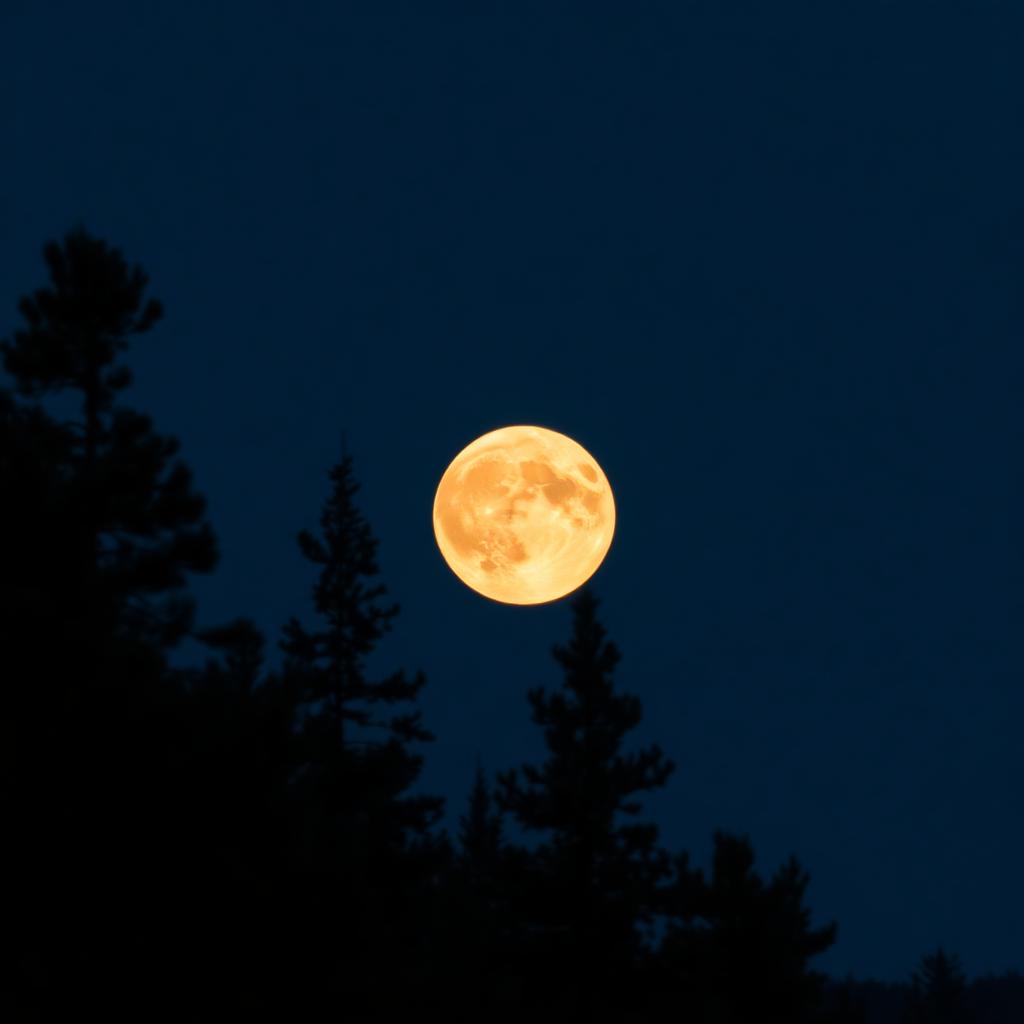
Both 2026 Blue Moons will look like ordinary full moons: bright, silvery white when high in the sky, and warmer orange or gold when low on the horizon.
How to Watch and Photograph the 2026 Blue Moons
You do not need observatory grade equipment to enjoy either of the 2026 Blue Moons. A few practical tips will sharpen the experience.
- Catch moonrise. The "moon illusion" makes the disc look larger near the horizon when framed against distant objects like trees, buildings, or hills. Local moonrise time is the most rewarding viewing window.
- Step away from city lights. A full moon is bright enough to cut through urban light pollution, but darker skies reveal crater detail, lunar mare, and the faint glow of nearby stars more clearly.
- Use a tripod. Even a smartphone benefits from a stable mount. For DSLR or mirrorless cameras, set ISO 100 to 200, use a long lens of 200mm or more, and keep the shutter fast enough to avoid motion blur from the moon's apparent drift.
- Check the local weather. Cloud cover is the single biggest factor between a great viewing and a missed event. Most weather apps now show cloud cover percentage at the times you actually care about.
- Bring binoculars. A modest pair of 7x50 or 10x50 binoculars dramatically upgrades the experience, surfacing craters and seas that the naked eye cannot resolve.
What Makes 2026 Special for Stargazers
Having both a calendrical Blue Moon in May and a seasonal Blue Moon in August inside the same calendar year is a rare scheduling quirk. It gives skywatchers and educators a clean way to teach both definitions side by side using events only a few months apart. If you want to introduce a child or a non astronomer to lunar cycles this year, these are two of the best teachable nights on the 2026 calendar.
The Takeaway
2026 delivers two distinct Blue Moons: a calendrical Blue Moon on May 31, 2026, as the second full moon inside the month of May, and a seasonal Blue Moon on August 27, 2026, as the third full moon in a four moon summer. Neither will look literally blue, but both are worth stepping outside for. Pick a viewing spot with low light pollution, time your trip to moonrise, and if you have a camera or binoculars, bring them. These are the kind of small, free, repeatable moments that make a long term sky watching habit feel rewarding.