Quick Answer
The next total solar eclipse is on Wednesday, August 12, 2026. The Moon's umbral shadow sweeps from the Arctic Ocean across eastern Greenland and western Iceland, then crosses the Atlantic before clipping the north of Spain and the northeast of Portugal just before sunset.
Maximum totality lasts about 2 minutes and 18 seconds off the coast of Iceland. In Spain and Portugal totality drops to roughly 1 minute 30 seconds, but it happens with the Sun low on the horizon, which is rare and visually spectacular.
Outside the narrow band of totality (which is only about 290 km wide at its widest), the rest of Europe sees a deep partial eclipse.
What Actually Happens During a Total Solar Eclipse
A total solar eclipse only occurs when the Moon passes precisely between Earth and the Sun, and is far enough away from Earth in its slightly elliptical orbit that its apparent disc is just large enough to cover the Sun's photosphere. Get the alignment slightly wrong, or have the Moon a little further out, and you get an annular eclipse (the ring of fire) instead.
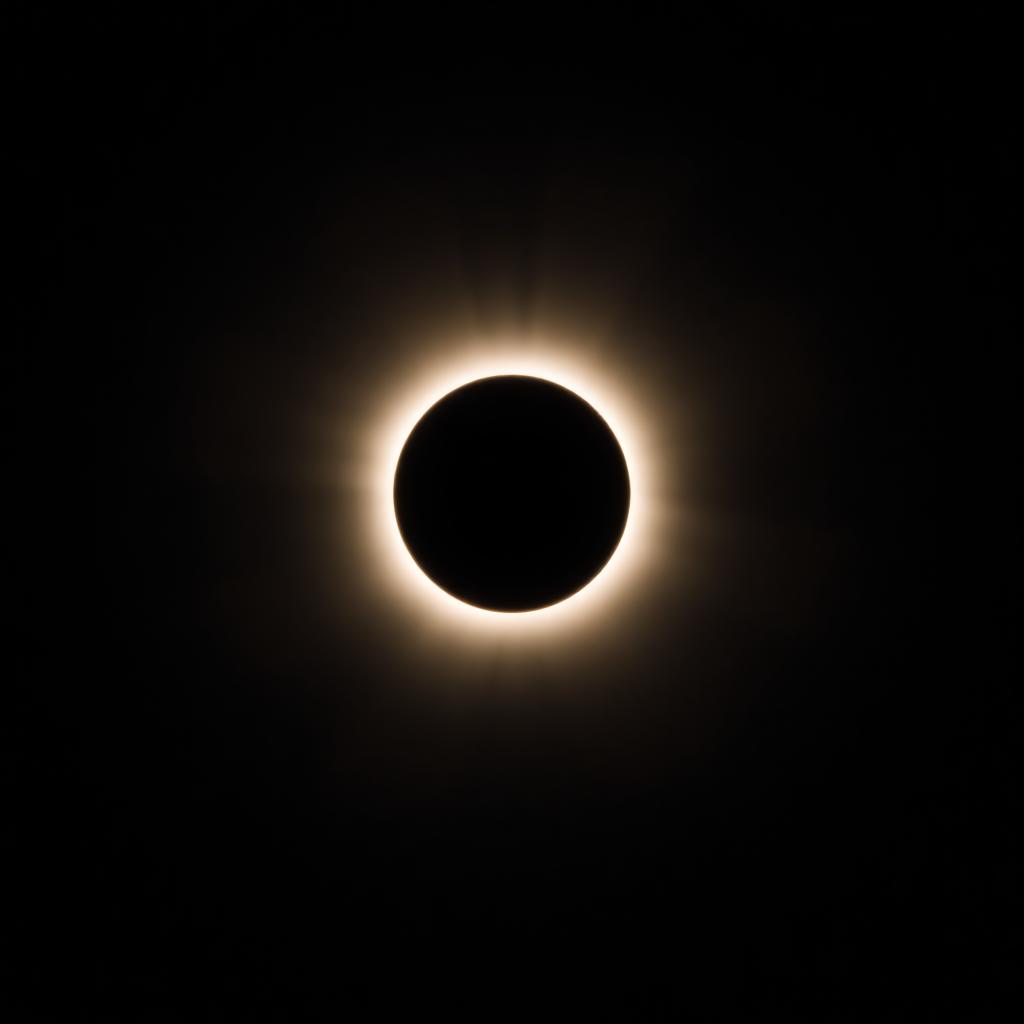
During totality, daylight collapses into a strange twilight, the temperature drops a couple of degrees, animals shut up, and the Sun's outer atmosphere (the corona) appears around the black disc of the Moon. It is the single most striking natural phenomenon most people will ever see, and it is genuinely brief.
The Path of Totality in Detail
1. The Arctic and Greenland
The Moon's shadow first hits the Earth out in the Arctic Ocean, north of Russia, then races southwest across the eastern coast of Greenland. Viewing conditions here are harsh, remote, and weather dependent, but expedition cruises into Scoresby Sound have been booked solid since 2024.
2. Iceland
Iceland is the showcase country for this eclipse. The path of totality crosses the western half of the island, including the Snaefellsnes peninsula and, crucially, the capital Reykjavik (which sits just inside the path). The combination of dramatic volcanic landscapes, easy international flights, and a wide tourism infrastructure makes Iceland the single most popular destination.
The catch is the weather. Iceland in August is notoriously fickle, and a thick cloud deck can wipe out totality for an entire region. Serious chasers always book a rental car so they can drive to clear sky on the morning of the event.
3. Spain
The shadow re enters land on the northern coast of Spain in the early evening. The path covers a wide swath of the north, including parts of Galicia, Asturias, Cantabria, the Basque Country, La Rioja, Navarre, and Aragon. Major cities inside or close to the centre of the path include Oviedo, Bilbao, Logrono, Zaragoza, and Palma de Mallorca on the Balearic Islands.
The Sun will be only 5 to 10 degrees above the horizon during totality, which is extremely unusual. Expect colours through the sky that are quite different from a midday eclipse.
4. Portugal
The northeastern corner of Portugal, particularly the Tras os Montes region around Braganca and the Montesinho Natural Park, falls inside the path. This area has not seen a total solar eclipse since 1912, and accommodation is essentially fully booked already.
How Long Will Totality Last?
Duration changes depending on where you stand inside the path.
- Off Iceland (maximum): about 2 minutes 18 seconds.
- Reykjavik: about 1 minute 50 seconds.
- Northern Spain (e.g. Bilbao, Logrono): about 1 minute 30 seconds.
- Northeast Portugal (Braganca area): about 1 minute 25 seconds.
If you have travelled this far, get as close to the centre line as you can. The difference between standing on the edge of the path and standing in the middle is the difference between a brief flash of totality and a usable minute and a half to actually look up.
Viewing the Eclipse Safely
The Sun is dangerous to look at directly without protection at every moment except totality itself. Permanent retinal damage from solar viewing is not theoretical, it is well documented.
- Eclipse glasses: Use glasses certified to ISO 12312-2. Regular sunglasses, even very dark ones, are not safe.
- Cameras, binoculars, telescopes: All need a dedicated solar filter on the front of the optic. Filters that go in the eyepiece can crack from concentrated heat.
- During totality only: When the Sun's disc is completely covered, it is safe to remove glasses and view with the naked eye. The instant the first sliver of bright photosphere reappears, glasses go back on.
Planning a Trip
Demand on the European leg is unusually high because the path of totality runs through some of the most accessible holiday destinations in the world. Practical advice if you are still planning:
- Book flexibility, not perfection. Use Madrid, Bilbao, or Porto as a hub rather than committing to a small town that will be jammed on the day.
- Rent a car. Cloud is the single biggest enemy. Mobility on the morning of August 12 is worth more than any specific hotel.
- Plan for traffic. Roads inside the path will be congested. Get into position the night before if you can.
Frequently Asked Questions
Can I see the 2026 eclipse from the UK or France?
Yes, but only as a deep partial eclipse. The UK will see roughly 80 to 95 percent obscuration depending on location, and France similar. Impressive, but not the same phenomenon as totality.
When is the next total solar eclipse after 2026?
August 2, 2027. That one is much longer (over 6 minutes of totality) and crosses North Africa and the Middle East, including Egypt and Saudi Arabia.
Do I need a telescope?
No. The best eclipse view is naked eye with certified glasses during the partial phases, and naked eye unfiltered during totality itself.
The Bottom Line
The August 12, 2026 total solar eclipse is the European event of the decade. Iceland, northern Spain, and northeast Portugal are the headline destinations, with the bonus of a low Sun horizon view in Iberia. Plan for weather, book mobility, protect your eyes, and you will walk away with the rare memory of standing in the Moon's shadow.