Quick Answer
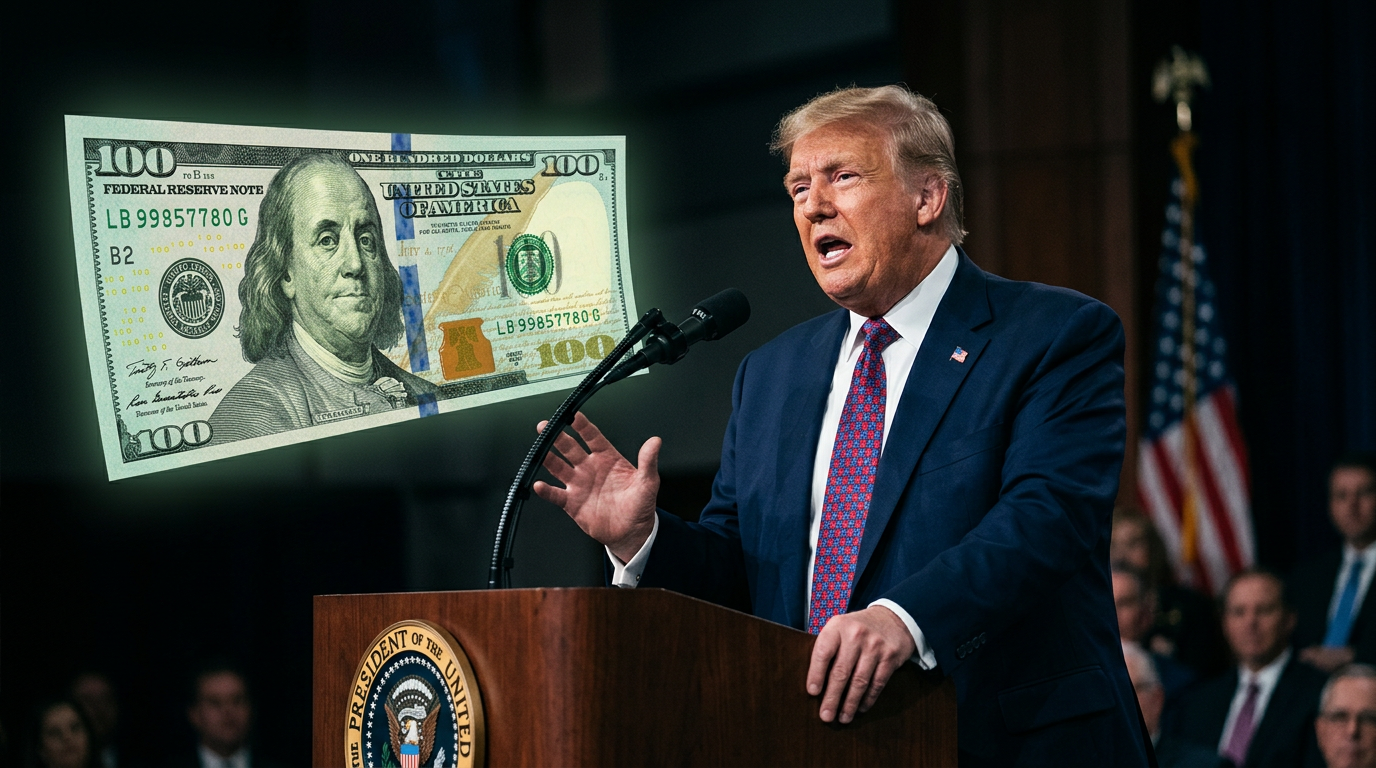
The Trump $250 bill is a proposed commemorative US bank note tied to the Semiquincentennial, the country's 250th anniversary of the Declaration of Independence. It would feature a portrait of President Donald Trump and is being pushed through Congress as H.R. 1761, the Donald J. Trump $250 Bill Act, introduced by Representative Joe Wilson of South Carolina.
It is not yet law and it cannot legally be printed today. The Thayer Amendment of 1866, codified at 31 U.S. Code section 5114, prohibits the image of any living person on US currency. H.R. 1761 contains specific language to carve out an exception for current or former presidents. Treasury Secretary Scott Bessent has confirmed the Treasury is preparing mock-ups and printing plates so it can move quickly if the bill becomes law, but he stated the Bureau of Engraving and Printing has not been asked to print the note before Congress acts.
Why a $250 Bill, and Why Now
The $250 denomination is not random. It is tied directly to the upcoming US Semiquincentennial, the historic 250th anniversary of the signing of the Declaration of Independence and the founding of the United States. Backers of the proposal argue that the country regularly issues commemorative coins and stamps for major anniversaries, and that a single high denomination note marking the 250 year milestone fits that tradition.
Representative Joe Wilson of South Carolina introduced the proposal as H.R. 1761, formally titled the Donald J. Trump $250 Bill Act. The legislation directs the Bureau of Engraving and Printing to issue the commemorative note specifically to honour the quarter millennium milestone. Representative Andy Barr added political momentum by writing an op-ed in favour of the bill, noting that the push aligned symbolically with the president's 250th day in office during his second term.
The Thayer Amendment, the Legal Wall in the Way
The biggest obstacle to a Trump $250 note is not political opposition. It is plain federal law. Under the Thayer Amendment of 1866, codified at 31 U.S. Code section 5114, the federal government strictly prohibits the image of any living person from appearing on US currency, bonds, or securities.
That law was enacted 160 years ago after a Treasury official printed his own face on a 5 cent note, sparking public outrage. The statute has been left untouched for more than a century and a half precisely because the prohibition is considered a safeguard against the cult of personality finding its way onto money the public is forced to use.
To bypass that wall, Representative Wilson's legislation includes explicit text amending the US Code to add the phrase, "except if the individual is or has been the President of the United States." If H.R. 1761 passes both chambers and is signed, that single clause is what would unlock a legal pathway for the new bill.
The Treasury's Quiet Pre-Production
According to investigative reports, US Treasurer Brandon Beach and senior adviser Mike Brown have been actively pushing Bureau of Engraving and Printing staff to prepare prototypes and plates ahead of any formal congressional action.
Reported Design Specifications
- Designer. British painter Iain Alexander, who reportedly discussed the visual concept directly with the president.
- Obverse face. A centered portrait of Donald Trump, modelled on the official portrait already used on banners across federal buildings in Washington D.C.
- Signatures. An unusual aesthetic shift, with Trump's bold signature displayed alongside those of Treasurer Beach and Treasury Secretary Bessent.
- Anniversary branding. The official US 250th Anniversary Semiquincentennial logo on the reverse face.
The acceleration has caused real internal friction. Patricia Solimene, the long time director of the printing bureau, reportedly resisted political pressure, warning that the legal, anti counterfeiting, and physical engraving protocols needed to safely issue a brand new denomination usually take several years. Solimene has since been reassigned, with political appointees taking operational control of the bureau to keep the timeline moving.
Secretary Bessent's Press Briefing
At a tense White House press conference, Treasury Secretary Scott Bessent defended his department's pre-production work while attacking the media's coverage. Holding up a copy of the Washington Post exposé, he called the reporting "terribly written, terribly edited."
Bessent clarified that the Treasury has not broken any law, emphasising that Treasurer Beach "never asked staff to print the $250 note before congressional action occurs." He openly defended the internal creation of mock-ups and printing plates, framing it as basic agency readiness. "We prepare for everything if it gets passed," Bessent said, adding that he found "nothing untoward" about honouring a sitting president on a commemorative note.
How a $250 Note Would Fit Into the US Currency Stack
A $250 bill would be the first new denomination introduced into US circulation since 1928, when the modern lineup of $1, $2, $5, $10, $20, $50, and $100 notes was standardised. Higher denominations such as the $500, $1,000, $5,000, and $10,000 bills were officially discontinued in 1969 as part of an anti money laundering push, and the federal government has resisted introducing larger notes ever since.
Practically speaking, most Americans would probably never see a $250 bill in everyday change. The Treasury has not specified the planned print run, and critics argue that a high denomination note primarily benefits collectors and large cash transactions, not ordinary consumers. Supporters counter that the bill is intended as a commemorative item, similar to limited edition coins, rather than a workhorse of daily commerce.
Where Things Stand and What Happens Next
As of late May 2026, H.R. 1761 has been introduced and is moving through committee review. It still needs a full House floor vote, a Senate companion bill, reconciliation, and a presidential signature before the Bureau of Engraving and Printing has any legal authority to release the note into circulation.
If any of those steps stalls, the prototypes and printing plates reportedly being prepared today will remain locked in Treasury vaults as historical curiosities. If the bill clears Congress, the Bureau has indicated it can move from final design to production within months rather than years thanks to the head start.
The Takeaway
The Trump $250 bill is a real legislative proposal, not a hoax or a meme. H.R. 1761 would carve out an exception to the 160 year old Thayer Amendment to allow a living president on US currency, the Treasury is openly preparing for a fast turnaround if the bill passes, and Secretary Bessent has confirmed that mock-ups exist while insisting that no actual notes have been printed. Whether the $250 commemorative bill ever lands in your wallet now depends entirely on what Congress does over the coming session.