Quick Answer
Sugar free means the food contains less than half a gram of total sugars per serving. No added sugar means no sugars were added during processing, but naturally occurring sugars can still be substantial.
A no added sugar fruit juice can carry 20 grams of sugar per glass and remain entirely legal. A sugar free dessert usually contains sweeteners or sugar alcohols instead.
Neither claim means low calorie, and neither means the product is good for you. Check the total sugars line and the calorie count rather than trusting the front of the pack.
What each claim legally requires
These are regulated nutrient content claims in the United States, not marketing flourishes, and the definitions are narrower than most shoppers assume.
- Sugar free: less than 0.5 grams of total sugars per serving, and no ingredient that is a sugar unless the label explains it.
- No added sugars: no sugars or sugar containing ingredients added during processing, and no ingredients that functionally substitute for added sugar such as fruit juice concentrate or jam.
- Reduced sugar: at least 25 percent less sugar than the reference product, which may still be a lot.
- Unsweetened: not formally defined as a nutrient content claim, so treat it as a description rather than a guarantee.
Crucially, a sugar free food is not automatically calorie free. The regulations require a low calorie or reduced calorie statement alongside the claim only in specific circumstances, so a sugar free biscuit can carry as many calories as the original.
Total sugars versus added sugars on the panel
Since the label update, American Nutrition Facts panels show total sugars with added sugars indented beneath. That single indentation resolves most confusion.
Total sugars combines everything: lactose in milk, fructose in fruit, and any sucrose or syrup the manufacturer stirred in. Added sugars counts only what was put in during manufacturing.
So plain yogurt might show 12 grams of total sugars and zero added sugars, all of it lactose. A flavoured yogurt might show 20 grams total with 8 grams added. The second number is the one health guidance is actually aimed at.
Where no added sugar gets misleading
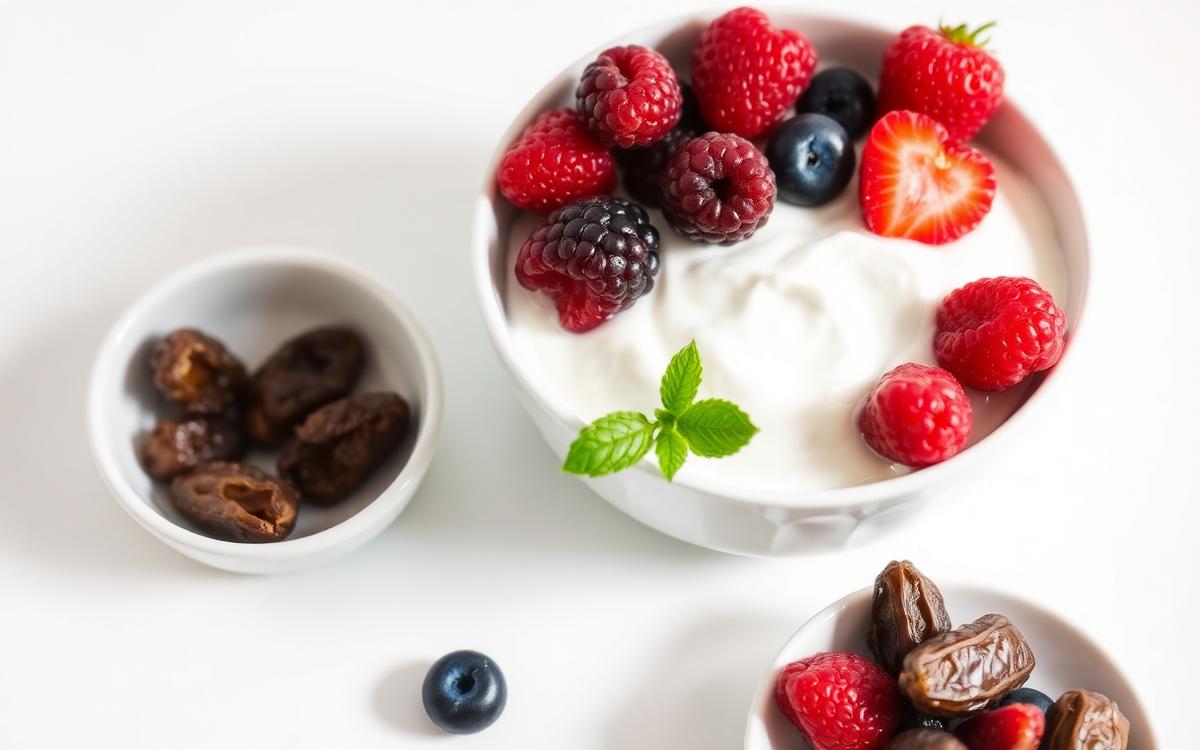
Fruit juice is the clearest case. Squeezing oranges adds nothing, so the carton can honestly say no added sugar while delivering the sugar of several oranges without the fiber that came with them.
Dried fruit is the second case. Date paste, raisin concentrate and fig puree are genuinely fruit, and they are also concentrated sugar. A no added sugar snack bar sweetened with date paste behaves in the body much like one sweetened with syrup, even though the label is accurate.
The third case is smoothies and purees, where blending breaks the fruit structure and releases sugars that would otherwise be locked in fiber. None of this makes fruit unhealthy, but it does mean the claim is describing sourcing rather than quantity.
What replaces the sugar in sugar free products
Something has to do the work of sweetness, and manufacturers have three broad options.
High intensity sweeteners such as sucralose, aspartame, acesulfame potassium, steviol glycosides and monk fruit extract deliver sweetness at tiny doses with negligible calories. They are reviewed and approved by food safety authorities, with acceptable daily intakes that most people do not come close to.
Sugar alcohols such as erythritol, xylitol, sorbitol, maltitol and mannitol provide bulk as well as sweetness, which matters in baking and confectionery. They supply roughly 0.2 to 3 calories per gram depending on which one, and they are only partly absorbed. That partial absorption is why products containing sorbitol or mannitol must warn about a laxative effect above certain levels.
The third option is fat and starch. Remove sugar from a biscuit and something has to hold the structure together, which is why sugar free versions frequently carry more fat than the original.
How much sugar you should actually be aiming for
The World Health Organization recommends keeping free sugars under 10 percent of daily calories, with a further benefit below 5 percent. On a 2,000 calorie diet that is 50 grams and 25 grams respectively.
The American Heart Association is stricter, suggesting no more than 25 grams a day for women and 36 grams for men. The Nutrition Facts panel uses 50 grams as its daily value reference.
None of these caps apply to the naturally occurring sugars in whole fruit, plain milk and unsweetened yogurt, which is exactly why the added sugars line exists.
A practical way to choose between two products
Compare the added sugars figure first, then the total sugars, then the calories. If the sugar free option costs more and saves 15 calories, it is not doing much for you.
For everyday staples such as yogurt, cereal and drinks, buying the plain version and sweetening it yourself is usually the best of both worlds. You control the amount, and you almost always use less than the manufacturer would.
For occasional treats, a normal small portion of the real thing is often more satisfying than a larger sugar free version that leaves you looking for something else afterwards.
Frequently asked questions
Is sugar free the same as diabetic friendly?
No. Sugar free products can still contain starches and sugar alcohols that affect blood glucose, and carbohydrate totals matter more than the claim on the front.
Do sugar alcohols count as carbohydrates?
Yes, they appear under total carbohydrate on the panel, usually broken out on their own line where the manufacturer chooses to declare them.
Is no added sugar fruit juice a healthy choice?
It is better than a soft drink and worse than whole fruit. A small glass a day is reasonable for most people, and the whole fruit gives you fiber the juice does not.
Why do sugar free sweets upset my stomach?
Sugar alcohols ferment in the large intestine when eaten in quantity, which causes gas, bloating and loose stools. Maltitol and sorbitol are the usual culprits.
Is honey an added sugar?
Yes. Honey, maple syrup, agave nectar and coconut sugar all count as added sugars when a manufacturer or a home cook puts them into food.
The difference between sugar free and no added sugar, side by side
Sugar free is a limit on the amount of sugar present, set at under half a gram per serving. No added sugar is a restriction on what the manufacturer put in, with no cap on what the ingredients brought with them.
So a sugar free jelly and a no added sugar smoothie sit at opposite ends of the sugar scale while both carrying reassuring front of pack wording.