Quick Answer
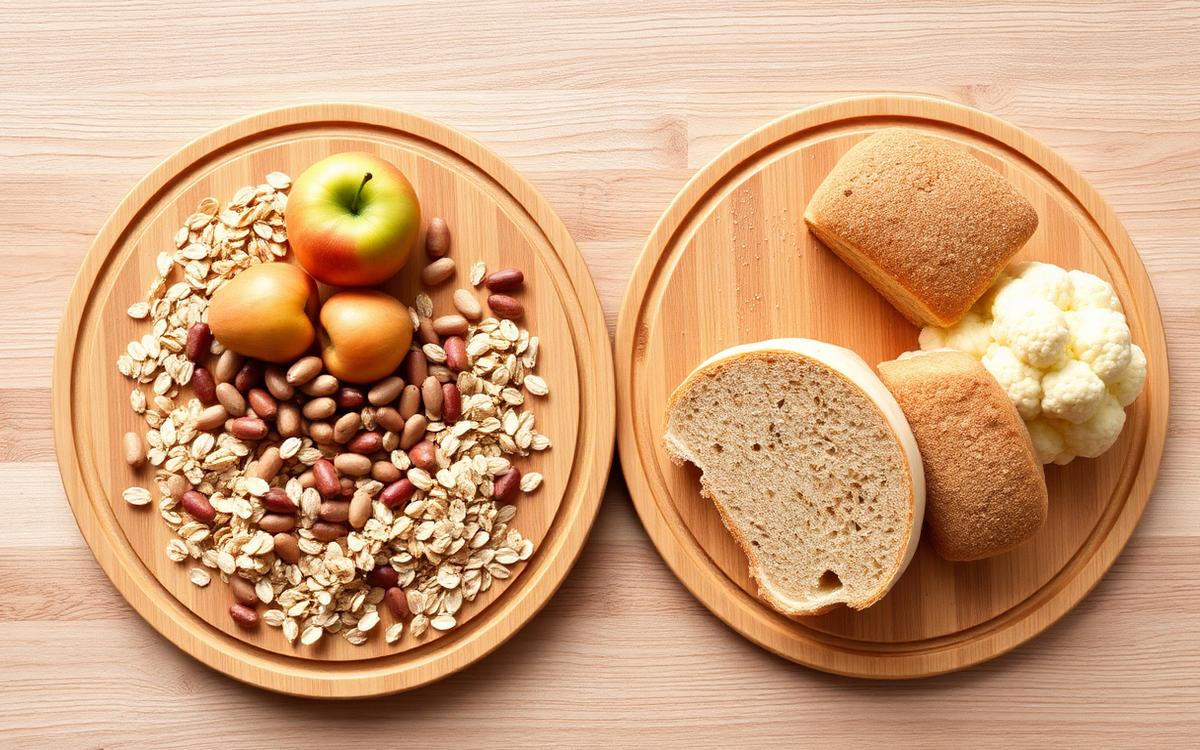
Soluble fiber dissolves in water and forms a gel. It slows digestion, blunts blood sugar rises and lowers LDL cholesterol. Oats, barley, beans, apples, citrus and psyllium are the main sources.
Insoluble fiber does not dissolve. It adds bulk, holds water in the stool and speeds up transit through the colon. Wheat bran, whole grains, nuts, and the skins and stalks of vegetables are the main sources.
You do not need to track them separately. A varied diet of legumes, whole grains, fruit and vegetables gives you both in a workable ratio of roughly one part soluble to three parts insoluble.
What soluble fiber actually does
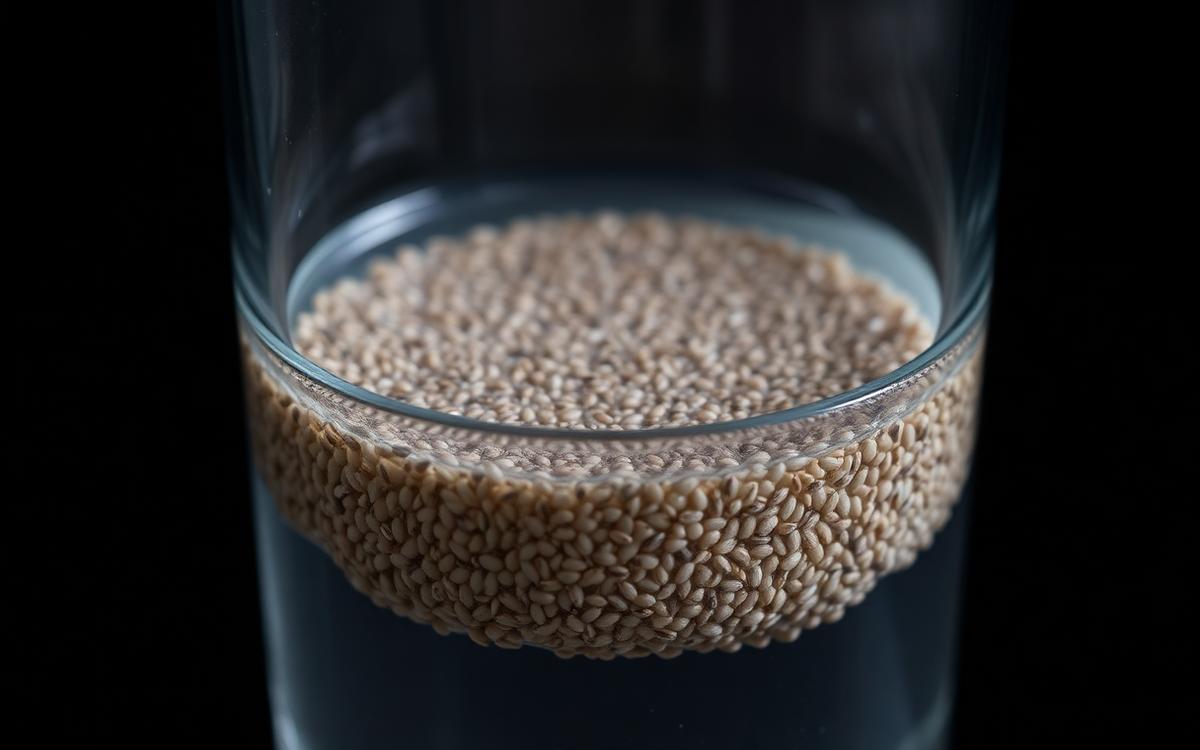
Put psyllium or chia in water and you get a thick gel within minutes. The same thing happens in your stomach and small intestine, and it produces three effects worth knowing about.
It slows gastric emptying. Food leaves the stomach more gradually, which flattens the glucose curve after a meal and extends fullness.
It binds bile acids. The liver has to pull cholesterol out of circulation to make replacement bile, which is the mechanism behind the modest LDL reduction seen with oats and psyllium.
It feeds gut bacteria. Most soluble fibers are readily fermented, producing short chain fatty acids such as butyrate that nourish the cells lining the colon.
What insoluble fiber actually does
Insoluble fiber passes through largely intact. Its value is mechanical rather than chemical: it adds mass, holds water, and stimulates the gut wall so that material moves along faster.
That makes it the more useful type for constipation and for keeping bowel habits regular. It is also the type most associated with lower risk of diverticular disease, largely through the same effect on transit time and pressure inside the colon.
The trade off is that it can be harsh on a sensitive gut. People with irritable bowel syndrome often do worse on wheat bran and better on psyllium.
Which foods carry which
- Mostly soluble: oats and oat bran, barley, psyllium, chia, flaxseed, apples, citrus, carrots, and most beans.
- Mostly insoluble: wheat bran, whole wheat flour, brown rice, nuts, cauliflower, green beans, potato skins and most vegetable stalks.
- A genuine mix: lentils, chickpeas, pears, avocados, sweet potatoes and Brussels sprouts.
Nutrition labels in most countries do not split the two out, so the practical approach is to eat across those groups rather than to calculate anything.
Which one do you need more of?
It depends on the problem you are solving. If you are constipated, lean toward insoluble sources and drink more water. If you are managing cholesterol or blood sugar, lean toward oats, barley, beans and psyllium.
If you have loose stools, soluble fiber is often better because the gel absorbs excess water and firms things up. This is one of the few cases where the same supplement, psyllium, genuinely helps in opposite situations.
Fermentable, viscous and resistant starch
Researchers increasingly describe fiber by behaviour rather than solubility, because the old two way split is a simplification. Viscosity, fermentability and how quickly bacteria break the fiber down all matter.
Resistant starch is a good example. Found in cooled cooked potatoes, cooled rice, green bananas and legumes, it escapes digestion in the small intestine and is fermented in the colon much like soluble fiber, even though it is technically a starch.
Frequently asked questions
Does the label tell you which type you are getting?
Rarely. Some products break out soluble fiber voluntarily, particularly oat based ones making a cholesterol claim, but most simply list total fiber.
Is one type better for weight loss?
Soluble fiber has a slight edge for appetite because of the gel and slower stomach emptying, but the difference is small next to total fiber intake and overall diet quality.
Can you get too much of one type?
Very large amounts of insoluble bran can irritate a sensitive gut and interfere with mineral absorption. Very large amounts of fermentable soluble fiber tend to cause gas. Variety avoids both problems.
Does cooking change the type?
Cooking can shift some fiber toward the soluble side by softening cell walls, and cooling starchy foods after cooking adds resistant starch. The changes are modest.
Is psyllium soluble or insoluble?
Mostly soluble but poorly fermented, which is an unusual and useful combination. It forms a gel without producing much gas, which is why it is tolerated better than inulin by many people.
Matching the fiber type to the problem
A short cheat sheet is more useful than the theory. For hard stools and infrequent movements, reach for wheat bran, whole grains and vegetable skins. For loose stools, reach for psyllium and oats, which absorb excess water.
For cholesterol, the evidence points squarely at beta glucan from oats and barley, and at psyllium, with roughly 3 grams of beta glucan a day linked to a measurable LDL reduction. For blood glucose control, viscous soluble fibers eaten with the meal do the most work.
Why variety beats optimisation
Your gut bacteria are not one population but hundreds, and different species specialise in different substrates. A diet built on a single fiber source feeds a narrow slice of that community.
This is the practical argument for eating across the categories rather than picking a winner. Beans, oats, bran, fruit skins and cooled starches together support a wider microbial mix than any supplement can.
The practical difference between soluble and insoluble fiber is simple: one dissolves and thickens, the other stays intact and adds bulk. Eat both and you cover every job fiber does.