Quick Answer
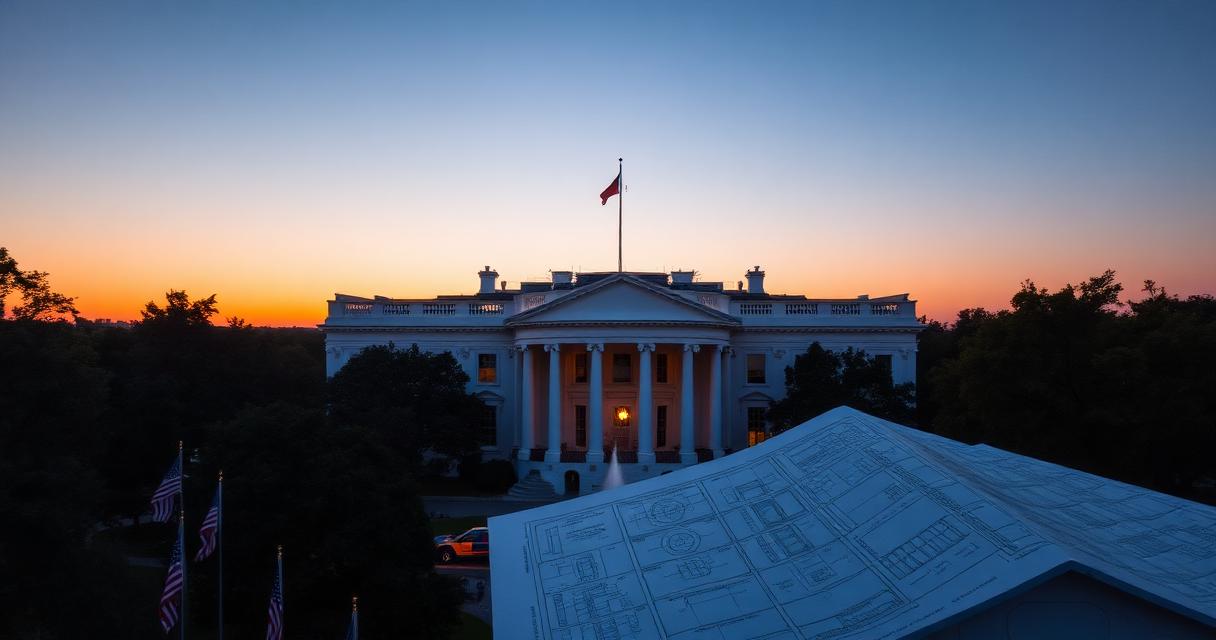
Ballroom funding refers to the political fight over a roughly $1 billion Secret Service security request tied to the Trump administration's proposed $400 million White House ballroom. The construction itself is being financed privately by tech sector donors, but the security infrastructure was submitted as a taxpayer expense. The Senate parliamentarian stripped the security funds out of a $72 billion spending package in May 2026, and Republican leaders are now searching for an alternative legislative vehicle.
How the Project Is Structured
The ballroom project itself sits on top of a hybrid funding model. The construction cost is private. The security cost is public.
- Construction. Roughly $400 million, funded by private donations from a group that reportedly includes Apple, Amazon, Google, Microsoft, Meta, and Palantir.
- Site preparation. The existing East Wing structure was demolished in 2025 to clear the footprint.
- Security infrastructure. Roughly $1 billion, submitted by the Secret Service as a separate request tied to the new facility.
The administration's argument is that the construction is a gift to the federal government and the security spend is a normal expense that would apply to any new high profile structure on the White House campus.
Inside the $1 Billion Security Request
Secret Service Director Sean Curran presented the detailed breakdown to Senate Republicans in a closed door briefing. The figure became politically urgent after an April 2026 incident in which an armed individual attempted to breach a black tie media gala at the White House.
| Line item | Amount | Purpose |
|---|---|---|
| White House hardening | $220 million | Structural and ballistic reinforcement of the East Wing footprint |
| Visitor screening facility | $180 million | New secure screening hub for ballroom event attendees |
| Secret Service training | $175 million | Tactical training for high density public facing operations |
| Protectee enhancements | $175 million | Mobile communications and rapid evacuation assets |
| Evolving threats and tech | $150 million | Anti drone systems and cyber countermeasures |
| Events of national significance | $100 million | Logistical funding for major international summits |
Supporters of the request inside the administration argue that almost all of these line items would be necessary regardless of the ballroom and that bundling them under the project is simply efficient. Critics argue the bundling is exactly the problem because it ties general Secret Service modernization to a single controversial construction.
Why the Senate Stripped the Funds
The mechanical reason the funding came out of the package is procedural. Senate Parliamentarian Elizabeth MacDonough ruled that the security funds did not satisfy the strict budget reconciliation rules that allow the Senate to pass spending with a simple majority. Once stripped, the funds would require 60 votes to be reattached.
Senate Republicans hold 53 seats. They are seven votes short of the threshold and unlikely to secure them, because Senate Democrats are unified in opposition. Minority Leader Chuck Schumer framed the project as a vanity expense at a time when households are absorbing inflationary pressure, and Democratic senators publicly committed to blocking any package that includes the ballroom security funds.
The Political Logic on Both Sides
Each side is playing a defensible political hand.
The administration wants the funding because the ballroom is a signature project and because the Secret Service genuinely does want the modernization budget. Securing it through a major spending bill is cleaner than running individual authorizations.
Senate Democrats want the funding blocked because the ballroom is unpopular in independent voter polling and because forcing Republicans to either drop the project or hold individual floor votes on it is strategically useful in a midterm cycle.
Senate Republican leadership, including Majority Leader John Thune, is caught between the White House and a small number of fiscally cautious members who would rather not be on record voting for a billion dollar security expansion attached to a private ballroom.
What Happens Next
Three plausible paths from here.
- Standalone authorization. Republicans introduce a smaller, focused bill covering only the most defensible line items, such as anti drone tech and Secret Service training, and try to peel off a handful of Democratic votes.
- Appropriations rider. The funds get attached to a year end government funding bill, where the political pressure to keep the government open creates leverage.
- Executive reallocation. The administration tries to move existing Department of Homeland Security funds into the project, which would almost certainly trigger another round of litigation similar to the earlier East Wing court challenge.
The administration's stated completion target for the ballroom is September 2028. That timeline assumes the security funding question is resolved within roughly twelve months, which is not currently a safe assumption.
The Bottom Line
The ballroom funding fight is really two fights bundled into one. The construction money is private and not in dispute. The $1 billion security money is public, is in dispute, and has now been stripped from the main Senate spending vehicle. Until Republican leadership finds a procedural workaround, the security upgrades stay in limbo and the political cost of the ballroom keeps growing.