Quick Answer
Turn up on time or cancel, work cutlery from the outside in, keep the napkin on your lap, and catch a server's eye rather than clicking, waving or calling out.
Send food back only when something is genuinely wrong, do it quietly and early, and never take it out on the person carrying the plate.
Leave when the meal is clearly finished unless the restaurant is empty. Your table is somebody else's booking.
Booking and Arriving
Proper restaurant etiquette begins with the booking. Book if you can, and cancel if plans change. No shows cost small restaurants real money, and a thirty second call frees the table.
Arrive within about ten minutes of your booking. Most restaurants release a table after fifteen minutes because the kitchen and the floor are timed around it.
Turn up with the number you booked. Two extra people at a table for four is a genuine problem for a small dining room, not a small favour.
Mention allergies, high chairs, wheelchair access, a birthday or a quiet table when you book rather than when you arrive.
Wait to be seated where there is a host stand, even if you can see an empty table. Table allocation is a puzzle involving sections, servers and later bookings.
The Place Setting
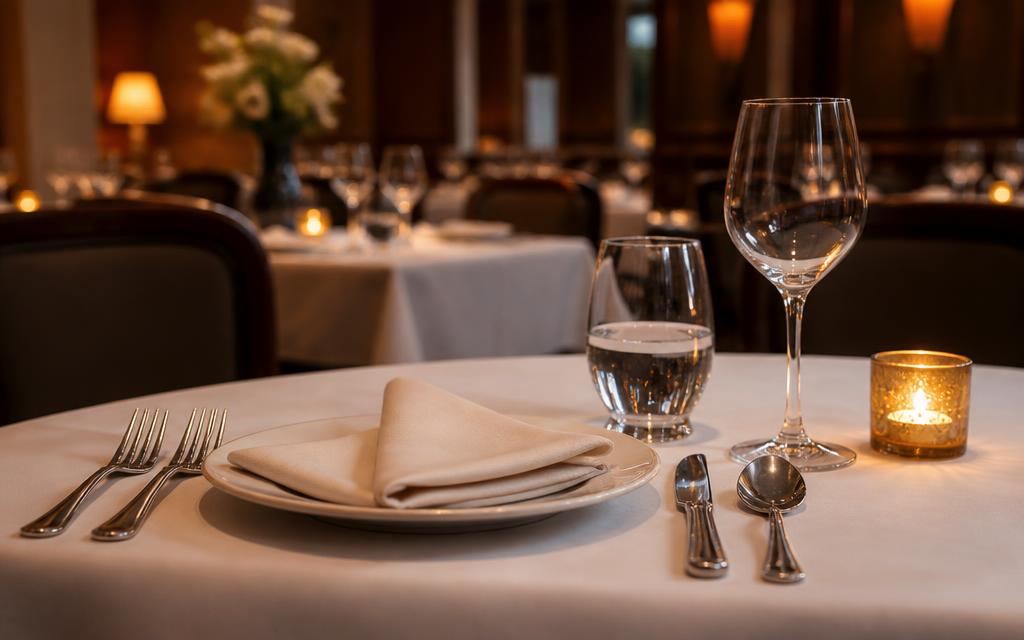
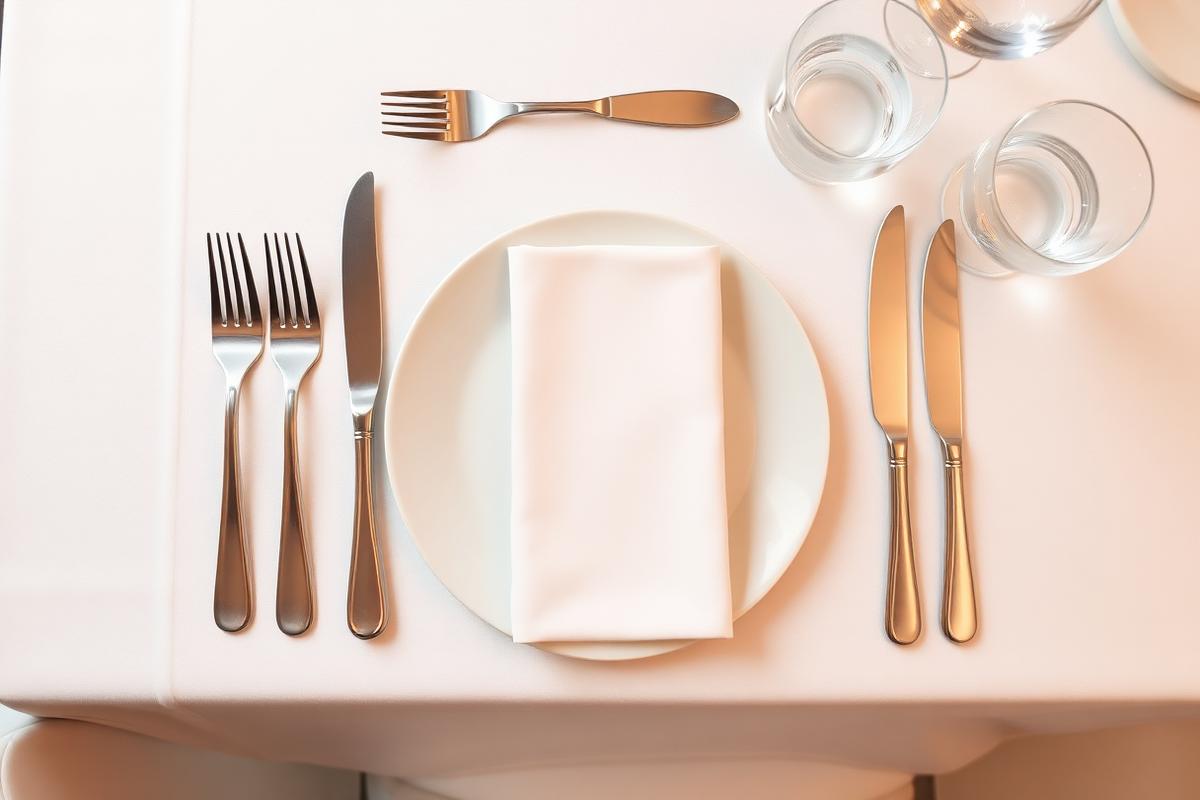
Work from the outside in. The furthest fork and knife are for the first course, and each course moves you inward.
Your bread plate is on the left, your drinks are on the right. The classic memory trick is that b comes before d: bread left, drink right.
The small fork and spoon above the plate are for dessert.
Napkin on your lap as soon as you are seated. If you leave the table mid meal, put it on your chair, and at the end put it loosely to the left of the plate rather than refolding it.
Finished cutlery goes together at roughly four or five o'clock on the plate. Cutlery apart signals you are still eating.
Ordering
Look at the menu before the server arrives so the table is roughly ready. If you need longer, say so and give them a time: "two more minutes, thank you."
Order for yourself rather than for the table, unless it is a set menu or a shared format the group already agreed.
Ask questions about the menu freely. Servers expect it, and a good one will tell you honestly which dish is better tonight.
Substitutions are fine within reason. Asking for dressing on the side is normal, asking a kitchen to rebuild a dish is not.
Say allergies clearly and early, and use the word allergy when you mean it. Kitchens have a separate procedure for allergies and it takes time to run.
Give the server the courtesy of eye contact and a thank you rather than ordering over your shoulder mid conversation.
Getting a Server's Attention
Make eye contact and raise a hand slightly. That is the whole method and it works in every restaurant in the world.
Do not click your fingers, whistle, tap a glass, wave a menu or call across the room. These are the behaviours servers universally single out.
Do not grab or touch a server as they pass. They are usually carrying something hot.
If your own server is busy, ask any passing member of staff politely rather than sitting frustrated for ten minutes.
At the Table
Wait until everybody has been served before starting, unless the host or the person still waiting tells you to begin.
Chew with your mouth closed, keep elbows off the table while eating, and do not talk with food in your mouth. These three cover most of what people notice.
Pass to the right, and pass salt and pepper together.
Keep your voice at table volume. In a small dining room, one loud table changes the evening for everybody in it.
Phones off the table. If you must take a call, step outside.
Do not stack the plates for the server. It seems helpful, but it is not how they are trained to clear and it can make the stack unstable.
Wine and Drinks Service
Whoever ordered the wine is usually given the taste. You are checking that the wine is not faulty, not deciding whether you like the style.
A corked wine smells of damp cardboard and is a legitimate return. Deciding you would rather have had something else is not.
Let the server pour rather than reaching for the bottle in a formal restaurant, and hold the glass by the stem.
Declining alcohol needs no explanation. "Not for me tonight, thank you" is complete and should never be questioned.
When Something Is Wrong
Say something early, quietly and factually. "This is cold in the middle, would you mind" gets a fast fix. Eating half of it and complaining at the end does not.
Direct the complaint at the problem, not the person. The server did not cook it and almost certainly wants to fix it.
Do not demand free things. A decent restaurant will offer something if the fault is theirs, and pushing for it damages the interaction.
If you have a serious complaint, ask for the manager calmly after the meal rather than making a scene in a full dining room.
The Bill and Leaving
Ask for the bill rather than waiting to be offered it. Many restaurants deliberately do not bring it until asked.
Check for a service charge before adding a tip so you do not accidentally tip twice.
Splitting is normal. Agree the method before the bill arrives rather than doing arithmetic across the table with a card machine waiting.
Do not sit at a table for an hour after paying on a busy night. If you want to carry on, move to the bar.
Push your chair in and take your belongings. Coats, umbrellas and phones left behind are the most common lost items in every restaurant.
Frequently Asked Questions
Which fork do you use first?
The one furthest from the plate. Cutlery is laid out so you work from the outside inward with each course.
Where should the napkin go when you leave the table?
On your chair if you are coming back, and loosely to the left of your plate when the meal is finished.
Is it rude to send food back?
No, when something is genuinely wrong. Do it early and politely rather than after eating most of the dish.
How do you get a waiter's attention politely?
Catch their eye and raise your hand slightly. Never click, whistle, wave a menu or call across the room.
How long can you stay at a table after eating?
Until the restaurant clearly needs the table. On a busy service, leaving within twenty to thirty minutes of paying is the courteous thing to do.
Bottom Line
Arrive on time with the number you booked, work cutlery outside in, keep the napkin on your lap and the phone off the table.
Signal servers with eye contact, raise problems early and quietly, check the bill for service, and free the table when the meal is over.