Quick Answer
Ask the patient or the family before you go, keep the visit to fifteen or twenty minutes, and never visit if you have any infection.
Check the ward's visiting hours and rules first. Many wards restrict flowers, food and the number of visitors at the bedside.
The most useful visitor brings something practical, sits down, listens, and leaves before the patient is tired.
Before You Go
Ask first, always. Text the patient or a family member and let them say no or not today without pressure.
Check the ward's visiting hours on the hospital website. They vary enormously between wards and many intensive care and maternity units run their own.
Check how many visitors are allowed at the bedside. Two at a time is the most common limit.
Do not go if you have a cough, a cold, a stomach bug, a temperature or a rash. Hospital patients are the people least able to fight off whatever you are carrying.
Wait at least 48 hours after any sickness or diarrhoea has completely stopped.
How Long to Stay
Fifteen to twenty minutes is the right length for most visits. Hospital days are exhausting even when nothing is happening.
Watch the patient rather than the clock. Closing eyes, shorter answers and a flattening voice all mean it is time to go.
Say the length up front: "I can only stay twenty minutes." It gives the patient a guaranteed ending and lets them relax.
Short and repeated beats long and rare. Two twenty minute visits in a week are worth far more than one two hour one.
On the Ward
Use the hand gel on the way in and on the way out. Every single time, without being asked.
Sit down. Standing over a bed makes a visit feel like an inspection and it is physically tiring for the patient to look up.
Keep your voice low. Ward bays are shared and the person in the next bed may be very unwell.
Do not sit on the bed. It is an infection control issue and it can hurt somebody with lines, drains or surgical wounds.
Step out when staff need the bedside. Ward rounds, medication rounds and personal care all take priority over your visit.
Do not photograph anything. Other patients are in the frame and most wards prohibit it outright.
What to Bring
Practical beats sentimental in hospital. The best gifts solve a real problem of the day.
- Phone charger with a long cable. The most requested item on any ward.
- Lip balm and unscented hand cream. Hospital air is very dry.
- Comfortable socks or slippers with grip.
- Earplugs and an eye mask. Wards are noisy and lit at night.
- Something easy to read. Magazines and puzzle books beat a long novel.
- Toiletries in small sizes. Dry shampoo is disproportionately appreciated.
- Change or a card for the car park and the shop.
Ask before bringing food. Many patients are nil by mouth, on restricted diets or on fluid limits, and food they cannot eat is a small cruelty.
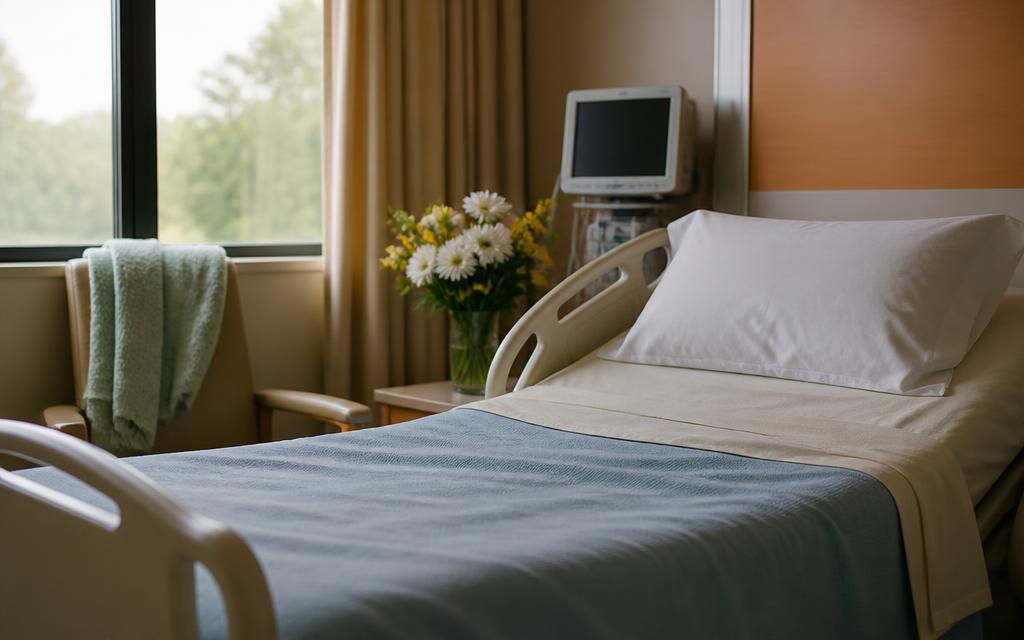
Many wards no longer allow flowers because of infection control and because staff cannot manage vases and water. Check before buying.
What to Say
Follow the patient's lead. Some want to talk about the illness in detail, and some desperately want to talk about anything else.
Bring news from the outside world. Ordinary gossip, work stories and what the neighbours are doing are genuinely welcome.
Ask open questions and then let silence exist. You do not have to fill every gap.
Avoid the standard mistakes: my aunt had that and it was awful, you look so tired, are you sure they are treating it properly, and any story with a bad ending.
Do not offer medical opinions or share what you read online. It creates anxiety and undermines the team treating them.
Do not press for a diagnosis or a prognosis. If they want to tell you, they will.
"I do not know what to say, but I am here" is an entirely acceptable thing to say out loud.
Children and Groups
Check the ward policy before bringing children. Some wards restrict under twelves entirely.
Keep children close, quiet and off the equipment, and be prepared to leave early.
Do not arrive as a group of five. Two visitors at a time is the usual limit and a crowd around a bed is overwhelming.
Coordinate with other friends so the patient is not visited by nobody for four days and then by nine people on a Sunday.
Supporting the Family Too
The relative sitting by the bed all day is often the person most in need of help.
Bring them a proper coffee and something to eat. Hospital canteens close and relatives skip meals.
Offer specific practical help at home: the school run, the dog, the bins, a lift, a shop.
Offer to sit with the patient so the family member can go home and sleep for a few hours.
After the Visit
Send a short message rather than a long one. Replies are effortful when you are ill.
Make clear that no reply is needed. That single sentence takes the pressure off completely.
Keep checking in after discharge. The weeks at home afterwards are usually lonelier than the ward.
Do not share anybody's medical news without their permission, including in a group chat that means well.
Frequently Asked Questions
How long should a hospital visit be?
Fifteen to twenty minutes for most patients. Watch for tiredness and leave before they have to ask.
Can you bring flowers to a hospital?
Often not. Many wards ban them for infection control and practical reasons, so check with the ward first.
What should you bring a patient in hospital?
A long phone charger, lip balm, unscented hand cream, grippy socks, earplugs, an eye mask and something light to read.
Should you visit if you have a mild cold?
No. Even a mild infection is a serious risk to hospital patients, and you should wait until you are fully clear.
What should you not say to someone in hospital?
Avoid horror stories about the same condition, comments on how they look, medical opinions and pressure to explain their diagnosis.
Bottom Line
Ask first, check the ward rules, skip the visit if you are ill, use the hand gel, sit down and keep it to twenty minutes.
Bring something practical rather than flowers, follow the patient's lead in conversation, look after the relative at the bedside, and keep checking in after discharge.