Quick Answer
Enter your sex, age, weight, height and tape measurements (neck, waist, and hips for women) in the calculator below to estimate your body fat percentage.
The tool uses the US Navy circumference method, then classifies your result against age-adjusted ranges and breaks your weight into fat mass and lean mass.
Margin of error is typically around 3 to 4 percent versus a clinical DEXA scan.
Body Fat Calculator
US Navy method, age adjusted, with lean and fat mass.
Estimate body fat percentage using simple tape measurements, no scales or callipers needed.
What is body fat percentage?
Body fat percentage is the share of your total weight that is made up of fat tissue. Unlike BMI, which treats every kilo the same, body fat percentage tells you what that weight is actually built from.
Two people at the same weight and height can have very different physiques. The one carrying more muscle and less fat will look leaner, perform better and usually carry less metabolic risk.
Body fat categories (ACE standards)
| Category | Women | Men |
|---|---|---|
| Essential Fat | 10-13% | 2-5% |
| Athletes | 14-20% | 6-13% |
| Fitness | 21-24% | 14-17% |
| Average | 25-31% | 18-24% |
| Obese | 32%+ | 25%+ |
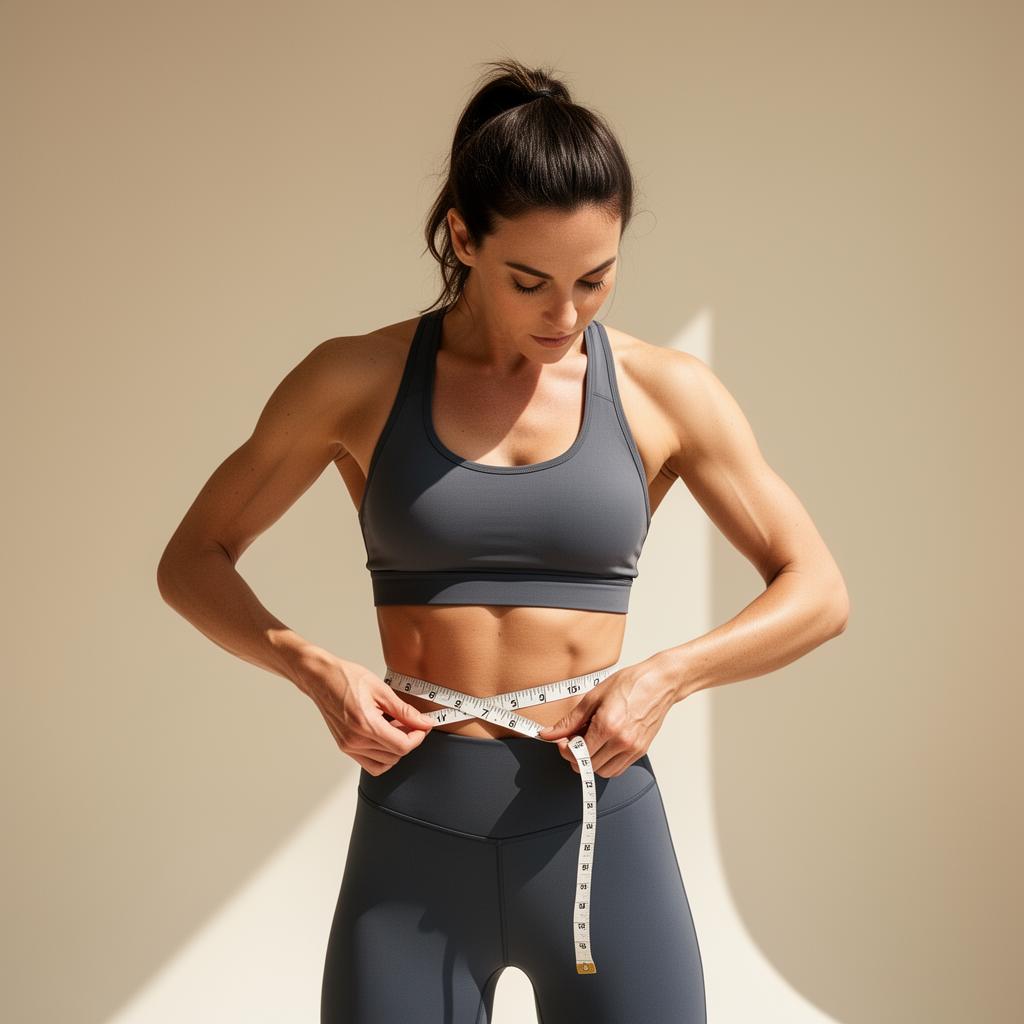
How to measure for the US Navy method
Accuracy depends on consistent tape work. Stand relaxed and use a soft, non-stretch tape that sits flush against the skin without compressing it.
- Neck: Just below the larynx (Adam's apple), tape sloping slightly down at the front.
- Waist: Men, at the navel. Women, at the narrowest point of the natural waist.
- Hips (women only): At the widest point of the hips and buttocks.
Measurement methods compared
| Method | Accuracy | Equipment |
|---|---|---|
| DEXA Scan | Gold standard | Clinical X-ray |
| Skinfold Calipers | Very good (skill dependent) | Calipers + trained tester |
| US Navy Tape (this tool) | ±3-4% of DEXA | Tape measure |
| Bioelectrical Impedance Scale | Inconsistent | Smart scale |
Why women need more fat than men
Women carry more essential fat for hormonal function, reproduction and biological storage. That's why a healthy female athlete can sit comfortably at 18 to 22% body fat, while the same number on a man would be considered fairly lean but not extreme.
Lowering body fat versus losing weight
Dropping the number on the scale is easy. Dropping body fat percentage is harder, because you need to lose fat while protecting muscle.
The recipe is consistent across the literature: a moderate calorie deficit (around 300 to 500 kcal), high protein intake (about 1.6 g per kg of bodyweight) and regular resistance training.
Frequently asked questions
What is a healthy body fat percentage?
Generally the Fitness band is ideal. That's roughly 14 to 17% for men and 21 to 24% for women, though Average is still acceptable for general health.
How do I calculate body fat at home?
The US Navy tape method, used by this calculator, is the most accurate option without equipment. All you need is a tape measure and a few honest measurements.
Is this as accurate as a DEXA scan?
No calculator matches a clinical DEXA scan. But the Navy formula is usually more consistent than bioelectrical impedance scales and tends to land within 3 to 4 percent of a DEXA result.
Why does the neck measurement matter?
The neck helps the formula estimate frame size and lean muscle. A thicker neck relative to the waist signals more muscularity, which the equation uses to refine the fat estimate.
I have a normal BMI, why is my body fat high?
That's the classic skinny-fat profile: low weight, low muscle, surprisingly high fat. The fix is resistance training and protein, not more dieting.
Does age affect body fat?
Yes. Average body fat naturally rises with age due to gradual muscle loss. This tool widens the ideal range slightly each decade to keep the assessment fair.
How can I lower my body fat percentage?
Hold a 300 to 500 kcal daily deficit, eat around 1.6 g of protein per kg of bodyweight, and lift weights two to four times per week.
Can I target belly fat?
Spot reduction is a myth. Body fat comes off systemically as your overall percentage drops, with stubborn areas usually leaving last.
At what body fat are abs visible?
For most men, around 12 to 15%. For most women, around 18 to 22%. Genetics affect where fat sits last, so two people at the same percentage can look different.
How fast can I lose body fat safely?
Around 0.5 to 1% body fat per week is a sustainable ceiling. Faster than that and you risk losing muscle alongside the fat.
How does sleep affect body fat?
Poor sleep raises ghrelin (hunger) and cortisol (stress), which encourages belly fat storage and breaks down muscle. Sleep is a fat-loss tool, not just recovery.
Formula and methodology
The calculator uses the US Navy circumference equations, then classifies the result with age-adjusted ranges based on ACE and Jackson & Pollock data.
- Men: 86.010 × log10(waist − neck) − 70.041 × log10(height) + 36.76
- Women: 163.205 × log10(waist + hip − neck) − 97.684 × log10(height) − 78.387
- Inputs: all circumferences and height in inches; the tool converts metric inputs automatically.
What to do with your number
Once you know your body fat percentage and lean mass, you can build a smarter nutrition plan. Pair this tool with my Calorie Calculator to set a deficit and the Macro Split Calculator to translate calories into protein, carbs and fat.
Medical disclaimer
This calculator and article are for general educational and wellness purposes only. They are not a substitute for professional medical advice, diagnosis or treatment. Results are estimates based on population formulas and do not account for every individual factor.
If you are pregnant or breastfeeding, under 18, over 65, an athlete, recovering from illness or surgery, or living with a chronic condition (diabetes, heart, kidney, thyroid, eating disorder), speak to a qualified healthcare professional before changing your diet, exercise or hydration habits based on these numbers.
See the full site-wide Disclaimer & Notice for the complete terms that apply to every calculator and tool on dmbio.