Quick Answer
A mock drill is a planned, simulated emergency exercise that lets an organisation or community practise its response to events like fires, earthquakes, gas leaks, active threats, or industrial chemical spills. The point is to test alarms, evacuation routes, response times, and team coordination under realistic but safe conditions, then fix whatever breaks.
In most countries, mock drills are required by workplace safety law. The U.S. Occupational Safety and Health Administration mandates regular fire drills under 29 CFR 1910.38, and the UK Regulatory Reform Fire Safety Order 2005 requires at least one full drill each year for most premises. Schools, hospitals, and chemical plants usually run them quarterly.
Done well, a mock drill cuts average evacuation time by 30 to 50 percent and replaces panic with rehearsed, almost automatic behaviour during a real event.
The phases of a mock drill
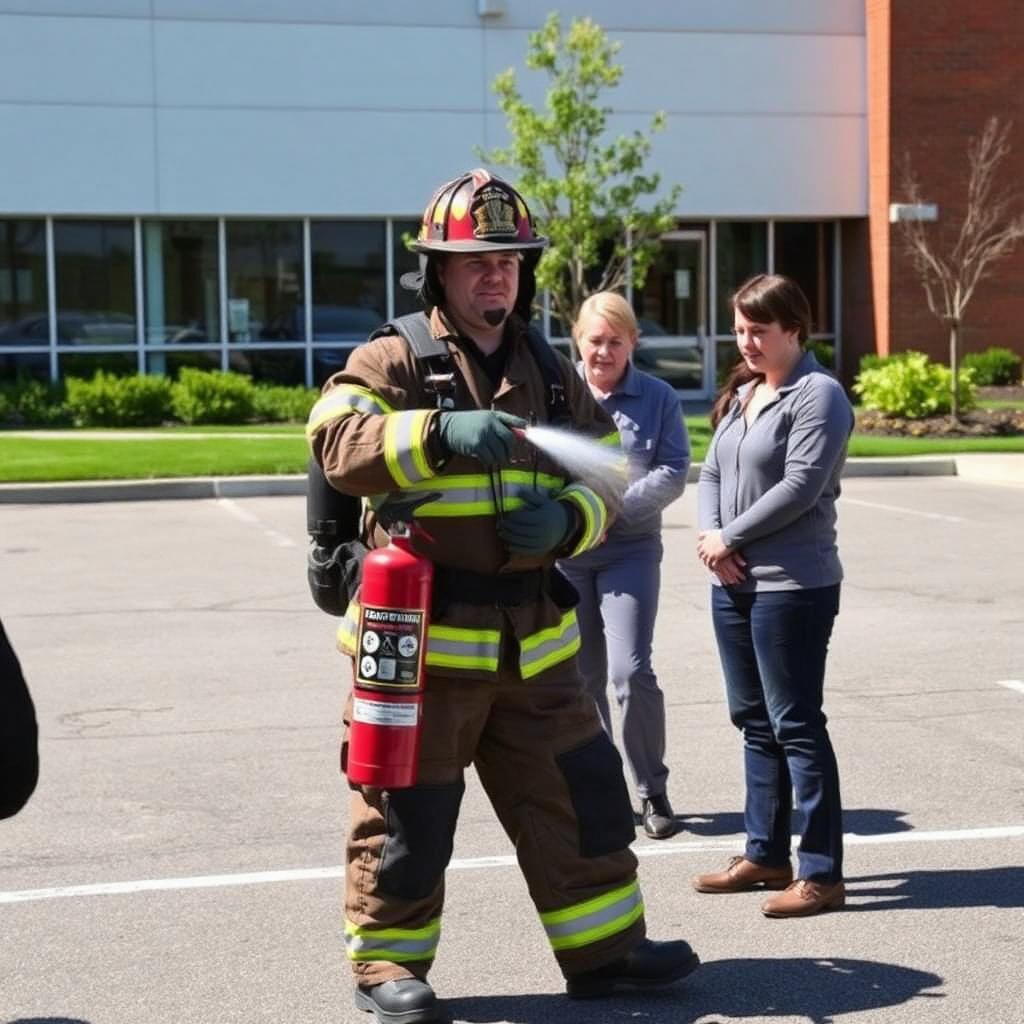
A standard drill has four phases, and each one tests something different.
- Scenario activation. A planned trigger sets the drill in motion. It might be a simulated fire alarm, a coded announcement, or a runner reporting a fake chemical leak. The goal is to make the start feel real without warning the participants too far in advance.
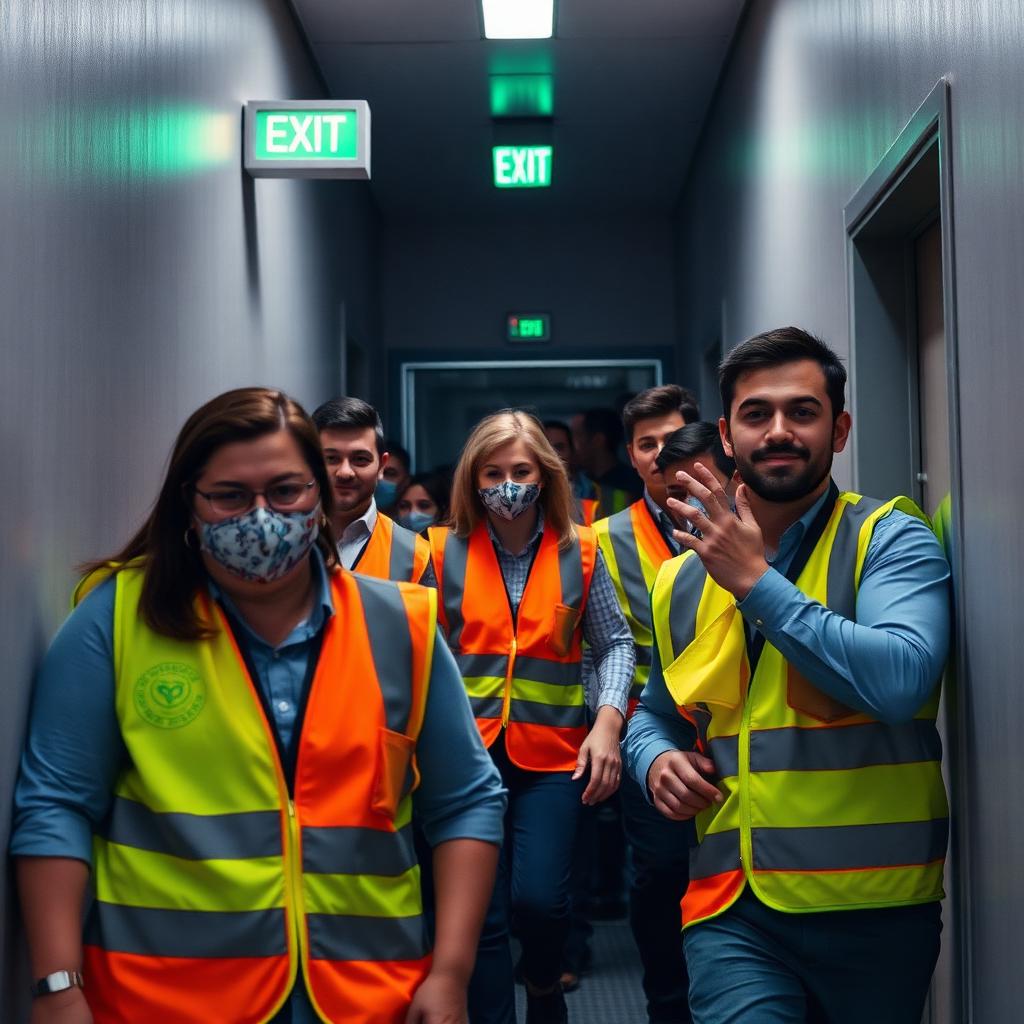
- Evacuation or shelter response. Occupants move through their assigned routes. Wardens sweep their floors. Lifts shut down. Assembly points fill up. Observers time each step and note bottlenecks.
- Protocol audit. Once everyone is accounted for, the team checks who responded correctly, which alarms worked, whether the public address system was audible, and how long the full evacuation took.
- Debrief and corrective action. A short meeting captures findings. Most organisations close the loop within two weeks, fixing signage, retraining wardens, or replacing failed equipment.
What a drill is actually testing
- Response times. How long it takes from alarm activation to last person clear of the building. Office benchmarks aim for under 4 minutes; schools target under 3 minutes.
- Equipment reliability. Fire alarms, automated fire doors, exit lighting, sprinkler isolation, and public address audibility all get a live workout.
- Communication chains. Whether floor wardens reach the incident controller, whether the controller can reach the fire service, and whether off duty staff get the right alerts.
- Behaviour under stress. Whether occupants walk briskly without running, whether they leave belongings behind, and whether they assemble at the right point instead of drifting.
- Muscle memory. Repeated practice replaces conscious thought with reflex action. Research from the National Fire Protection Association shows that occupants who have completed at least two drills make significantly fewer route errors during real evacuations.
Types of mock drills
| Drill type | Scenario | Typical frequency |
|---|---|---|
| Fire evacuation | Simulated fire and alarm activation | Twice a year minimum |
| Earthquake drop, cover, hold | Simulated quake, shelter under desks | Annually in seismic zones |
| Lockdown or active threat | Intruder on premises, shelter in place | Annually for schools and offices |
| Chemical spill or gas leak | Simulated leak in plant or lab | Quarterly for industrial sites |
| Medical emergency | Cardiac arrest, AED retrieval, CPR | Quarterly for health facilities |
| Bomb threat | Search protocol and partial evacuation | Annually for high risk sites |
How a good drill is planned
The planning team usually includes a safety officer, a facilities lead, a security representative, and at least one trained observer from outside the affected area. Most plans cover seven items.
- Scenario brief and date window.
- List of participating floors or zones.
- Communication script for wardens.
- Observer assignments and timing sheets.
- Coordination with local fire or emergency services.
- Assembly point map and headcount template.
- Debrief schedule and corrective action owner.
Why drills actually reduce panic
Panic is partly a product of uncertainty. When people do not know where the exit is, whether the alarm is real, or whether to take the lift, the brain runs into competing options and the amygdala drives a freeze or flight reaction. Repeated drills strip out the uncertainty. The first decision is already made, so the body executes the next step without spending cognitive bandwidth.
This is the same principle that makes pilots run thousands of simulator hours and surgeons rehearse rare procedures with mannequins. Practice replaces panic with procedure.
Common failures to watch for
- Pre announced drills. When everyone knows the date, behaviour becomes performative and the data is not useful.
- Inaudible alarms. Mechanical noise from HVAC or factory floors often drowns out the alarm in specific zones.
- Disabled exits. Fire doors propped open with wedges, blocked stairwells, and locked back exits are the most common failures.
- Missing headcount. Wardens cannot confirm everyone is out because the visitor or contractor log is incomplete.
- No corrective action. Findings get logged but never fixed, and the next drill repeats the same failures.
Frequently asked questions
How often should we run a mock drill?
For most offices, at least twice a year. Schools, hospitals, and industrial plants run them quarterly. High risk facilities like nuclear sites or oil refineries run multiple drills per quarter.
Are mock drills legally required?
In most jurisdictions, yes. OSHA in the United States, the Fire Safety Order in the United Kingdom, and equivalent regulations in India, the EU, Australia, and Canada all require documented drills for most workplaces.
What is the difference between a drill and a tabletop exercise?
A drill is a live, full body practice that moves people through the response. A tabletop exercise is a discussion based walk through where leaders talk through how they would respond. Most organisations alternate the two.
Should drills be announced or surprise?
A mix works best. Announce the first drill so people learn the route. Make later drills unannounced so you measure realistic response times.