Quick Answer
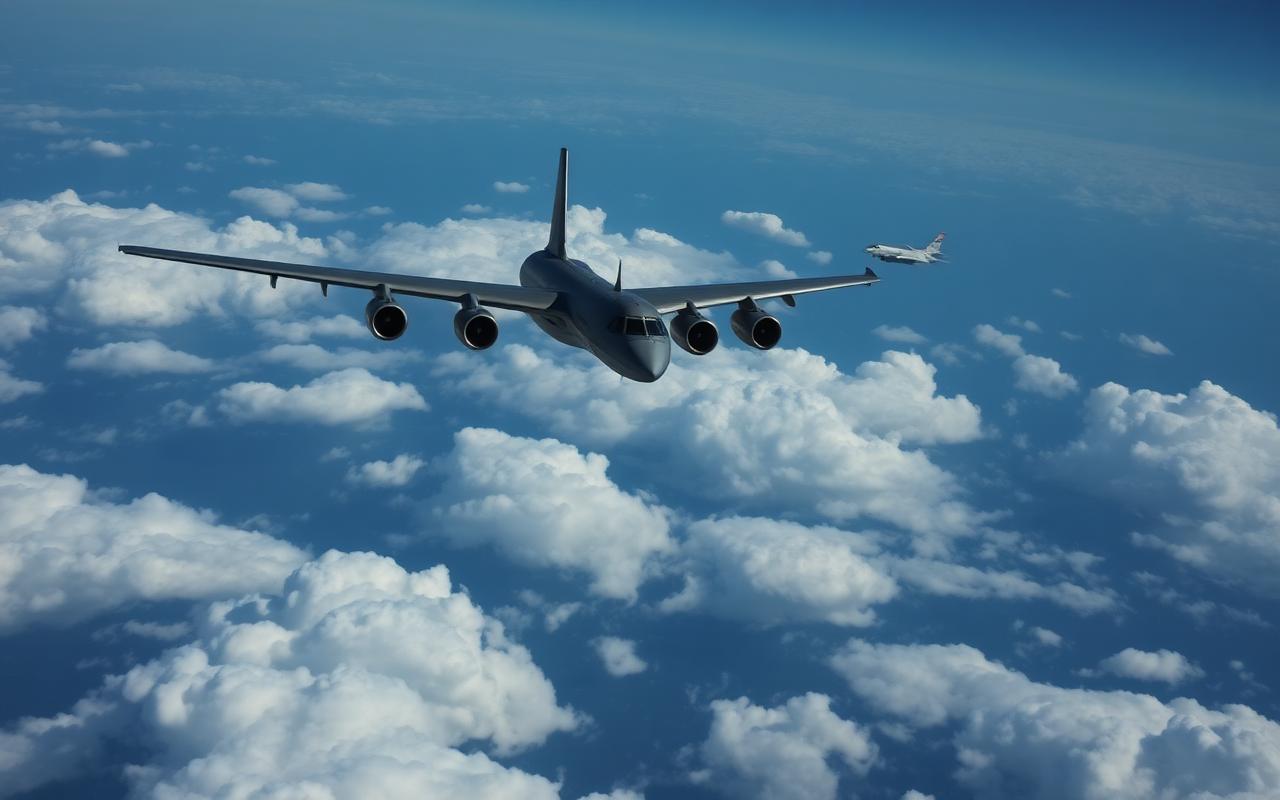
The UK Ministry of Defence (MoD) confirmed that two Russian fighter jets, a Sukhoi Su-35 and a Sukhoi Su-27, dangerously intercepted an unarmed Royal Air Force RC-135W Rivet Joint reconnaissance aircraft over international airspace above the Black Sea.
The Su-35 closed so aggressively that wake turbulence forced the Rivet Joint s autopilot to disengage. The Su-27 then made six high speed passes, coming as close as six metres (about 19 feet) from the nose of the British plane.
The UK has formally demarched the Russian Embassy in London, and Defence Secretary John Healey has condemned the conduct as dangerous and unacceptable.
What Actually Happened
According to the operational report from the MoD, the RAF Rivet Joint was conducting a routine intelligence, surveillance, and reconnaissance (ISR) mission over international waters in the Black Sea. These flights are part of the UK s ongoing contribution to NATO s Eastern Flank security and to tracking regional military activity.
During the flight, the aircraft was approached by two Russian Federation jets that executed two distinct, escalating manoeuvres.
The autopilot override. The Su-35 closed the gap so aggressively that the combined wake turbulence and proximity triggered the Rivet Joint s onboard safety systems. The autopilot automatically disengaged, and the RAF crew had to take immediate manual control of a large, heavy aircraft at altitude.
The six metre pass. The Su-27 then made six separate high speed passes directly in front of the British plane. The closest of those passes brought the Russian jet within six metres (around 19 feet) of the Rivet Joint s nose cone. At supersonic closing speeds, that distance is effectively zero margin for error.
Why This Matters: The Rivet Joint Is Not a Combat Asset
The RC-135W Rivet Joint is the crown jewel of the Royal Air Force s signals intelligence (SIGINT) fleet. It is operated by No 51 Squadron out of RAF Waddington in Lincolnshire and is one of the most expensive single airframes in the British military inventory.
It is also unarmed. The aircraft is a heavily modified Boeing platform packed with electronic sensors designed to intercept, geolocate, and analyse radio communications, radar emissions, and other electromagnetic signals across vast areas in real time. It carries no weapons, no missiles, and no offensive capability of any kind.
That matters legally and operationally. Under international aviation law, an unarmed aircraft operating in international airspace is entitled to safe passage. Aggressive close range manoeuvres against it are not lawful, even by an opposing military.
The Crew Response
The MoD highlighted the discipline of the No 51 Squadron crew. Despite losing the autopilot, despite the six metre pass, and despite the presence of armed Russian fighters on both flanks, the crew held their flight path, completed the planned ISR run, and returned safely to RAF Waddington.
Maintaining a steady track in this situation is a deliberate choice. It signals that the UK is not going to be pushed out of international airspace by intimidation. Breaking the planned route under pressure would create a precedent that future Russian intercepts could exploit.
The UK Government Response
Defence Secretary John Healey MP issued the formal political reaction. The UK has demarched the Russian Embassy in London, which is the standard diplomatic channel for condemning specific operational misconduct without rupturing wider diplomatic relations.
In his public statement, Healey said:
"This incident is another example of dangerous and unacceptable behaviour by Russian pilots towards an unarmed aircraft operating entirely within international airspace. These actions create a serious, uncalled for risk of accidents and potential military escalation. This will not deter the UK s ironclad commitment to defend NATO and our interests from Russian aggression."
The 2022 Precedent
This is not the first time an RAF Rivet Joint has been targeted in this way over the Black Sea.
In September 2022, a Russian Su-27 pilot actually fired a live air to air missile in the vicinity of an RAF Rivet Joint during a similar ISR mission. The Kremlin initially blamed the incident on a technical malfunction. Later Western intelligence reviews concluded that the missile was launched deliberately, after the Russian pilot received ambiguous engagement guidance from a ground based radar controller.
That 2022 incident set the baseline for how seriously Western governments take Black Sea ISR encounters. The 2026 episode is the most dangerous since that 2022 event.
The Su-35 and Su-27 in Context
The two aircraft involved are core Russian air defence assets.
The Su-35 Flanker-E is a 4.5 generation multirole fighter, the most advanced conventional fighter currently in widespread Russian service. It carries long range air to air missiles and is the jet Russia typically tasks with high profile intercepts against NATO ISR platforms.
The Su-27 is the older Flanker baseline. It is still operationally capable, and its smaller radar signature and high manoeuvrability make it well suited to close in visual intercept work.
Using both airframes together is a calculated mix. The Su-35 brings the long range threat, and the Su-27 brings the close pass capability.
Why the Black Sea Is the Flashpoint
The Black Sea has become the most contested ISR airspace in Europe.
NATO members fly regular reconnaissance missions over international waters to monitor Russian naval activity around Sevastopol, Russian air defence movements across Crimea, and the logistics flows supporting the war in Ukraine. The aircraft used for those missions are concentrated, expensive, and politically sensitive, which makes them attractive targets for aggressive Russian intercepts designed to drive up the cost of NATO presence.
Crucially, this is international airspace. The Russian intercepts are not happening over Russian territory. They are happening over open water, where international law clearly protects civilian and military flight.
The Strategic Read
Three takeaways for anyone following the wider NATO Russia picture.
First, the trend line is escalating. From the 2022 missile incident to the 2026 six metre pass, Russian pilots are testing the upper limits of what they can do before NATO airframes are forced to break off or return fire.
Second, the UK is unlikely to back down. Healey s statement explicitly commits the UK to continued operations, and Britain is one of only a few NATO members with the standalone SIGINT capability to maintain these missions.
Third, the risk of an accidental shoot down is now higher than at any point since the early 2022 invasion of Ukraine. Six metres is well inside the margin where a small misjudgement by either crew creates a mid air collision.
The Takeaway
A Russian Su-35 and Su-27 dangerously intercepted an unarmed RAF RC-135W Rivet Joint over the Black Sea, closing to within six metres of the British plane and forcing its autopilot to disengage. The UK has formally demarched Moscow, Defence Secretary John Healey has condemned the conduct, and RAF ISR missions out of RAF Waddington will continue. It is the most serious British Russian aerial confrontation since the 2022 live missile incident, and the underlying escalation trend is now the central concern for NATO planners.