Quick Answer
The typical signs of iron deficiency are tiredness that feels out of proportion to your day, breathlessness climbing stairs, pale skin, cold hands and feet, headaches, brittle spoon-shaped nails, hair shedding and restless legs at night.
A distinctive one is pica, an urge to chew ice, chalk or dirt. Craving ice in particular is strongly associated with low iron.
Iron deficiency is the most common nutritional deficiency worldwide and is confirmed with a simple ferritin and full blood count test.
Deficiency versus anaemia
These are two stages of the same process and getting them mixed up causes a lot of confusion.
Iron deficiency means your stores are depleted, measured by low ferritin. You can feel rotten at this stage while your haemoglobin is still perfectly normal, which is why people are sometimes told their blood test is fine when it is not.
Iron deficiency anaemia is the later stage, when stores are so low that the body cannot make enough haemoglobin and red cells become small and pale. Symptoms get considerably worse here.
Symptoms in more detail
- Fatigue and weakness, the most common complaint and the easiest to dismiss.
- Breathlessness during ordinary activity such as carrying shopping or walking uphill.
- Pale skin, often clearest on the inside of the lower eyelid, the gums and the nail beds.
- Heart palpitations as the heart works harder to move oxygen around.
- Headaches and light-headedness, particularly on standing up.
- Cold extremities, because peripheral circulation is deprioritised.
- Brittle nails, sometimes developing a concave spoon shape called koilonychia.
- Hair shedding, which often shows up before anaemia does.
- Restless legs syndrome, a well documented association with low ferritin.
- Sore or cracked corners of the mouth, and a smooth, inflamed tongue.
- Pica, especially compulsive ice chewing.
- Poor concentration and low mood, which often lift noticeably once stores are rebuilt.
Who is most at risk
- Women with heavy periods. This is by far the most common cause in adults of reproductive age.
- Pregnant women, whose requirement roughly doubles.
- Vegetarians and vegans, because plant iron is absorbed far less efficiently.
- Endurance athletes, through a combination of increased turnover, sweat losses and foot strike haemolysis.
- Frequent blood donors.
- Anyone with coeliac disease, Crohn's disease or a history of gastric surgery.
- People with slow gastrointestinal bleeding, including from ulcers, long term NSAID use or, importantly, bowel cancer.
That last point is why unexplained iron deficiency in men or postmenopausal women is always investigated rather than simply supplemented.
Two kinds of dietary iron
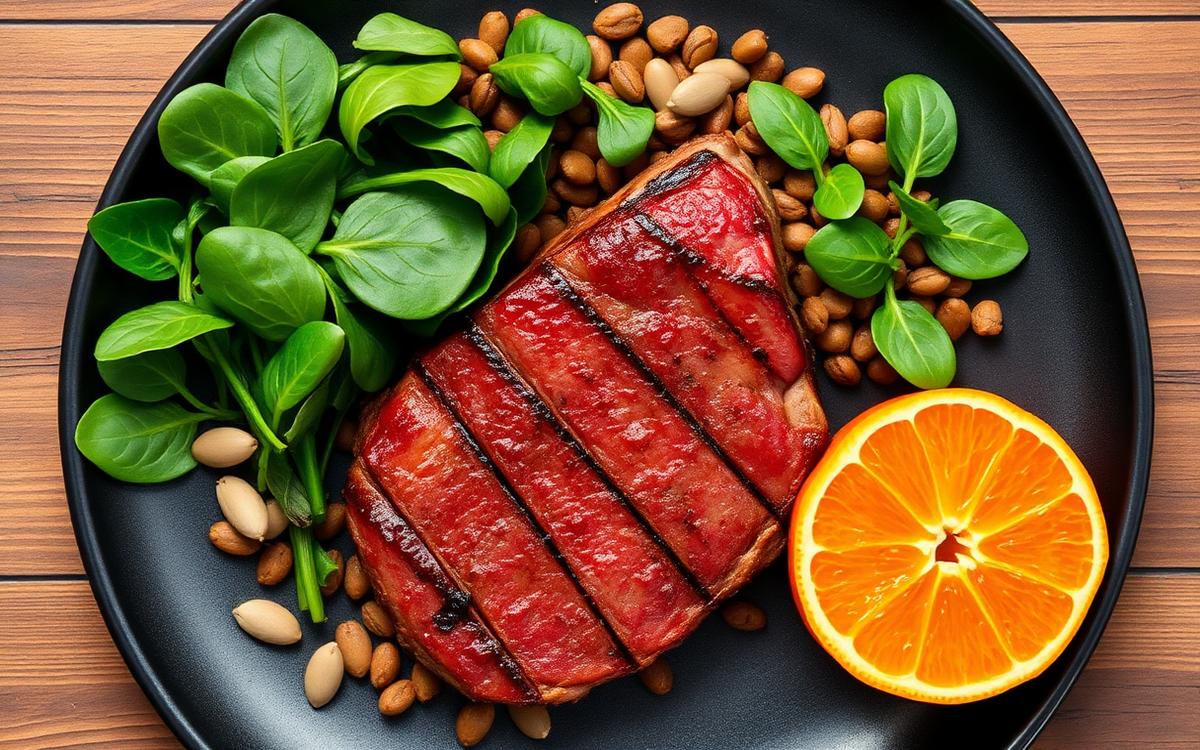
Heme iron comes from meat, poultry and fish, and roughly 15 to 35 percent of it is absorbed. Non-heme iron from plants, eggs and fortified foods is absorbed at a much lower rate, often around 2 to 20 percent depending on what else is on the plate.
Absorption helpers: vitamin C, whether from citrus, peppers, tomatoes or strawberries, and a small amount of meat eaten alongside plant sources.
Absorption blockers: tea and coffee (tannins), calcium supplements and dairy taken at the same meal, and phytates in whole grains and legumes. Soaking, sprouting and fermenting reduce phytate content noticeably.
The single easiest change most people can make is moving their tea or coffee an hour away from iron rich meals.
Getting tested
Ask for ferritin plus a full blood count. Ferritin below about 30 micrograms per litre indicates depleted stores in most laboratories, and many clinicians treat symptomatic patients below 50, particularly with restless legs or hair loss.
One complication: ferritin rises during infection or inflammation, so it can look falsely reassuring. If inflammation is suspected, transferrin saturation or C-reactive protein alongside gives a clearer picture.
Treatment and how long it takes
Oral iron is first line. Ferrous sulfate, fumarate or gluconate all work, and gentler chelated forms such as bisglycinate cause fewer digestive complaints.
Recent research suggests alternate day dosing may actually be absorbed better than daily dosing, because a large dose raises hepcidin, a hormone that then blocks absorption for the following day.
Expect haemoglobin to improve within two to four weeks, but refilling stores takes three to six months. Stopping as soon as you feel better is the classic mistake that leads straight back to deficiency.
Take iron on an empty stomach with a glass of orange juice if you can tolerate it, and never within two hours of tea, coffee, dairy or a calcium supplement.
When to see a doctor
Always get iron deficiency investigated rather than self-treating indefinitely. Supplements fix the number but not the cause, and the cause can be serious.
Seek prompt care for chest pain, fainting, breathlessness at rest, blood in the stool or black tarry stools, or symptoms in a man or postmenopausal woman with no obvious explanation.
The bottom line
Iron deficiency creeps up as ordinary tiredness and only later becomes obvious anaemia. Breathlessness on stairs, brittle nails, restless legs and an urge to crunch ice are the tells worth acting on.
Get ferritin checked, find out why it is low, then rebuild stores with food and a well timed supplement over several months rather than a fortnight.
Frequently asked questions
How long does it take to fix low iron?
Haemoglobin normally responds within two to four weeks, but rebuilding ferritin stores takes three to six months of consistent supplementation. Stopping early is why so many people relapse.
Can you get enough iron on a vegan diet?
Yes, though it needs planning. Lentils, tofu, pumpkin seeds and fortified cereals carry plenty of iron, and pairing them with vitamin C rich foods closes most of the absorption gap.
Does spinach really have that much iron?
It has a reasonable amount, but oxalates in spinach block much of it. Lentils, tofu and pumpkin seeds are better plant sources despite spinach getting all the attention.
Why does iron cause constipation?
Unabsorbed iron irritates the gut and slows transit. Switching to bisglycinate, taking it on alternate days, or lowering the dose usually solves it without giving up on treatment.
Can you take too much iron?
Yes. Iron overload damages the liver and heart, and supplements are a leading cause of poisoning in young children. Never supplement long term without a blood test confirming you need it.