Quick Answer
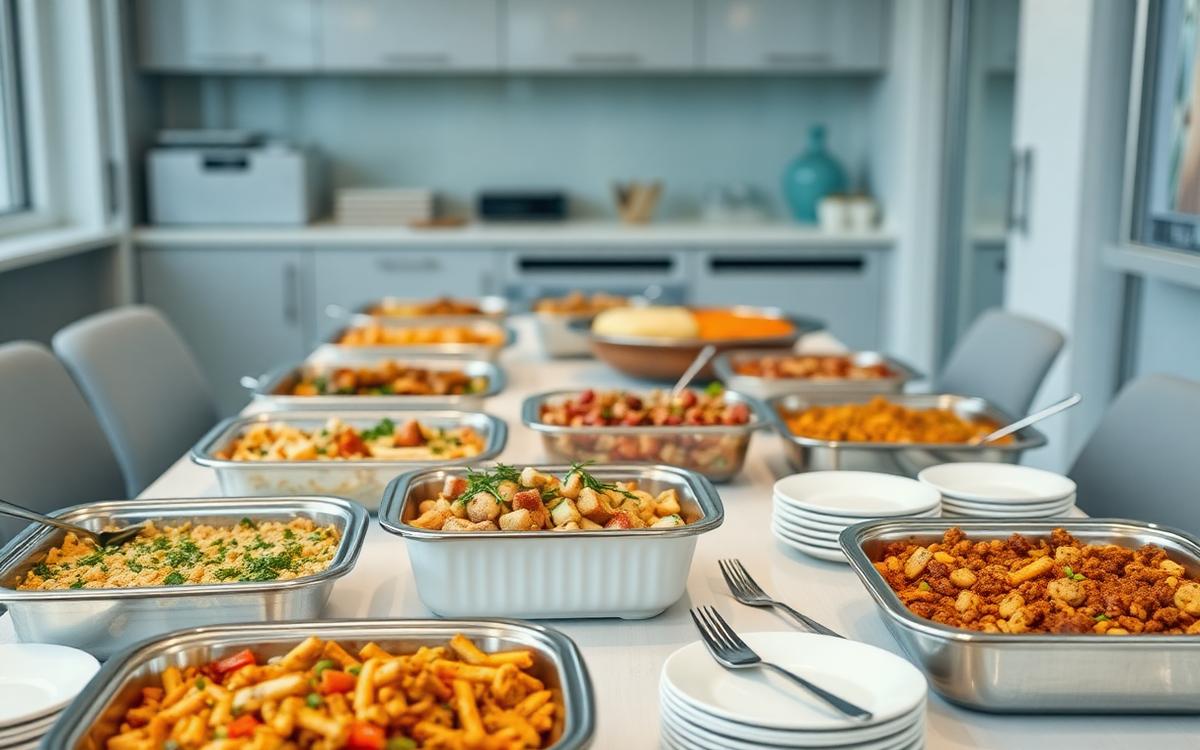
Sign up for a category, bring enough for eight to ten servings, label allergens clearly, bring your own serving utensil, and clean up your dish before you leave.
Take a small first portion so everyone gets some, and go back for seconds only once the whole team has eaten.
If you cannot cook, bring drinks, bread, cheese, fruit or plates. Contributing something bought is far better than contributing nothing.
Signing Up Properly
Use the sign up sheet the organiser created and put your actual dish on it, not a vague word like side. Nine bowls of pasta salad happen because nine people wrote salad.
Claim a category that is still empty. Mains and hot dishes are usually short, while desserts and chips are always oversupplied.
Commit early and stick to it. Swapping a hot main for a bag of crisps the morning of the event leaves a hole in the table.
Tell the organiser if you need oven, microwave or fridge access. Office kitchens have one microwave and a queue of twelve people at noon.
How Much to Bring
- Main dish: eight to ten servings.
- Side dish: ten to twelve small servings.
- Dessert: twelve or more small pieces, since people take one bite of several.
- Drinks: plan on two servings per person.
Aim for slightly more than your headcount share rather than exactly your share. Potluck plates are small and people sample widely, so variety matters more than volume.
Allergens and Dietary Needs
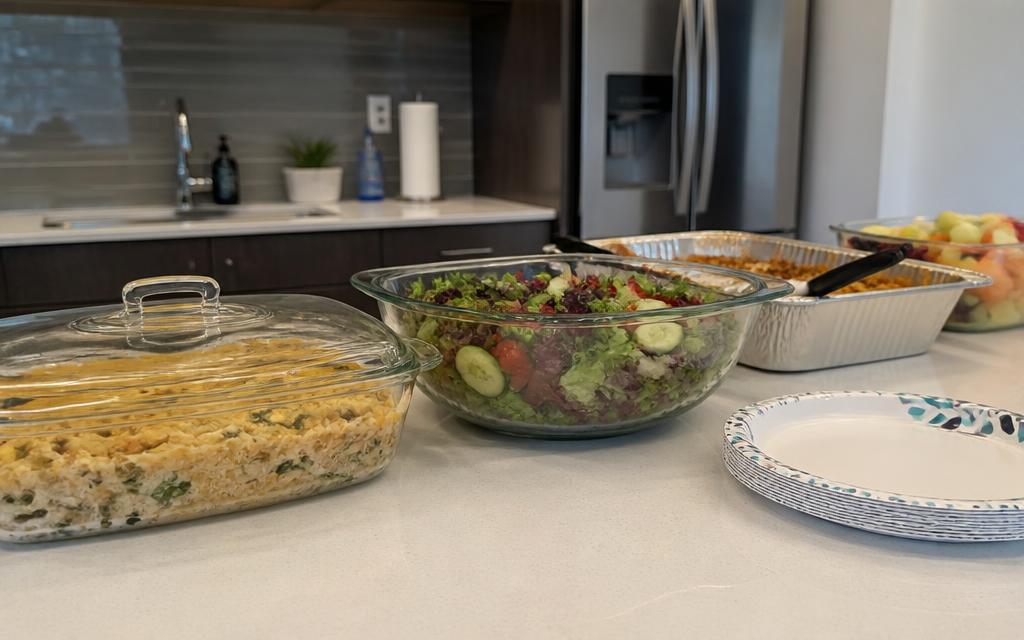
Label your dish with the main ingredients. A small folded card listing the key allergens takes two minutes and prevents a genuinely dangerous mistake.
The allergens worth naming explicitly are nuts, dairy, eggs, wheat and gluten, soy, shellfish, fish and sesame.
Say plainly if a dish contains pork, alcohol, beef or gelatin. Colleagues with religious dietary rules should not have to interrogate every tray.
Include at least one vegetarian option on the table overall, and try to have something that is both vegan and gluten free. That is often the only thing one or two colleagues can eat.
Do not hide ingredients as a joke or to persuade somebody to try something. It is not funny and for a nut allergy it can be an emergency.
Food Safety
Hot food should stay above 60 degrees Celsius, roughly 140 Fahrenheit, and cold food below 4 degrees Celsius, roughly 40 Fahrenheit.
The two hour rule applies. Perishable food left at room temperature for more than two hours should go in the bin rather than back in the fridge.
Slow cookers and insulated carriers solve most of this. If you are bringing a hot dish, bring a way to keep it hot rather than relying on a shared microwave.
Cold dishes with mayonnaise, cream, raw fish or soft cheese are the highest risk in a warm office. Keep them on ice or bring something more forgiving.
Do not bring food you cooked while ill, and do not bring leftovers from a family event two days earlier.
Serving and Eating
Bring a serving spoon or tongs with your dish. Organisers always underestimate utensils and people end up using their own forks in shared bowls.
Take a small portion on the first pass. Someone at the back of a queue of thirty should still find food on the table.
Do not hover over the table eating directly from it, and do not pick at food with your fingers.
Try a little of several dishes if you can. People notice when their contribution is untouched, and a colleague who cooked something unfamiliar is often quietly watching.
Compliment at least one dish sincerely. It costs nothing and it is the main social payoff of the whole exercise for the person who cooked.
Cleanup
Take your own dish home the same day, washed if the kitchen allows it. Abandoned casserole dishes are the most reliable source of office kitchen resentment.
Put your name on the base of your dish and lid with a strip of tape. It is the only way anything gets back to its owner.
Wipe the surface you used, run the dishwasher if there is one, and take the rubbish out rather than pressing it into a full bin.
Handle leftovers explicitly. Either offer them to the room, take them home, or bin them. Do not leave them in the shared fridge for someone else to deal with next week.
If You Cannot or Will Not Cook
Store bought is completely acceptable and nobody serious cares. A good bakery loaf, a cheese board, a fruit platter or a decent salad from a supermarket all contribute.
Alternatively take a role rather than a dish. Bring plates, cups, napkins and cutlery, or volunteer to set up and clear away.
Contributing cash to a shared order is fine where the team agrees to it, but only when everybody understands that is the arrangement.
What is not fine is eating enthusiastically at every potluck while never bringing anything. People keep score more than they let on.
Frequently Asked Questions
Is it acceptable to bring store bought food to an office potluck?
Yes. Nobody is judging the origin of a good cheese board, and it is far better than skipping your slot.
Should potlucks be mandatory at work?
No. Attendance and contribution should both be voluntary, since food events carry cost, dietary and cultural implications for staff.
How do you handle a colleague who never contributes?
Let the organiser manage the sign up sheet. A clear list with names attached solves most of it without a confrontation.
Can you take leftovers home?
Take back what you brought. Take other people's leftovers only if they have been openly offered to the room.
What is the best dish to bring to an office potluck?
Something that is good at room temperature, travels well and does not need cutting. Trays of pasta, grain salads, roasted vegetables and hand held bakes all work.
Bottom Line
Claim a real category on the sign up sheet, bring eight to ten servings with a labelled allergen card and your own serving spoon.
Take a small first portion, keep hot food hot and cold food cold, and take your dish and your mess home the same day.