Quick Answer
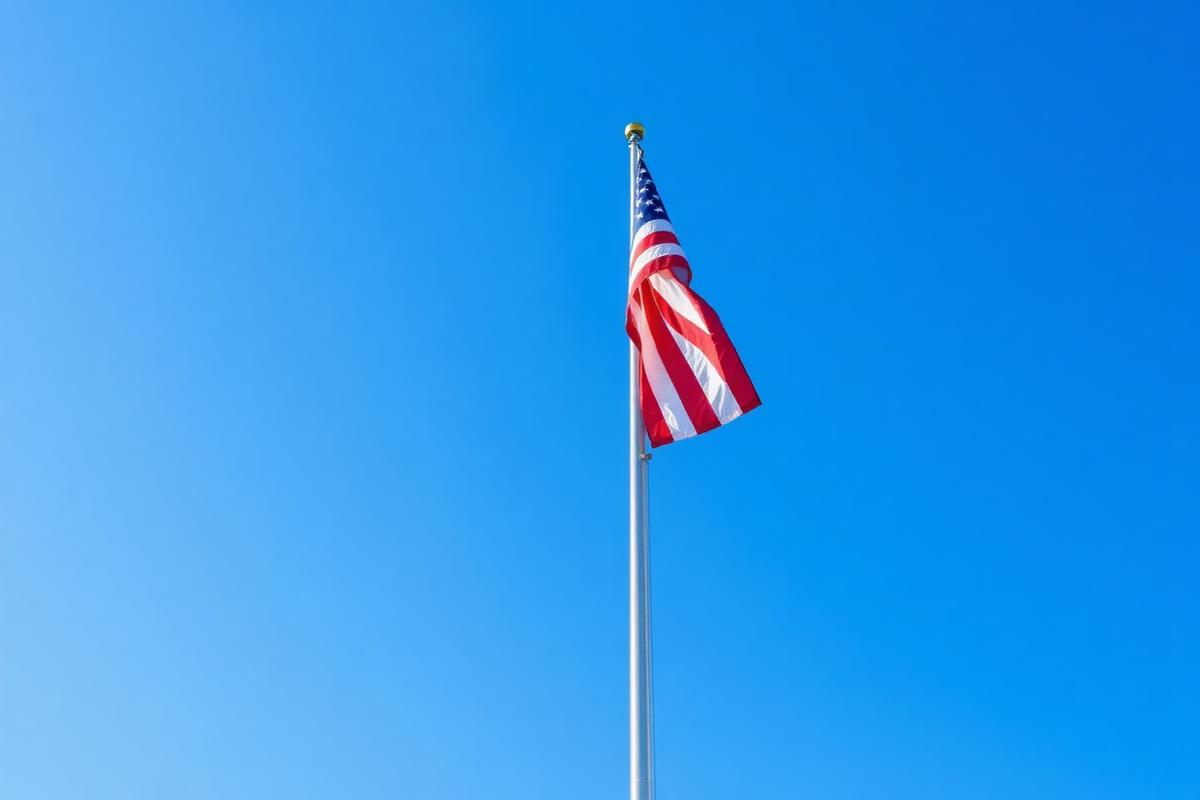
The United States Flag Code says the flag should be displayed from sunrise to sunset, or around the clock if it is properly illuminated at night. It should never touch the ground, should be raised briskly and lowered ceremoniously, and should be the highest flag on a shared pole.
When hung flat against a wall or in a window, the blue union of stars goes to the observer's upper left.
The Flag Code is federal guidance for civilians rather than a criminal statute, so there are no fines for households, but it is the standard nearly every organization follows.
Where the Rules Come From
The rules for displaying the American flag come from a single federal document rather than from local custom.
The Flag Code sits in Title 4 of the United States Code. It was adopted in 1942 and has been amended several times since.
It was written to standardize what had been a patchwork of local customs. It applies to civilians as advisory etiquette, while the military and federal agencies operate under stricter internal orders.
Courts have repeatedly held that flag display is expressive conduct protected by the First Amendment, which is why the code reads as a set of shoulds rather than penalties.
Time of Day and Lighting
The default is sunrise to sunset. Take the flag down at dusk unless you can light it.
If you want a 24 hour display, the code asks for the flag to be illuminated during darkness. In practice that means a small solar spotlight aimed at the flag, or a pole mounted light. The test is whether a passerby can recognize it as the flag at night.
Raise it briskly in the morning. Lower it slowly and deliberately at the end of the day. The difference is symbolic rather than practical, but it is the part most people get wrong.
Half Staff Protocol
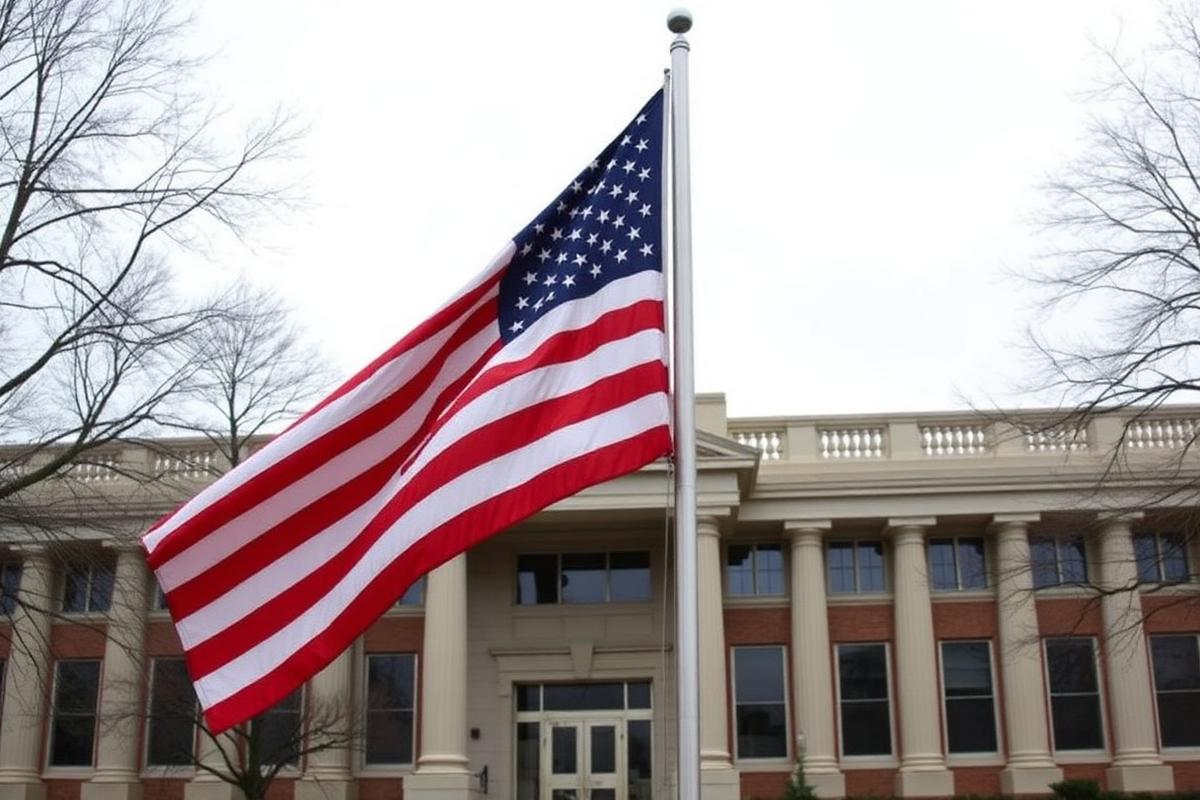
Half staff is ordered by the President for national observances, and by a state governor for that state. Individual households are not required to follow, but many choose to.
The procedure has a specific sequence. Raise the flag to full staff first, pause, then lower it to the halfway point. Reverse it at the end of the day: raise to full staff, pause, then lower fully.
Several dates carry standing half staff instructions, including Peace Officers Memorial Day on May 15, Patriot Day on September 11, and Pearl Harbor Remembrance Day on December 7.
Memorial Day is the exception with a split day. The flag flies at half staff until noon, then goes to full staff for the rest of the day.
If your pole cannot lower, the accepted alternative is a black mourning ribbon attached at the top of the staff.
Hanging the Flag Flat, in a Window or Over a Street
When the flag is displayed flat against a wall, either horizontally or vertically, the union of stars goes to the top and to the observer's left. That means for a vertical hang you rotate the flag so the stars end up top left from the viewer's side, not from yours.
In a window, orient it for the person on the street rather than the person inside.
Across a street, the union faces north on an east to west street, and east on a north to south street.
On a speaker's platform, the flag goes behind and above the speaker, or on the speaker's right if it is on a staff at floor level.
Flying With Other Flags
On a single halyard with state, city or organizational flags, the United States flag goes at the peak.
On separate poles of equal height, the United States flag is raised first and lowered last, and it goes to its own right, which is the observer's left.
No other flag should be placed above it on the same pole. The one traditional exception is the church pennant flown above the flag during religious services at sea by Navy chaplains.
Flags of other nations are flown on separate poles of equal height, never on the same halyard, as a mark of equal sovereignty.
Weather, Wear and Maintenance
The code says the flag should not be displayed in inclement weather unless it is an all weather flag. Modern nylon and polyester flags are treated as all weather, so this rule mostly affects older cotton flags.
Wind is the real enemy. A flag on an exposed coastal or hilltop pole can shred in a season. Rotating two flags extends the life of both considerably.
Repairing small fraying at the fly end is acceptable and common. Many households hem a torn flag rather than replacing it.
Wash a soiled flag on a gentle cycle or have it dry cleaned. The code specifically permits cleaning and mending.
Things the Code Advises Against
- Letting the flag touch the ground, floor, water or anything beneath it.
- Using it as clothing, bedding or drapery, or as a covering for a ceiling.
- Carrying it flat or horizontally, except when it drapes a casket.
- Placing marks, words, insignia or drawings on it.
- Using it as a receptacle for carrying or delivering anything.
- Using it for advertising, or embroidering it onto cushions and handkerchiefs.
Flag themed clothing is a common point of confusion. A patch or a lapel pin is treated as a respectful representation. An actual flag worn as a garment is not.
Retiring a Worn Flag
When a flag is no longer a fitting emblem for display, the code says it should be destroyed in a dignified way, preferably by burning.
Most people do not do this themselves. American Legion posts, Veterans of Foreign Wars posts, many Scout troops and a lot of local fire departments run retirement ceremonies and accept drop offs year round.
Some hardware and flag retailers also run collection boxes when they sell replacements.
If you do retire a flag at home, do it in a controlled fire, fold it first, and check local burn ordinances and air quality rules. Nylon flags produce heavy smoke, so many groups now use respectful cutting and burial for synthetic flags instead.
Folding the Flag
The familiar triangular fold starts by folding the flag in half lengthwise twice, with the union on the outside. Then you make repeated triangular folds from the striped end toward the union until only the blue field shows.
A correctly folded flag has no red or white visible and tucks its final flap inside the fold.
The thirteen folds have popular symbolic readings attached to them, but those readings are traditions added later and are not part of the Flag Code itself.
Frequently Asked Questions
Is it illegal to break the Flag Code?
No. For civilians it is etiquette, not enforceable law, and flag related expression is constitutionally protected.
Can I fly the flag at night?
Yes, if it is illuminated. A small solar light aimed at the flag satisfies the guidance.
Which side do the stars go on when I hang it on a wall?
The observer's upper left, whether you hang it horizontally or vertically.
Do I have to lower my flag to half staff when the President orders it?
Private citizens are not required to, but it is a common courtesy and most people do.
What do I do with a flag that is faded and torn?
Take it to an American Legion or VFW post, a Scout troop or a participating fire station for a retirement ceremony.
Can two national flags share one pole?
No. Flags of different nations are flown on separate poles of equal height.
Bottom Line
Fly it from sunrise to sunset or light it at night, keep it off the ground, put the stars to the observer's upper left when it is flat, and retire it with a local veterans post when it wears out.
Those five habits cover almost every situation a household will meet.