Quick Answer
A standard 12 fluid ounce can of classic cola contains about 140 calories, 39 grams of total sugars, 45 milligrams of sodium and 34 milligrams of caffeine. There is no fat, no protein and no fiber.
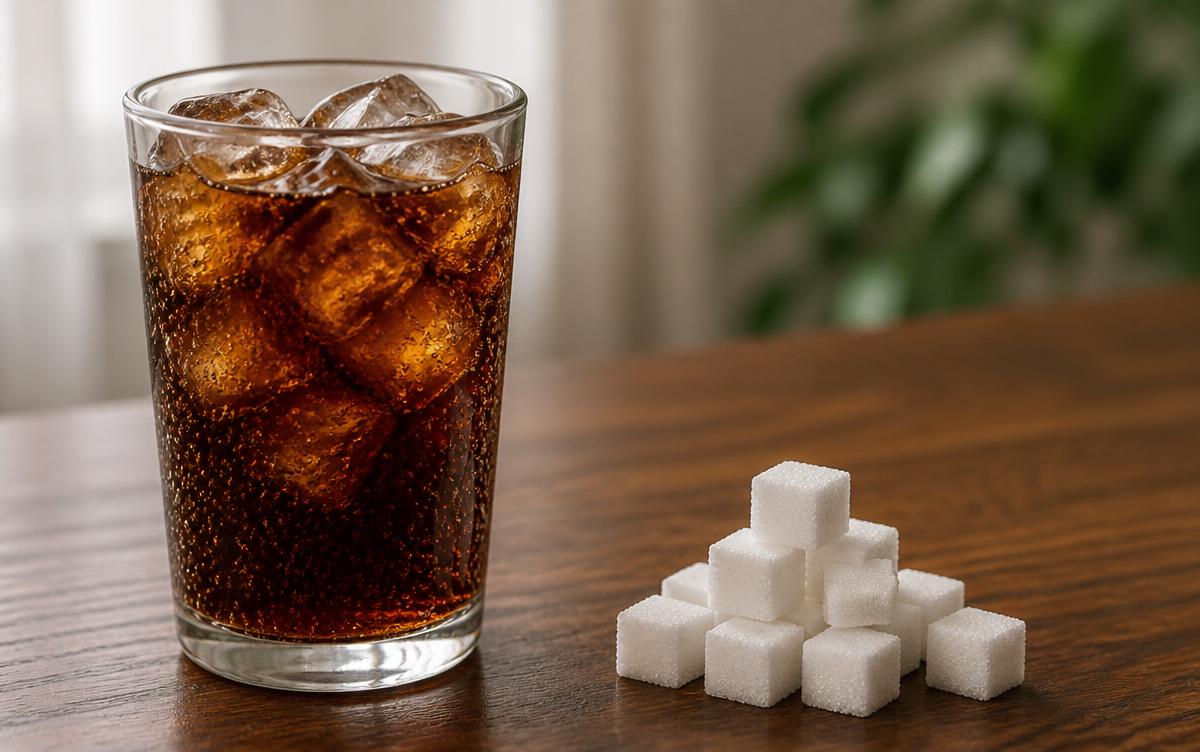
All 39 grams count as added sugar, which is close to ten teaspoons. That single can exceeds the American Heart Association daily added sugar suggestion for women and comes very close to the figure for men.
Diet and zero sugar versions declare zero or negligible calories and sugar, with slightly different caffeine and sweetener profiles depending on the variant and the country.
The nutrition facts Coke prints on the can are per serving, and in most single cans the serving equals the whole can, so the numbers you read are the numbers you drink.
The full panel for a 12 ounce can
The classic formulation is one of the simplest nutrition panels in the supermarket, because there is very little in it besides sugar water.
- Calories: 140.
- Total fat: 0 grams.
- Sodium: 45 milligrams, roughly 2 percent of the daily value.
- Total carbohydrate: 39 grams, all sugars.
- Total sugars: 39 grams, including 39 grams of added sugars, which is 78 percent of the daily value.
- Protein: 0 grams.
- Caffeine: 34 milligrams.
That 78 percent figure is the one worth pausing on. A single can uses up more than three quarters of the added sugar allowance the label itself is built around, before any food enters the picture.
How the sizes change everything
The can is the small format. Bottles scale the numbers up quickly and are frequently consumed in one sitting despite listing multiple servings.
A 20 fluid ounce bottle carries roughly 240 calories and 65 grams of sugar. A one litre bottle carries around 420 calories and 108 grams. A large fountain drink with ice varies with the ice, but a 32 ounce cup typically lands near 350 calories and 90 grams of sugar.
The 7.5 ounce mini can, at about 90 calories and 25 grams of sugar, exists precisely because portion size is the easiest lever. If you want the drink rather than the volume, it is the sensible format.
What 39 grams of sugar means in context
The World Health Organization recommends keeping free sugars below 10 percent of daily energy, with additional benefit below 5 percent. On a 2,000 calorie diet that is 50 grams and 25 grams respectively. One can sits at 39.
The American Heart Association is tighter still, suggesting a ceiling of about 25 grams a day for women and 36 grams for men. By that standard a single can exceeds the daily allowance for most adults.
The sugar in a soft drink is also unusual in how fast it arrives. There is no fiber, fat or protein to slow gastric emptying, so it reaches the bloodstream quickly and produces very little satiety. Liquid calories are poorly compensated for at later meals, which is the mechanism behind the consistent association between sugary drinks and weight gain in cohort studies.
Sugar, corn syrup and why the recipe varies
In the United States classic cola is typically sweetened with high fructose corn syrup. In the United Kingdom, Mexico and much of Europe it is sucrose from cane or beet.
Metabolically the difference is small. High fructose corn syrup used in soft drinks is roughly 55 percent fructose and 45 percent glucose, while sucrose splits almost evenly at 50 and 50 once digested. Health authorities generally treat them as equivalent added sugars, and the panel counts them identically.
Taste differences are real enough that people import the cane sugar version, but nutritionally the argument is about quantity rather than which sugar it is.
The diet and zero sugar versions
Both declare zero calories and zero sugar, and both replace sugar with high intensity sweeteners. Diet versions have traditionally used aspartame, while zero sugar formulations commonly blend aspartame with acesulfame potassium. Recipes differ by market and change over time.
Aspartame was classified in 2023 by the International Agency for Research on Cancer as possibly carcinogenic to humans, a hazard category that also contains aloe vera extract and pickled vegetables. At the same time the joint expert committee on food additives reaffirmed the acceptable daily intake of 40 milligrams per kilogram of body weight. For a 70 kilogram adult that is roughly the aspartame in more than a dozen cans a day.
Switching from sugar sweetened to zero sugar cola removes 140 calories and 39 grams of added sugar per can, which is a substantial and immediate improvement for anyone drinking several a day. Whether it is better than water is a different and much easier question.
Caffeine and the other ingredients
At 34 milligrams per can, cola contains roughly a third of the caffeine in a standard cup of coffee. Diet variants often run slightly higher, around 46 milligrams, and caffeine free versions exist for both.
Phosphoric acid provides the sharp tang and gives cola a pH around 2.5, similar to vinegar. That acidity, combined with sugar, is why dentists single out sipping soft drinks slowly through the day as particularly hard on enamel. Drinking with a meal and rinsing with water afterwards reduces the exposure.
Caramel colour, natural flavours and carbonated water complete the list. There is nothing else of nutritional consequence in the can.
Practical ways to cut back
Going straight from four cans a day to water usually fails. Stepping down works better.
Move to the mini can first, which cuts the sugar by a third without giving up the ritual. Then alternate: one cola, one sparkling water. Carbonation and cold turn out to be most of what people are actually attached to, which is why plain sparkling water with lime satisfies more people than flat water does.
Keep the drink for a specific occasion rather than as a default. A cola with a Saturday meal is nutritionally trivial across a week. A can with lunch every weekday is nearly 200 grams of added sugar and 700 calories, which is where the real cost sits.
Frequently asked questions
How many teaspoons of sugar are in a can of Coke?
About 9.75 teaspoons, since a teaspoon of sugar weighs roughly 4 grams and the can contains 39 grams.
Is Coke Zero the same as Diet Coke?
They have different flavour formulations and slightly different sweetener blends and caffeine levels, but both declare zero calories and zero sugar.
Does cola dehydrate you?
Not meaningfully at this caffeine level. The fluid outweighs the mild diuretic effect, though water remains the better hydration choice.
Is one can a day a problem?
One can supplies more added sugar than most daily guidance allows, so it is not ideal, but the rest of the diet matters far more than any single item.
Why does cola taste different in other countries?
Sweetener choice varies, with cane sugar common outside the United States and high fructose corn syrup common inside it, and local water and carbonation levels differ too.