Quick Answer
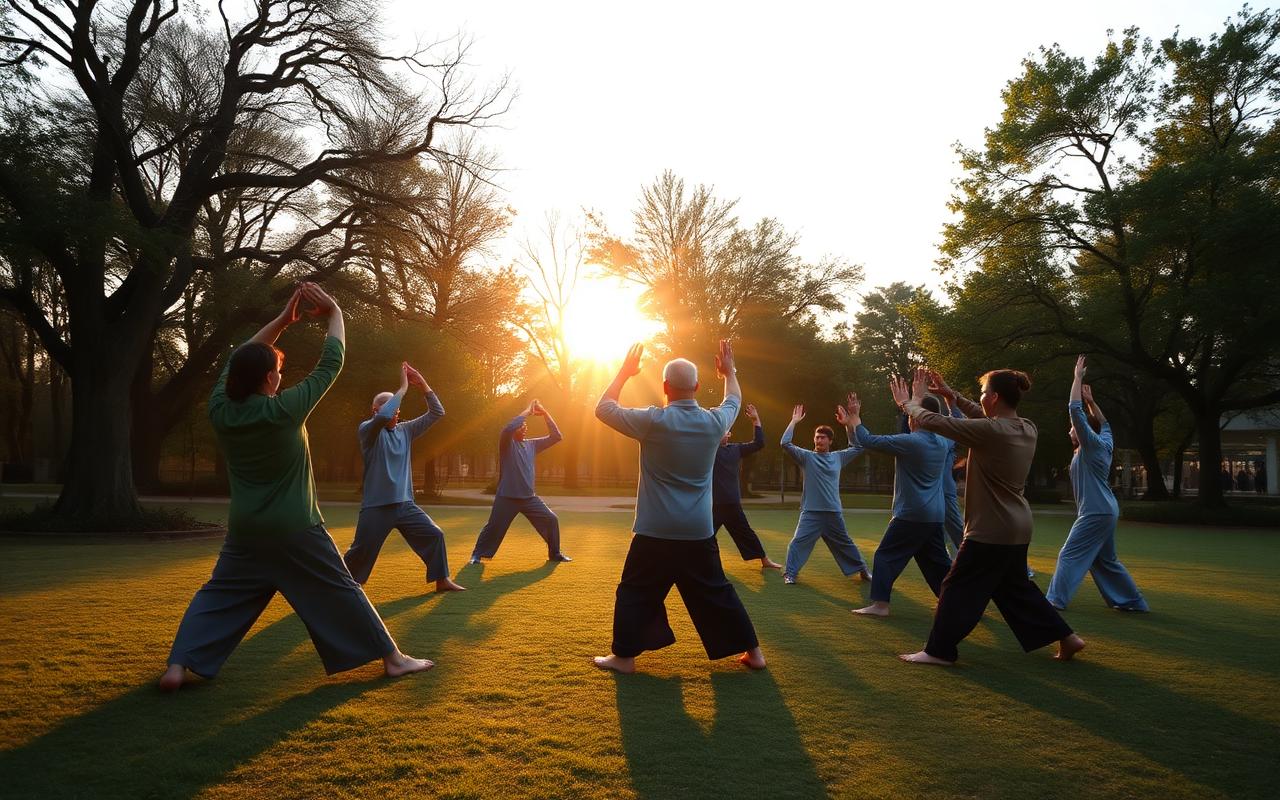
Baduanjin, often translated as the Eight Pieces of Brocade, is a centuries old Chinese Qigong routine made up of eight gentle, flowing movements coordinated with deep breathing. A full session takes about 15 to 20 minutes and needs no equipment.
Modern clinical research links regular Baduanjin practice with better balance and flexibility, improved cardiovascular and lung function, reduced blood pressure, lower anxiety and depression scores, and better sleep quality, particularly in middle aged and older adults.
It is low impact, easy to learn, and safe for most people including those recovering from illness, which is why it is used in hospital based wellness programs across China and increasingly worldwide.
What Is Baduanjin?
Baduanjin (pronounced bah dwan jeen) literally translates to "eight section brocade." Brocade was a rich, intricately woven silk fabric, prized for its smoothness and value. The name signals what the practice aims to be: a sequence of eight smooth, continuous movements that feel woven together.
The earliest written references date to the Song Dynasty (960 to 1279 AD), with legends linking the form to General Yue Fei, who reportedly used it to keep his soldiers strong and healthy. Today, the most widely taught version is the standardized Health Qigong Baduanjin form released by the Chinese Health Qigong Association in 2003.
The Eight Movements
Each movement is performed slowly, usually six to eight repetitions, with breathing in through the nose and out through the mouth or nose. Together they target different organ systems and energy meridians in traditional Chinese medicine theory.
- Two Hands Hold Up the Heavens. Regulates the Triple Burner, stretches the spine, improves posture.
- Drawing the Bow to Shoot the Hawk. Opens the chest, expands lung capacity, strengthens shoulders and arms.
- Separating Heaven and Earth. Harmonizes the stomach and spleen, stretches the side body.
- Wise Owl Gazes Backward. Releases neck and upper back tension, said to ease "five strains and seven impairments."
- Sway the Head and Shake the Tail. Calms excess "heart fire," strengthens the lower back and waist.
- Two Hands Hold the Feet to Strengthen the Kidneys and Waist. Stretches the hamstrings and spine, tonifies the kidneys.
- Clench the Fists and Glare Fiercely. Builds qi and physical power, energizes the liver.
- Bouncing on the Toes Seven Times. Closes the form, stimulates the spine and nervous system, settles the qi.
The Physical Benefits
The movements are slow but they are not passive. A full Baduanjin session loads the legs, opens the hips, mobilizes the spine in all six directions, and stretches the major fascial chains of the body.
Randomized controlled trials and systematic reviews published in journals like the Journal of Sport and Health Science and Evidence Based Complementary and Alternative Medicine consistently show improvements in:
- Balance and fall risk in adults over 60.
- Lower limb strength and proprioception.
- Spinal mobility and flexibility.
- Resting heart rate and blood pressure.
- Lung function measures including forced vital capacity.
The Mental Health Benefits
Baduanjin is a moving meditation. Synchronizing breath with movement pulls attention out of the default mode network (the part of the brain associated with rumination) and into the body. Several meta analyses have shown moderate reductions in symptoms of anxiety, depression and perceived stress after eight to twelve weeks of regular practice.
Sleep quality improves too. Pittsburgh Sleep Quality Index scores have improved significantly in trials with older adults and with patients recovering from chronic illness. The combination of gentle physical exertion, parasympathetic breathing and reduced rumination is a strong recipe for better sleep.
Who Should Practice Baduanjin
One of the reasons Baduanjin has spread well beyond China is that it is genuinely accessible. There are no impact loads, no inversions, no breath holds, and no equipment required. It suits:
- Older adults looking for safe balance and mobility work.
- Office workers who need to undo postural strain.
- Patients in cardiac rehab, pulmonary rehab and cancer survivorship programs.
- Anyone using high intensity training who needs a restorative counterbalance.
If you are pregnant, recovering from surgery, or have significant cardiovascular disease, check with your clinician before starting, and consider learning from a certified Health Qigong instructor.
How to Build a Daily Practice
The biggest mistake beginners make is treating Baduanjin like a workout to crush. It is not. Aim for consistency over intensity.
- Practice 15 to 20 minutes, ideally once in the morning and optionally once in the evening.
- Keep the spine long, the knees soft, and the shoulders relaxed.
- Breathe through the nose into the lower belly. Each repetition should ride one full inhale and exhale.
- Move slower than feels natural. The benefit is in the slowness.
- Follow a guided video for the first month so you learn the standardized sequencing.
How Baduanjin Compares to Tai Chi and Yoga
Tai chi is longer, more choreographically complex, and emphasizes martial application. Yoga has hundreds of styles, often involves more strength and flexibility demand, and uses static holds. Baduanjin sits between them: shorter than tai chi, more accessible than most yoga styles, and unmatched in terms of how quickly you can learn the full sequence.
For many people, Baduanjin is the easiest way to start a daily mind body practice and the easiest one to keep going for years.
The Takeaway
Baduanjin is one of the most studied, most teachable and most forgiving forms of mind body exercise on the planet. Twenty minutes a day, no equipment, no gym, and a stack of evidence behind it covering balance, blood pressure, sleep, anxiety and quality of life. If you have been looking for a sustainable wellness practice, the Eight Pieces of Brocade is a serious contender.
Frequently Asked Questions
How long does a Baduanjin session take?
About 15 to 20 minutes for the full eight movement sequence.
Do I need special equipment?
No. Loose clothing, flat shoes or bare feet, and a small floor space are enough.
How quickly will I see benefits?
Most studies show measurable improvements in flexibility, blood pressure and mood after 8 to 12 weeks of practicing 3 to 5 times per week.