Quick Answer
To enter Canada in 2026, most visa exempt foreign nationals arriving by air need a valid Electronic Travel Authorization (eTA) linked to their passport. Visa required nationals need a full Temporary Resident Visa (TRV). U.S. citizens are exempt from both and only need a valid U.S. passport (or an enhanced driver's licence at a land port).
Beyond documents, the Canada Border Services Agency (CBSA) screens every traveler for criminal admissibility (a past DUI is a common refusal trigger), proof of funds, and ties to your home country. Filing an advance declaration in the ArriveCAN app within 72 hours of landing routes you through an express lane at major airports.
Foundational Documents: eTA, TRV, or Neither
Canada splits inbound travelers into three buckets, and the wrong document is the most common reason people get turned around at the gate before they ever board a flight.
Visa exempt foreign nationals (citizens of the United Kingdom, Australia, the European Union, Japan, South Korea, and several dozen other countries) must hold a valid eTA before boarding any flight to Canada. The eTA is filed online, costs 7 CAD, and is normally approved within minutes. It links electronically to the passport you travel on, so if you renew your passport you need a new eTA.
Visa required foreign nationals (citizens of India, China, Nigeria, Brazil, and most of South America, Africa, and South Asia) must apply for a Temporary Resident Visa (TRV) through an IRCC visa application centre. TRVs require biometrics, a full purpose of travel package, and often take several weeks to process.
U.S. citizens do not need an eTA or a TRV. A valid U.S. passport is enough by air, and at land or marine ports of entry an enhanced driver's licence (EDL) from a participating state, a NEXUS card, or a U.S. passport card all work. Important nuance: U.S. permanent residents (Green Card holders) traveling by air do need an eTA linked to the passport from their country of citizenship.
The ArriveCAN Advance Declaration
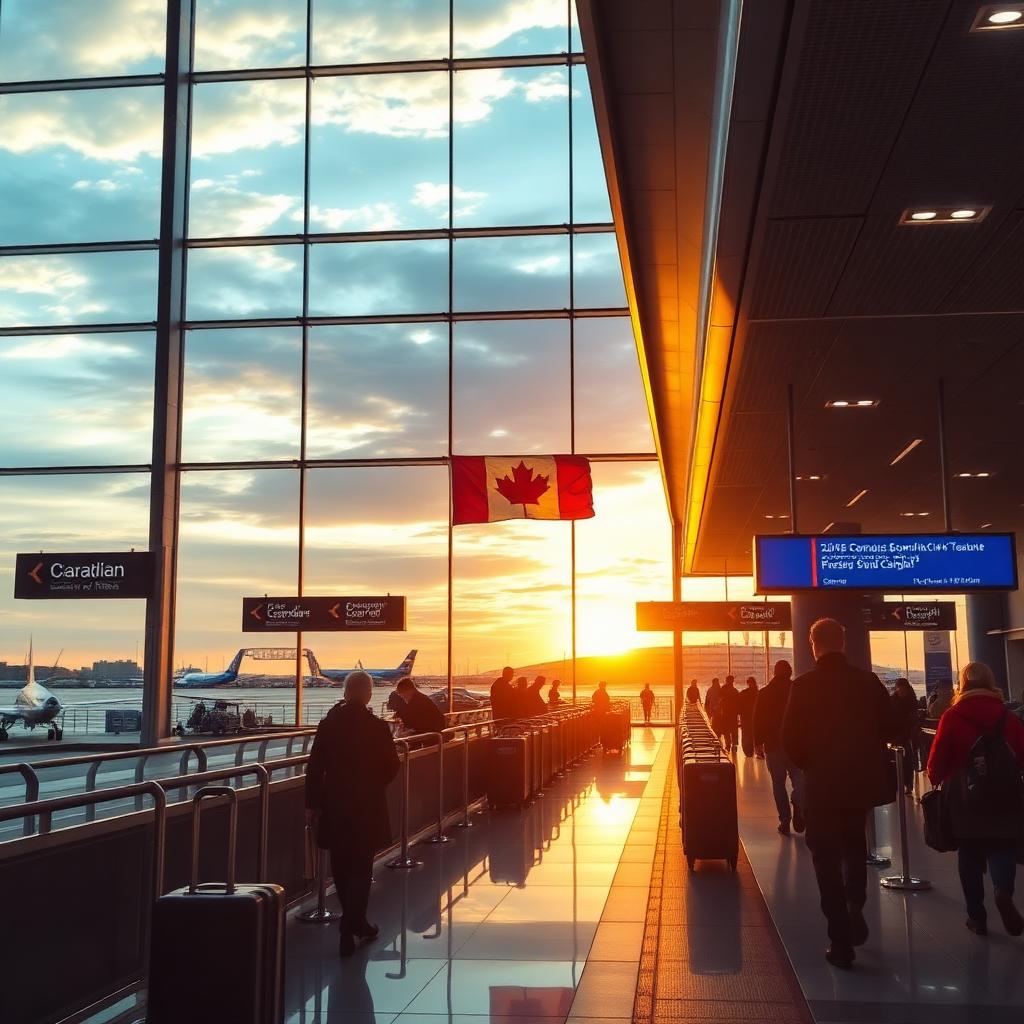
CBSA encourages travelers landing at Toronto Pearson (YYZ), Vancouver (YVR), Montreal Trudeau (YUL), Calgary (YYC), Ottawa (YOW), Quebec City (YQB), Winnipeg (YWG), Halifax (YHZ), and Edmonton (YEG) to submit a customs and immigration declaration in the ArriveCAN app up to 72 hours before landing.
It is no longer mandatory the way it was during the pandemic, but it still gives you a real benefit: dedicated express kiosks that scan your passport, match your face, and print a receipt in roughly thirty seconds. The unofficial estimate from CBSA is that advance declaration travelers clear primary inspection 30 to 40 percent faster on average.
Criminal Inadmissibility (Including a Single DUI)
Canada enforces some of the strictest criminal admissibility rules in the developed world. Under the Immigration and Refugee Protection Act, a single past conviction can render you inadmissible even if the offence is minor at home.
The most common trip up is a past DUI, DWI, or OVI conviction. Since the 2018 Bill C 46 reforms, simple impaired driving in Canada carries a maximum sentence of 10 years on indictment (and impaired driving causing death now carries a maximum of life imprisonment under section 320.21 of the Criminal Code). Either way it qualifies as "serious criminality" for immigration purposes, so even one DUI from years ago can get you refused at the border with no warning.
There are three formal remedies:
- Deemed rehabilitation may apply automatically if your single non serious conviction was completed more than 10 years ago, but it never applies to DUIs after 2018.
- Criminal rehabilitation is a formal application (246.25 CAD for non serious "criminality" and 1,231 CAD for serious criminality, per the current IRCC fee schedule) submitted to a Canadian consulate. Processing runs 12 to 24 months but the clearance is permanent.
- Temporary Resident Permit (TRP) is a one off pass for urgent travel. It can be applied for at the border but approval is at the officer's discretion and not guaranteed.
If you have any criminal record, sort the paperwork before you book a flight. Showing up at YYZ hoping for the best is how people end up on the next plane home.
What CBSA Officers Actually Ask
Even with the right documents, primary inspection is a real interview. Officers have absolute discretion to deny entry, and the questions cluster around three areas:
- Purpose and length of visit. Be specific. "Visiting my friend Sarah in Toronto from June 5 to June 12 then flying home" lands better than "just travelling around."
- Financial self sufficiency. You should be able to demonstrate access to enough money to cover lodging, food, and a return ticket. A credit card with available balance and a return flight booking is usually enough.
- Ties to your home country. Officers want to see that you have reasons to leave: a job, a lease, family, school enrolment. The risk profile they care about is overstay.
You also need to declare cash and equivalents totalling 10,000 CAD or more, alcohol over your personal exemption (1.5 L of wine, 1.14 L of spirits, or 8.5 L of beer per adult), and any commercial goods or food products. Failing to declare is a much worse problem than the duty itself.
Land Border vs Air Travel Differences
Most rules above apply to both, but a few specifics shift at land crossings. eTAs are not required by land or sea, only by air. U.S. citizens can use an EDL, NEXUS card, or passport card at land ports but only a full passport in the air. CBSA also runs roving secondary inspection at land borders far more often than at airports, so be ready to step inside the building and have your vehicle searched without it meaning anything is wrong.
The Takeaway
Canada's border system in 2026 is heavily digitized but unforgiving. Get the right document for your citizenship (eTA for most visa exempt fliers, TRV for visa required nationals, nothing extra for U.S. citizens), file an ArriveCAN advance declaration if you are landing at a major airport, and clear any past criminal record long before you book your trip. Show up with a specific itinerary, proof of funds, and clear ties to home, and the average traveler is through CBSA primary inspection in under a minute. Skip any of those steps and even a tourist trip can end at the gate.