Quick Answer
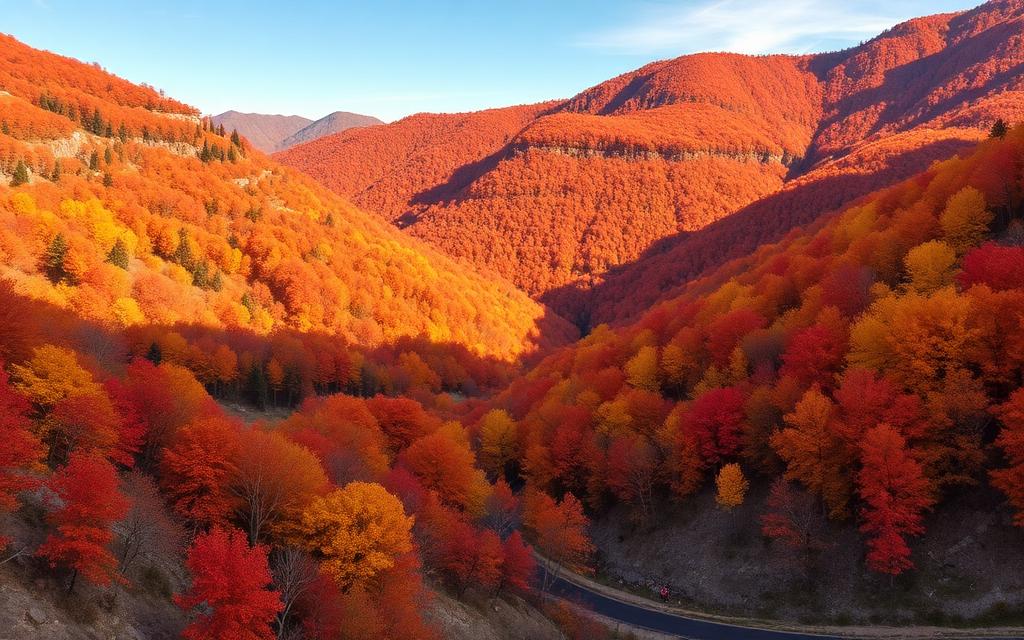
Peak color moves from north to south and from high elevation to low. Northern New England and the high Rockies usually turn from late September, the mid-Atlantic and Great Lakes through mid October, and the southern Appalachians and lower elevations into early November.
Elevation shifts timing as much as geography. Driving up a mountain road in October can move you two weeks forward in the season within half an hour.
The reliable planning trick is to book a base with a range of elevations nearby, then choose the day's route once you can see what has actually turned.
What Actually Triggers the Color
Shortening day length is the primary signal. As nights lengthen, trees stop producing chlorophyll, the green pigment fades, and the yellows and oranges already present in the leaf become visible. Reds are different: they come from pigments produced in autumn, which is why red display varies so much year to year.
Weather modulates the show rather than scheduling it. A run of warm sunny days followed by cool nights above freezing tends to produce the most vivid reds. Drought stress can bring color early and drop leaves fast. A single hard freeze or a wind-driven rainstorm can end a display in a day.
Rough Timing Bands
| Region | Typical peak window | Notes |
|---|---|---|
| Northern New England, upper Midwest | Late September to early October | Earliest reliable color in the east |
| High Rockies, aspen country | Mid to late September | Short, intense golden window |
| Mid-Atlantic highlands, Great Lakes | Early to mid October | Broad window, good weekend flexibility |
| Southern Appalachians | Mid October to early November | Elevation spread gives weeks of color |
| Lowland South and Pacific coastal valleys | Late October into November | Later and often more subdued |
Treat these as bands rather than dates. Any given year runs early or late by a week or more, which is why a trip booked in July around a fixed weekend is a gamble and a trip booked around a flexible base is not.
Elevation Is Your Best Tool
Color generally arrives at higher elevations first and works downhill. In mountain regions that means a single valley can offer bare summits, peak color at mid elevation and still-green lowlands on the same morning.
Plan trips around a road or trail network that spans a good elevation range. If the ridgetops have already dropped, drive lower. If the valleys are still green, drive higher. That flexibility is worth more than any forecast.
How to Time the Booking
Foliage regions sell out. Lodging in popular corridors is often booked months ahead for the traditional peak weekends, at prices well above the shoulder rate.
- Book lodging early with a free cancellation policy, so you hold the room without committing to the week.
- Choose midweek where you can. The same color costs less and comes with far fewer cars.
- Base yourself in a town with several valleys within an hour, rather than in the single most famous one.
- Check state or park foliage reports in the final week and set the itinerary then.
- Have a rain plan, since overcast light is actually flattering for photographs but miserable for long drives.
Driving the Routes Without the Traffic
Scenic byways in peak season behave like city commuter roads. Popular overlooks fill by mid morning and the queue to park can outlast the good light.
Start at sunrise. The first two hours give you soft light, empty overlooks and parking. By late morning the crowd arrives, which is the moment to switch to a trail rather than a viewpoint. Late afternoon light returns the color to its best just as the day-trippers head home.
Fuel up the night before in peak areas, carry water and snacks, and expect cell coverage to be patchy in exactly the valleys you most want directions for. Download offline maps before you leave the hotel.
Photographing It Properly
Overcast days saturate color and remove harsh shadows, so a grey morning is a gift rather than a write-off. Backlit leaves photographed towards the sun glow in a way that front-lit leaves never do. A polarizing filter cuts the sheen off wet foliage and deepens the sky.
Include something for scale: a trail, a fence line, a person in a dark jacket. A wall of orange with no anchor reads as a texture rather than a landscape.
If You Arrive After Peak
A late trip is not a failed trip. Bare upper slopes usually mean lower elevations are still lit up, and the tail of the season brings oaks and beeches into their bronze and russet phase after the maples have gone.
Post-peak also brings quieter trails, easier parking, cheaper rooms and better wildlife viewing. Adjust the plan downhill and southward and there is almost always color within an hour's drive.
Building a Weekend Around the Color
The trips that work best treat foliage as the backdrop rather than the entire itinerary, because a display that peaks a few days early or late then costs you nothing.
Pick a base town with a working main street, a couple of restaurants that stay open past eight, and access to at least two different valleys. Spend the mornings on scenic drives and short walks, the middle of the day on something indoors like a market, a museum or a cider house, and the late afternoon back outside when the light softens again.
Pack for three seasons in one day. Foliage weekends routinely start below freezing at a mountain overlook and finish in shirtsleeves in a valley town, and a thermos of something hot at a 7am viewpoint is the difference between a memorable morning and a short one.
Book dinner ahead in small towns during peak weeks. Restaurant capacity in foliage corridors does not scale with visitor numbers, and a two hour wait at the only open kitchen is the most common complaint of the season.
Frequently Asked Questions
When does fall foliage peak?
Late September in the far north and high elevations, mid October across much of the middle latitudes, and into November in the south and lowlands.
What weather makes the best colors?
Warm sunny days with cool nights above freezing. Drought and early hard freezes shorten the display.
Does elevation change the timing?
Substantially. Higher ground turns first, so driving uphill moves you forward in the season.
How far ahead should you book?
Months ahead for peak weekends in popular corridors, ideally with free cancellation.
Is midweek really better?
Yes, on price, parking and traffic. The color does not know what day it is.
What if the leaves have already dropped?
Head lower or further south, where the same season is usually running a week or two behind.