Quick Answer
The travel hacks worth your attention are the small, repeatable ones that compound across every trip. Drop an AirTag in every checked bag. Roll your clothes instead of folding them and add packing cubes. Use a fee free debit card like Charles Schwab or Wise for ATM withdrawals. Pick seats near the front for short connections and near an exit row for short legs. Travel on Tuesdays and Wednesdays when you can. Almost everything else is noise.
Below are the hacks I use on every trip and a few smaller ones that pay off more often than they sound like they should.
Bag tracking: AirTags and Tile
Every checked bag should have an Apple AirTag or a Tile or a Samsung SmartTag inside. They are cheap, they last about a year on a single battery, and they give you independent location data that is often more accurate than the airline's own tracking. When a bag gets misrouted, you can show the agent exactly which airport it sat in and which terminal it is currently in, which dramatically speeds up recovery.
Major airlines including Delta, United, Lufthansa, and British Airways now formally accept AirTag location data when processing lost bag claims. The hack is no longer a hack. It is becoming the standard.
Packing: roll, cube, and compress
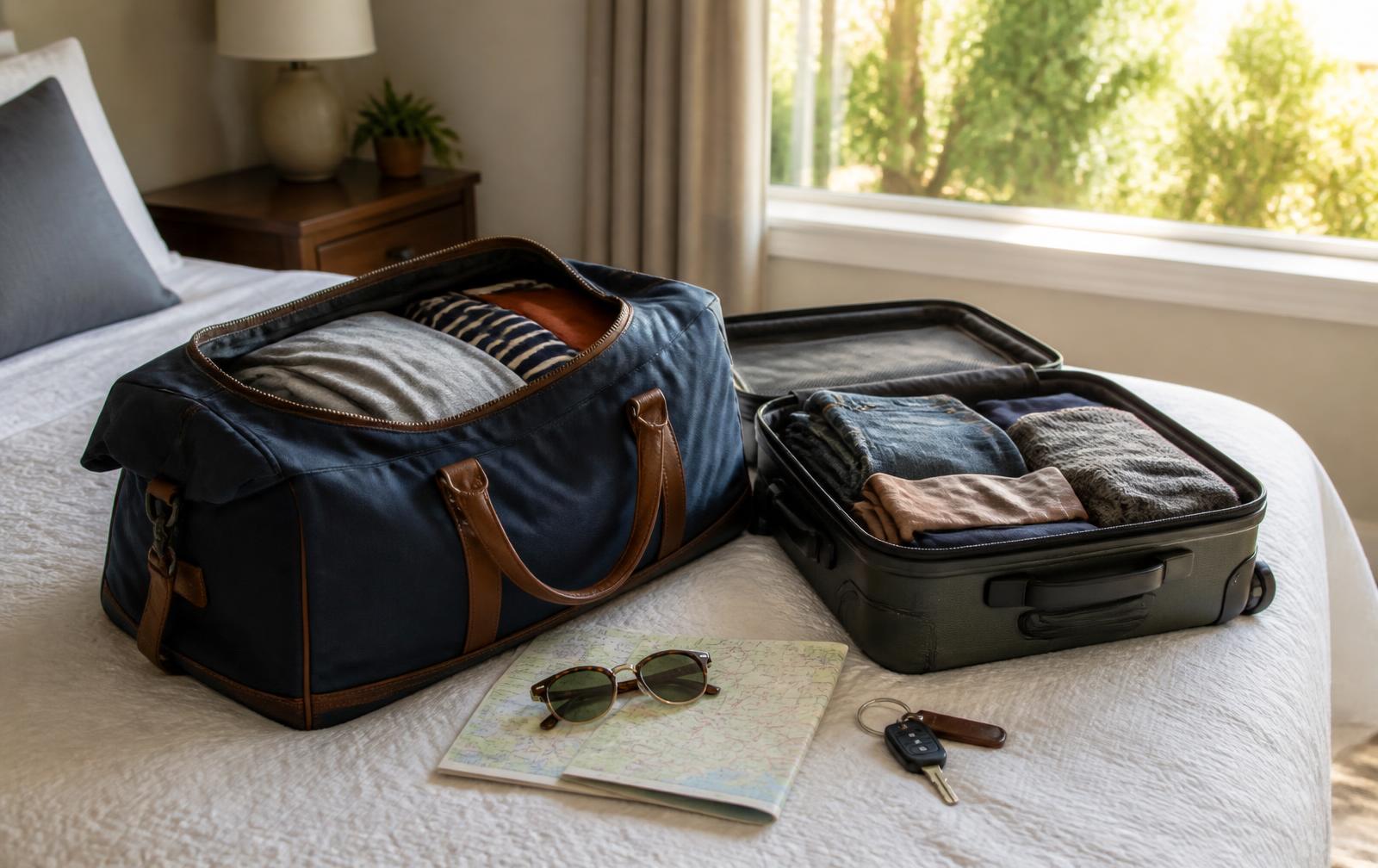
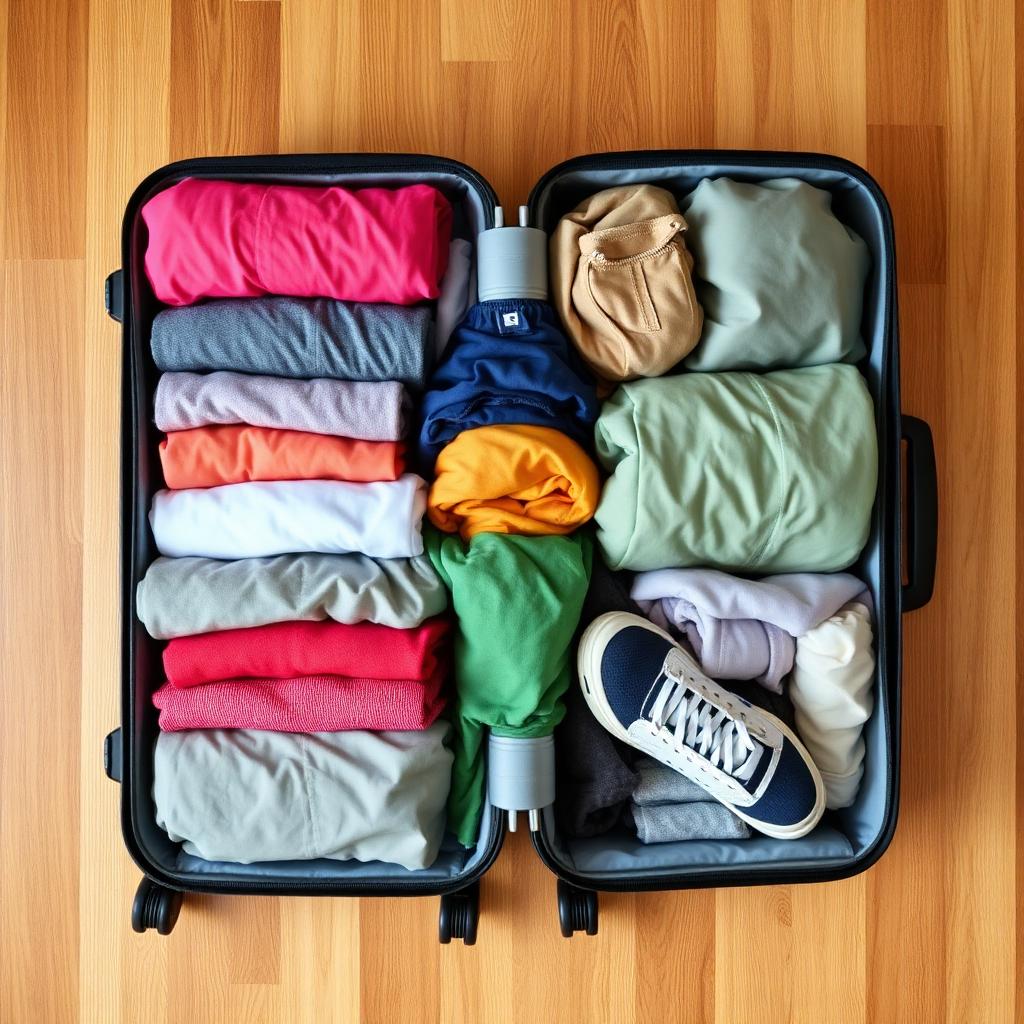
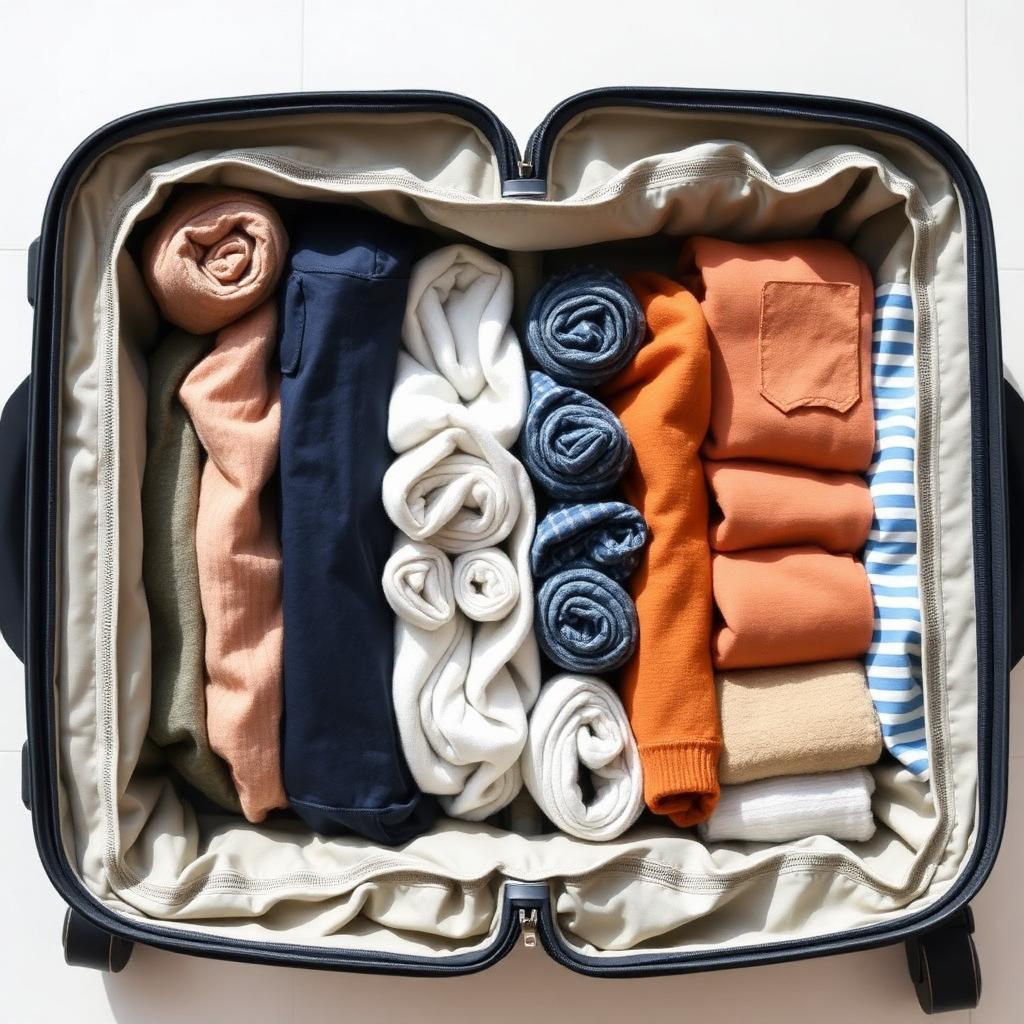
Rolling clothes tightly instead of folding them flat reduces volume by about thirty to forty percent and almost eliminates wrinkles in soft fabrics like T shirts, underwear, and lightweight pants. Add packing cubes to keep each category separate and your suitcase becomes a stack of small drawers rather than a chaotic pile.
Compression packing cubes from brands like Peak Design and Eagle Creek take this a step further by squeezing out trapped air. They are particularly useful for bulkier items like jumpers, fleece layers, and jeans. The trade off is a slightly heavier bag, since you have used the freed space to bring more.
Money: fee free cards and ATM choice
Foreign transaction fees, ATM withdrawal fees, and bad exchange rates quietly take three to seven percent off your travel budget if you do not plan around them. Two simple fixes solve it.
- A credit card with no foreign transaction fees. Many travel rewards cards include this. Use it for almost all spending and pay it off monthly.
- A debit card with global ATM fee reimbursement. The Charles Schwab High Yield Investor Checking account refunds every ATM fee worldwide. Wise and Revolut also offer near interbank rates with no hidden conversion margin.
Use bank ATMs in the local currency, never the airport currency exchange counters. Always decline the dynamic currency conversion option that asks if you want to be charged in your home currency. It always gives you a worse rate.
Flight selection: seats, days, and routes
The cheapest day of the week to fly is usually Tuesday or Wednesday. The most expensive is Friday or Sunday. Building your trip around weekday departures and returns saves real money on most routes.
For seat selection, three small habits help. Pick seats in the first ten rows when you have a tight connection so you can get off the plane fast. Pick an exit row or bulkhead for extra legroom on long flights. Avoid the last row, where seats often do not recline and are closest to the toilets. If you are flying with a partner on a less full flight, book the aisle and the window of the same row and leave the middle empty, since it is the least likely seat to be selected by another traveller.
Time zones: shift early
Jet lag is mostly a sleep schedule problem. The single most effective hack is to set your watch to the destination time the moment you board the flight and start sleeping or staying awake on that schedule immediately. On arrival, get outside in daylight as soon as possible and avoid napping for more than thirty minutes for the first day or two. Apps like Timeshifter give you a personalised plan based on your flight and your home schedule.
Airports: the moves that save real time
- TSA PreCheck, Global Entry, Clear, or your country's equivalent. If you fly more than a few times a year, the time saved at security pays for the membership within the first year.
- Mobile boarding passes plus a paper backup. The mobile pass is faster at the gate. The paper pass is your safety net if your phone dies.
- The far end of the security line. The line on the far right or far left is almost always shorter than the one straight ahead of the entrance.
- Lounge access via credit card. The Priority Pass that ships with several travel credit cards covers hundreds of lounges worldwide and pays for the annual fee in a few uses.
Health and safety
- Travel insurance. The single highest value purchase you can make for any international trip. A few hundred dollars covers medical emergencies that could otherwise cost a hundred thousand or more.
- A small first aid kit. Paracetamol, ibuprofen, plasters, antihistamines, electrolyte sachets, and any prescription medication in original packaging.
- A photocopy and a phone photo of every important document. Passport, visa, insurance policy, vaccination certificate. Store in your cloud drive and accessible offline.
- A backup credit card stored separately from the main one. If a wallet is stolen, you can still pay for a hotel and a flight home.
The small ones that punch above their weight
- Take a photo of your packed luggage. If it is lost, you can describe it accurately.
- Carry an empty water bottle through security and fill it after.
- Pack one full outfit and a phone charger in your carry on, even if you check a bag.
- Wear your heaviest jacket and shoes on the plane to save suitcase weight.
- Use the airline app, not the airport monitors, to check your gate. The app updates faster.
- Save your hotel address in the local language as a screenshot you can show a taxi driver.
- Always book the first night of accommodation in advance, even if you like to wing the rest.
The takeaway
The best travel hacks are not clever one off tricks. They are small habits that you apply every single trip until they become second nature. Track every checked bag, roll and cube your clothes, choose the right cards, time your flights to weekdays, and shift your sleep schedule on the plane. Add a half dozen of the small habits above and your trips will simply work better, without you having to think hard about it.
Frequently asked questions
Is it legal to put an AirTag in checked luggage?
Yes. Major airlines and aviation authorities including the FAA and EASA have confirmed that AirTags are safe and permitted in checked baggage. Their batteries are well below the limits set for lithium devices.
What is the single most useful travel hack?
Buy travel insurance. It is the one purchase that protects you from financially serious events like medical emergencies, evacuations, and major trip cancellations.
Are packing cubes really worth it?
For most travellers, yes. They make packing and unpacking faster, keep clean and dirty laundry separate, and let you find what you need without unpacking the whole bag.
How far in advance should I book international flights?
Roughly two to six months before departure for most routes. Use Google Flights price tracking and Hopper price predictions to monitor your specific route and book when the price dips.