Quick Answer
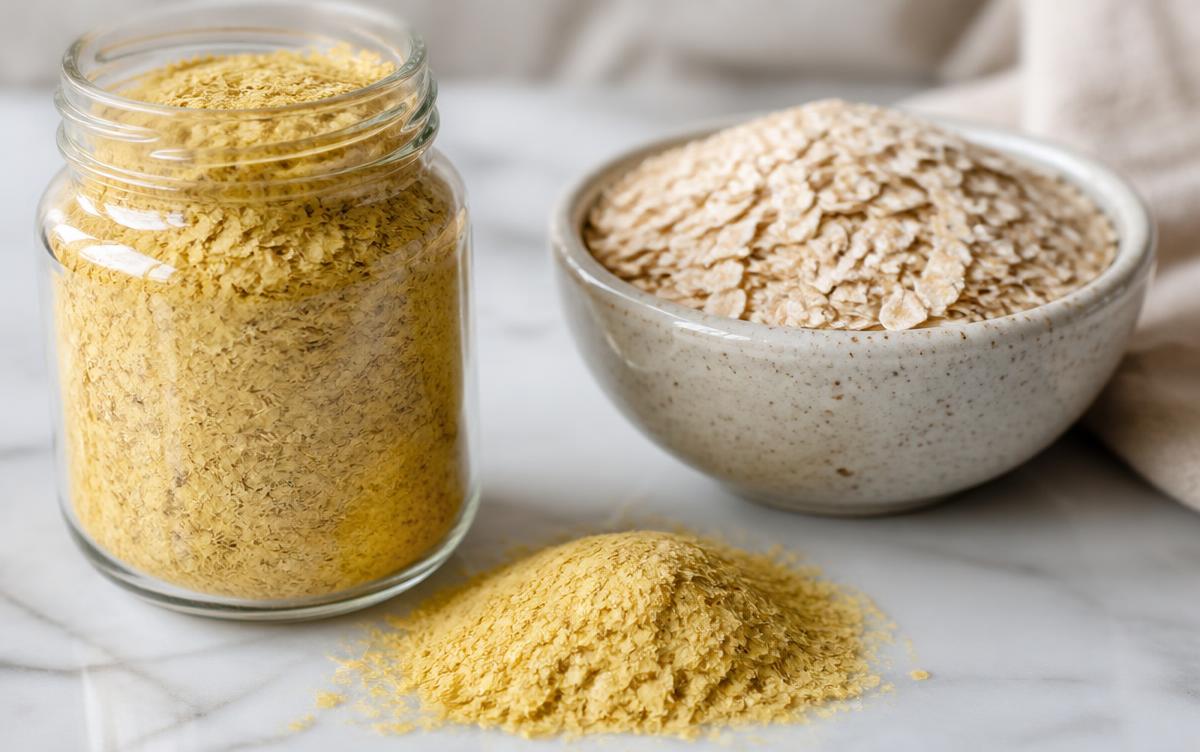
Nutritional yeast itself is gluten free. The yeast is grown on sugar, usually cane or beet molasses, not on wheat, barley or rye, so nothing in the organism carries gluten.
The risk sits entirely with the growing medium and the packing facility. A small number of products are grown on barley derived media, and shared equipment can introduce traces.
If you have coeliac disease, buy a tub that carries a certified gluten free mark and states the source of the medium. If you are simply reducing gluten, almost any mainstream nutritional yeast is fine.
Why people ask the question at all
The confusion comes from beer. Brewer's yeast, the by product of brewing, is grown on barley wort. Barley contains gluten, and residual protein from the wort clings to the yeast cells, so brewer's yeast is generally treated as not gluten free.
Nutritional yeast is the same species but a completely different production route. It is grown deliberately in tanks on a purpose made sugar solution, harvested, washed, pasteurised and dried. Barley never enters the standard process.
Because both products are yellow powders sold in health food aisles, the reputation of one attaches itself to the other. The two are not the same thing and should not be judged by the same standard.
What nutritional yeast is grown on
The overwhelming majority of commercial nutritional yeast is grown on molasses, a by product of sugar cane or sugar beet refining, diluted and supplemented with nitrogen and minerals.
Neither cane nor beet contains gluten. A yeast cell fed on that medium has no route to acquiring the gliadin or hordein proteins that trigger coeliac disease.
There are exceptions. A minority of producers, particularly those recovering yeast from brewing streams or using cereal derived sugars, work with barley based media. Those products may state that they are grown on a barley medium, and they are the ones to avoid if you are strictly gluten free.
The practical takeaway is simple: read the ingredient statement. If it says yeast, or dried yeast, plus added vitamins, you are almost certainly looking at a molasses grown product.
What the certification actually promises
In the United States, a gluten free claim on a package is regulated and means the food contains less than 20 parts per million of gluten. In the European Union and the United Kingdom the same 20 parts per million threshold applies.
Third party certification marks go further by auditing the facility and testing finished batches rather than relying on the manufacturer's own assessment. For coeliac disease, that extra layer is worth paying for.
An absence of a gluten free claim does not automatically mean the product contains gluten. Small producers often skip certification because of cost. It does mean nobody has tested and guaranteed the number, which is the part that matters clinically.
Cross contamination in the real world
Most contamination risk arises after the yeast is dried. Bulk bins in shops are the worst offender: shared scoops move between flour, oats and yeast flakes all day, and a single dusty scoop transfers more than any tank ever would.
Packing lines are the second consideration. A facility that also handles wheat based products can leave traces unless it runs validated cleaning between runs. Certified brands document this. Uncertified ones often do not mention it either way.
At home the same principle applies. If someone in the house dips a crumb covered spoon into the tub after buttering toast, the tub is no longer safe for a person with coeliac disease. Keep a dedicated spoon and pour rather than dip.
Fortified, unfortified and the vitamin carriers
Fortified nutritional yeast has B vitamins sprayed on after drying. Those vitamin premixes use carriers, and in theory a carrier could be cereal derived, although in practice maltodextrin from corn or a simple starch is standard.
Maltodextrin sometimes worries people because the name sounds like malt, which is barley. In food labelling terms, maltodextrin is almost always made from corn, rice, potato or tapioca, and in the United States a wheat derived maltodextrin would have to be declared as a wheat allergen.
Unfortified nutritional yeast avoids the question entirely but also contains no meaningful B12, so you trade one consideration for another. Choose based on what you actually need from the tub.
How to shop for it safely
A short checklist covers almost every case.
- Look for a certified gluten free mark rather than an unverified claim
- Prefer sealed packaging over bulk bins
- Read the ingredient list for any mention of barley or malt
- Check the allergen statement for a shared facility warning
- Contact the producer if the label is silent and you have coeliac disease
Prices vary widely, and the certified options are usually only marginally more expensive per gram once you compare tub sizes rather than headline prices.
Using it in a gluten free kitchen
Nutritional yeast earns its place in gluten free cooking because it restores savoury depth that often disappears when wheat goes. Gluten free pasta, bread and pastry tend to taste flatter, and a savoury booster helps.
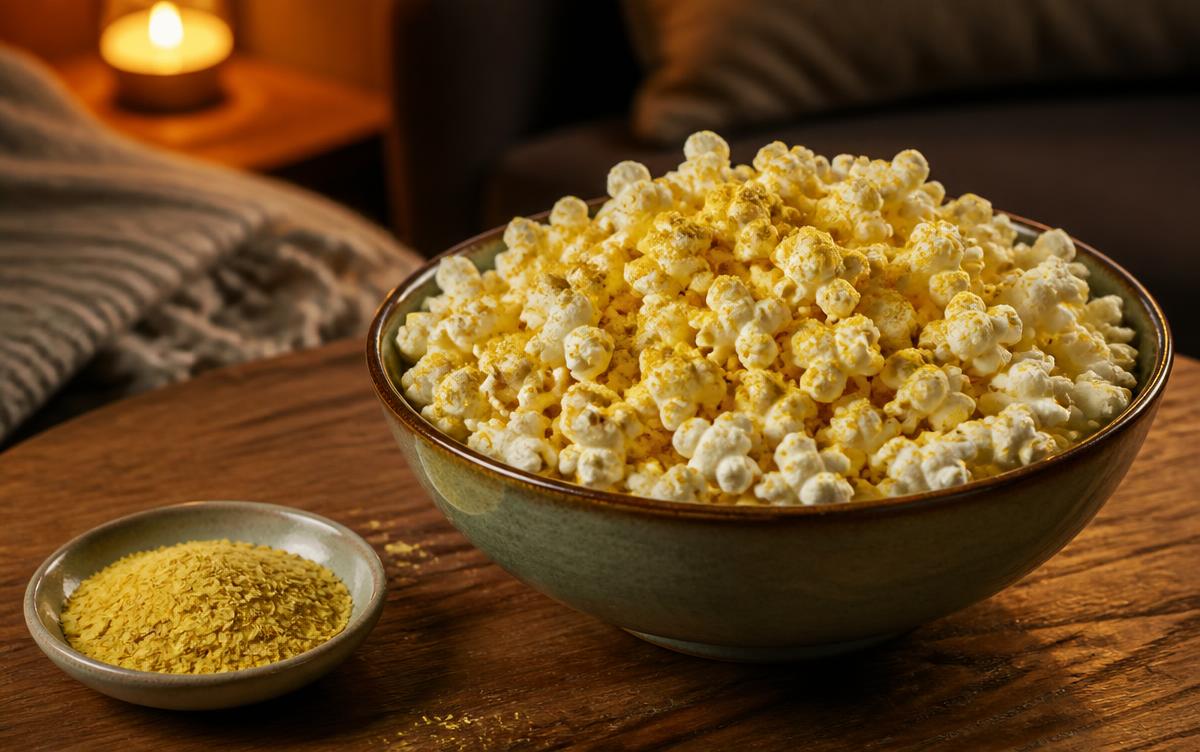
Stir it into a white sauce made with cornflour for a cheese style topping. Fold it through gluten free breadcrumb mixes before baking. Whisk it into soups and stews near the end of cooking. Dust it over warm popcorn with a light coat of oil so it clings.
It also works as a partial salt replacement. Because the umami hit reads as savoury on the palate, many people find they need noticeably less salt in a sauce once nutritional yeast goes in.
Storage and shelf life
Keep the flakes in an airtight opaque container away from heat and steam. A cupboard on the far side of the kitchen beats a shelf above the cooker.
Properly stored, flakes hold their flavour for one to two years. Fortified vitamins fade gradually with light exposure, which is another argument for an opaque tub rather than a clear jar on a sunny worktop.
Discard the tub if moisture gets in and the flakes clump, and never return a used spoon to the container in a mixed household.
The bottom line
Nutritional yeast is gluten free by nature because it is grown on sugar, not grain. The exceptions are barley grown products and cross contamination from shared equipment or bulk bins.
For casual gluten reduction, any mainstream tub is fine. For coeliac disease, buy certified, buy sealed and keep a dedicated spoon, and you can use it as freely as anyone else.