Quick Answer
Aim for less than 2,300 milligrams of sodium a day, which is about one level teaspoon of salt. That is the ceiling in the Dietary Guidelines for Americans and it lines up with the NHS limit of 6 grams of salt.
The American Heart Association goes further and suggests an ideal of 1,500 milligrams a day, particularly for people with high blood pressure. The World Health Organization recommends under 2,000 milligrams.
Average intake in most Western countries sits around 3,400 milligrams, and roughly 70 percent of it arrives already inside packaged and restaurant food rather than from your own salt shaker.
Sodium and salt are not the same number
Salt is sodium chloride, and sodium makes up about 40 percent of it by weight. To convert, multiply sodium in grams by 2.5 to get salt, or divide salt by 2.5 to get sodium.
So the NHS limit of 6 grams of salt equals 2,400 milligrams of sodium, which is essentially the same target as the American 2,300. Any apparent disagreement between the two systems is a unit problem, not a scientific one.
American labels list sodium. British and European labels list salt. Knowing the 2.5 factor lets you read either without hunting for a converter.
Where it actually comes from
Cooking salt and table salt together account for a minority of intake. The big contributors are bread and rolls, cured meats and cold cuts, pizza, sandwiches, soups, burritos and tacos, savoury snacks, cheese, sauces and takeaways.
Bread is a surprise to most people because it does not taste salty. It earns its place through volume rather than concentration: several slices a day adds up quietly.
This is why the shaker is rarely the right target. Changing three regular packaged purchases usually beats cooking without salt while continuing to eat the same processed foods.
Why the limit is set where it is
The clearest mechanism is blood pressure. Higher sodium intake raises blood volume and pressure in most people, and reducing intake lowers it, with the effect strongest in people who already have hypertension and in older adults.
The DASH sodium trial remains the reference point: cutting sodium produced meaningful reductions in blood pressure, and the effect was larger when combined with a diet rich in fruit, vegetables and low fat dairy.
Sensitivity varies. Some people show large blood pressure changes with modest sodium reduction, others barely move. Since there is no simple test for salt sensitivity, guidelines set one population level target rather than individual ones.
What a lower sodium day looks like
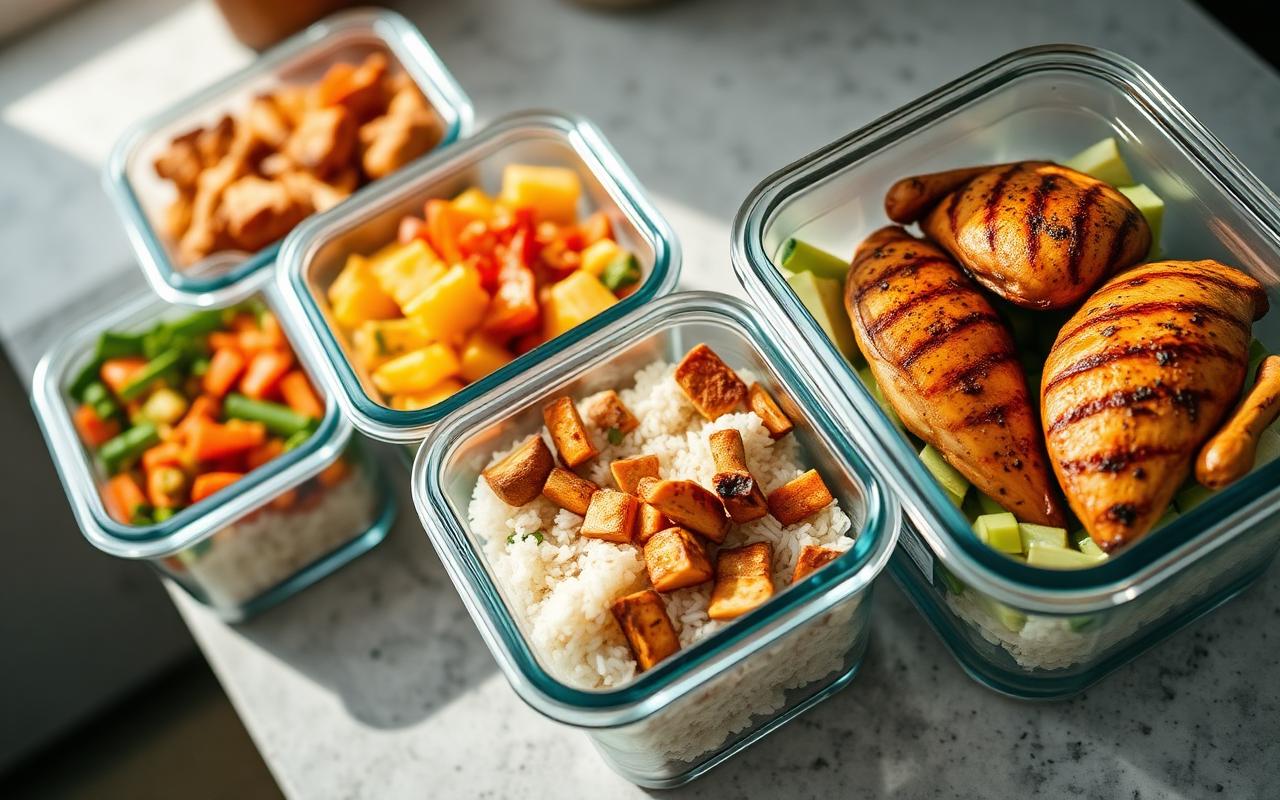
Nothing about this needs to be joyless. Porridge, fruit and yogurt at breakfast contribute almost nothing. A homemade sandwich on lower salt bread with fresh chicken instead of cold cuts saves several hundred milligrams. Dinner cooked from unprocessed ingredients with herbs, lemon and pepper does the rest.
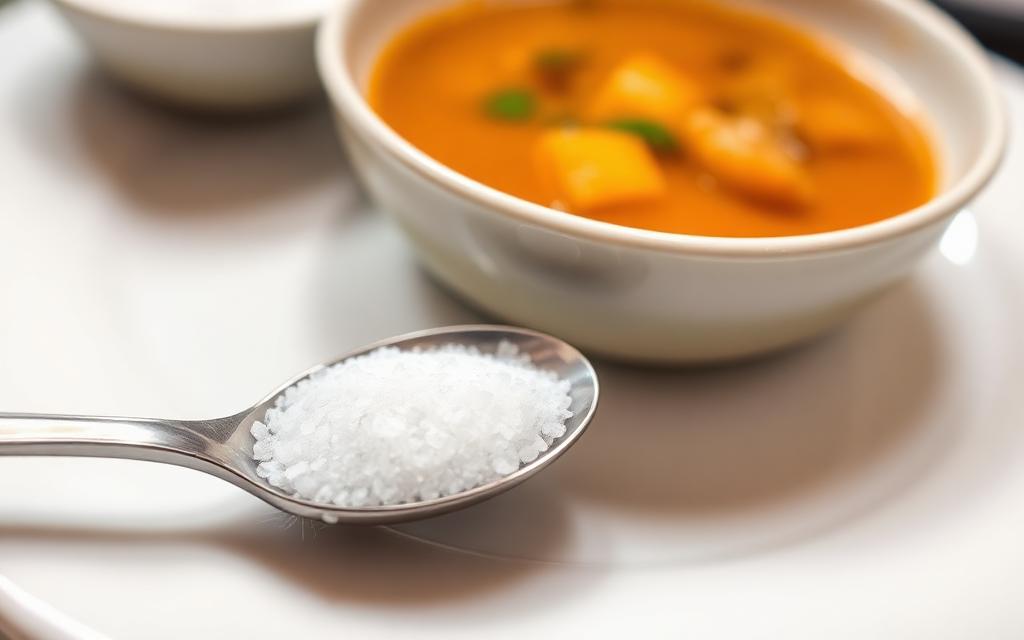
Compare that with a bought sandwich, a packet of crisps and a takeaway curry, which can pass 4,000 milligrams before you touch a shaker. The gap between those two days is entirely structural rather than a matter of willpower.
Reading labels for sodium
Use the 5 and 20 rule. Five percent daily value or less per serving is low, and 20 percent or more is high. In grams per 100, the UK front of pack traffic lights call 1.5 grams of salt or more per 100 grams high, and 0.3 grams or less low.
Watch the serving size on soups and sauces particularly closely, since a tin often contains two servings and almost nobody eats half a tin.
Terms are regulated too. Low sodium means 140 milligrams or less per serving in the United States, reduced sodium means at least 25 percent less than the standard product, and no salt added means none was added during processing, which is not the same as low.
Can you eat too little sodium?
Yes, though for most people it is a theoretical risk rather than a practical one. Sodium is essential for nerve signalling and fluid balance, and very low intakes can cause fatigue, cramps and low blood pressure.
Endurance athletes, people working in extreme heat and anyone with prolonged vomiting or diarrhoea genuinely need more, not less. So do people on some medications. If any of that applies, treat the population limits as a starting point to discuss rather than a rule to follow.
Retraining your taste for salt
Salt preference is learned and it changes. Studies of gradual reduction show that after several weeks on a lower salt diet, previously normal foods start to taste too salty.
The practical approach is to reduce by roughly a quarter and hold there for two weeks before reducing again, while adding acid, heat, herbs and umami sources such as mushrooms and tomato to fill the flavour gap.
Frequently asked questions
Is sea salt lower in sodium than table salt?
No. By weight it is essentially identical. Coarse flakes weigh less per teaspoon, which is the only reason it can appear lower.
Does drinking water flush out excess sodium?
It helps your kidneys manage a single high intake, but it does not undo the long term blood pressure effect of a consistently high salt diet.
Is Himalayan pink salt healthier?
Not meaningfully. The trace minerals are present in amounts too small to matter nutritionally, and the sodium content is comparable.
How long before cutting salt lowers blood pressure?
Changes usually appear within one to four weeks of a sustained reduction, which is why home monitoring over a month tells you more than a single reading.
Are salt substitutes safe?
Potassium based substitutes lower sodium intake effectively for many people, but they are not appropriate for anyone with kidney disease or on certain blood pressure medications. Ask your doctor before switching.
So how much sodium should you eat a day in practice?
Think in three tiers. Under 2,300 milligrams is the general ceiling, 1,500 milligrams is the ideal for anyone managing blood pressure, and anything over 3,000 milligrams a day is a pattern worth changing.
You do not need to track milligrams forever. Track for three days, identify the two or three products carrying most of the load, and replace those.
A swap list that does most of the work
- Cured deli meat to leftover roast chicken: saves 400 to 700 milligrams per sandwich.
- Tinned soup to homemade with low salt stock: saves 600 to 900 milligrams per bowl.
- Standard bread to a lower salt loaf: saves 200 to 300 milligrams a day for a regular bread eater.
- Jarred sauce to tinned tomatoes with herbs: saves 300 to 500 milligrams per portion.
None of those swaps requires cooking differently, only buying differently, which is why they hold up on a busy week.