Quick Answer
Tip a bellhop 2 to 5 dollars per bag, with 5 dollars per bag at a luxury hotel and a 5 dollar minimum even if you only have one small case.
Tip on arrival when the bags go up, and again on departure if a bellhop brings them down.
Add a few dollars if the bellhop also gives you a room orientation, fetches ice or fixes the air conditioning on the spot.
The Per Bag Standard
Bellhop tipping is one of the few areas where the per item rule still holds cleanly. The work scales with the number and weight of your bags rather than with the room rate.
- Budget or mid range hotel: 2 to 3 dollars per bag.
- Upscale hotel: 3 to 5 dollars per bag.
- Luxury hotel or resort: 5 dollars per bag.
- Very heavy or oversized item: 5 to 10 dollars for that item alone.
- One small bag only: 5 dollars as a courtesy floor.
If a bellhop makes two trips, that is effectively two services. Tip accordingly rather than treating it as one delivery.
Arrival, Departure and Bag Storage
Tip at the moment of service. On arrival that is when the bags reach the room, and on departure it is when they reach the car or the kerb.
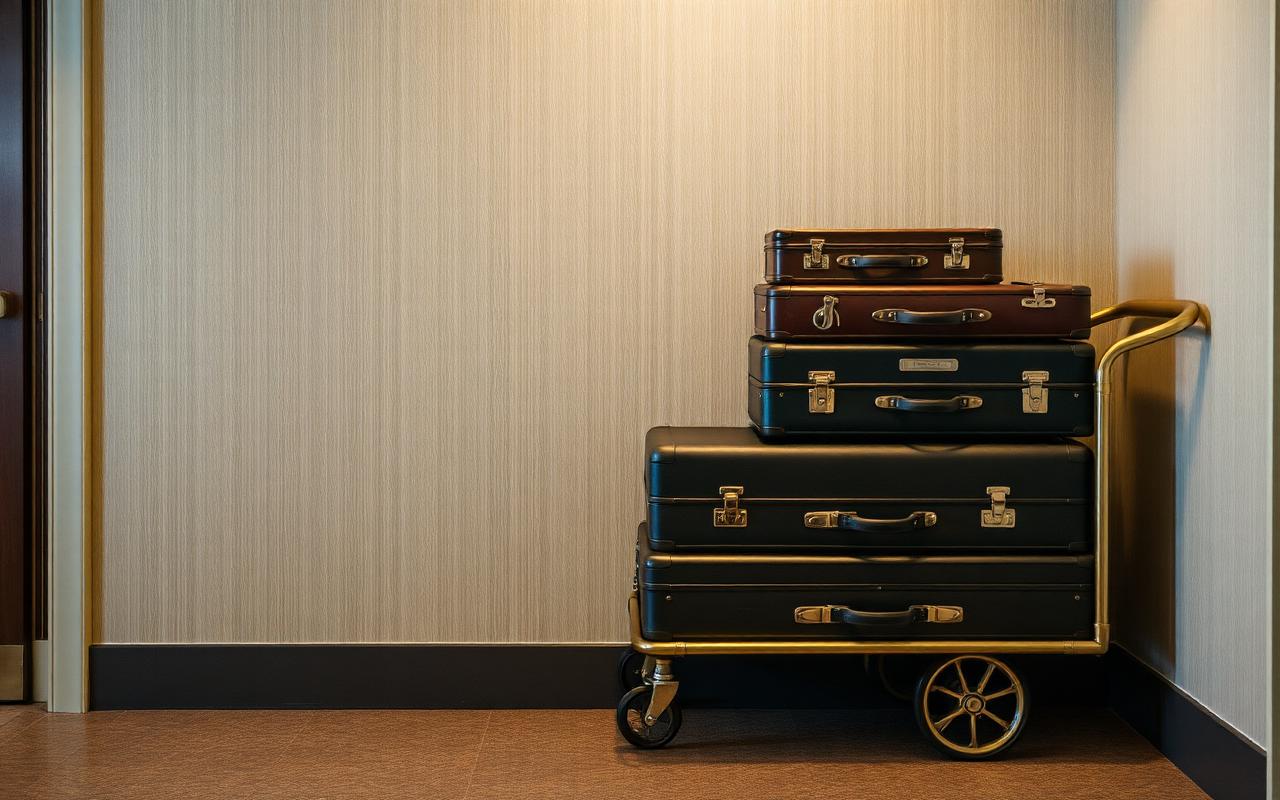
If you check out at noon and leave bags with the bell desk until an evening flight, tip 2 to 3 dollars when you drop them and the same when you collect.
Storage looks like nothing, but somebody is responsible for your luggage for the whole afternoon, and a tagged bag that goes missing is their problem.
Doormen, Valets and Housekeeping
A doorman who only opens the door needs no tip. A doorman who hails you a taxi in the rain, loads bags or carries something to the kerb should get 2 to 5 dollars.
Valet parking is tipped on retrieval rather than on drop off, usually 2 to 5 dollars per collection.
Housekeeping is a separate daily tip of 3 to 5 dollars per night, left in the room each morning. It has nothing to do with what you gave the bellhop.
Room service is often already charged a service fee. Check the bill, and add a couple of dollars in cash to the person at the door if the fee is small or absent.
Tipping the Concierge
A concierge who prints a map or points you to a coffee shop needs nothing. A concierge who secures a booking at a restaurant with no availability has earned 10 to 20 dollars.
For a genuinely difficult ask, such as last minute theatre tickets or a doctor at midnight, 20 to 50 dollars is appropriate.
Tip after the favour is delivered rather than in advance. Handing over money at the start is closer to a bribe than a thank you.
Resort Fees and Prepaid Gratuities
A resort fee is almost never a tip. It usually covers wifi, pool towels and a gym you may never use, and staff generally see none of it.
All inclusive resorts sometimes state that tipping is included. Even there, small cash tips for bellhops and housekeepers are widely accepted and appreciated.
Read the folio at checkout. If a gratuity line has genuinely been charged and distributed, you can reduce your cash tipping accordingly.
How Much Cash to Carry
Small notes are the practical constraint. Arrive with a handful of ones and fives so you are not stuck offering a large note or nothing at all.
A four night stay with two bags realistically needs about 40 to 50 dollars in small notes to cover the bell desk, housekeeping and the occasional valet run.
If you have no cash at all, ask the front desk to break a note. It is a routine request and nobody will think twice about it.
How the Bell Desk Actually Works
Bellhops are usually paid an hourly wage well below what the uniform suggests, and tips make up a large share of the job's real income.
The role is also more varied than carrying bags. Bellhops deliver packages, run forgotten items to rooms, arrange taxis, store luggage and often know the building better than anybody at the front desk.
Asking a bellhop where to eat usually produces a better answer than an online listing, because they hear what guests say when they come back.
Tipping Etiquette in Practice
Hand the money over directly rather than leaving it on a table. Bag handling is a face to face service and the exchange should be too.
Fold the notes so the amount is not on display in a busy lobby. Discretion is part of the convention.
Say thank you and use the name on the badge. Recognition costs nothing and is remembered for the rest of your stay.
If the same bellhop helps you repeatedly across a long stay, a larger tip at the end is appropriate on top of the per service amounts.
When travelling abroad, check whether tipping is customary. In much of Europe a euro or two per bag is normal, and in Japan it is not expected at all.
Frequently Asked Questions
Do you tip a bellhop if you carry your own bags?
No. If nobody handles your luggage there is nothing to tip for.
Is 20 dollars too much for a bellhop?
Not for four or five bags at a luxury hotel. It would be unusually generous for one small case.
Do you tip both on arrival and departure?
Yes, when different services are performed. Each trip with your bags is tipped separately.
Should you tip the doorman every day?
Only when they do something for you, such as hailing a cab or handling luggage.
Does the resort fee cover tips?
Almost never. Treat it as a facilities charge, not a gratuity.
Bottom Line
Two to five dollars per bag is the working standard for a bellhop, rising to 5 dollars per bag at luxury properties, with a 5 dollar floor for a single case.
Tip at the moment of service, tip separately for stored bags, and keep small notes on hand so you are never caught short in the lobby.