Quick Answer
To build muscle, aim for about 1.6 grams of protein per kilogram of body weight per day. For an 80kg lifter that is roughly 128 grams. Research pooling many training studies found that muscle gains stopped improving beyond about 1.6 g/kg, with the upper end of the confidence range sitting near 2.2 g/kg.
That means 1.6 to 2.2 g/kg covers almost everyone, and anything above it is expensive urine rather than extra size.
Training is the signal, protein is the material. Neither works alone.
Where the 1.6 number comes from
A widely cited 2018 meta-analysis in the British Journal of Sports Medicine pooled dozens of resistance training trials and looked for the point where additional protein stopped producing additional lean mass. The breakpoint landed at about 1.62 grams per kilogram per day.
Two details matter. First, the effect of extra protein was modest compared with the effect of the training itself. Second, the plateau is an average. Older lifters, people in a calorie deficit and very lean athletes tend to need the higher end.
The official recommended daily allowance of 0.8 g/kg is a different thing entirely. It is the amount needed to prevent deficiency in the general population, not the amount that optimises muscle growth in someone lifting four times a week.
Setting your own target
- Bodyweight in kilograms multiplied by 1.6 is your baseline.
- Multiply by 2.0 instead if you are cutting calories while trying to hold muscle, or if you are over 50.
- Use lean body mass or goal weight if you carry significant excess fat, since fat tissue does not need feeding.
- Divide across four meals of roughly 0.4 g/kg each to keep muscle protein synthesis stimulated through the day.
An 80kg lifter therefore targets about 128 grams, split as four meals of roughly 32 grams. A 60kg lifter targets about 96 grams, or four meals of 24 grams.
Protein quality and leucine
Not all protein is equally useful for muscle. What matters is the amino acid profile, and specifically the amount of leucine, which acts as the trigger for muscle protein synthesis.
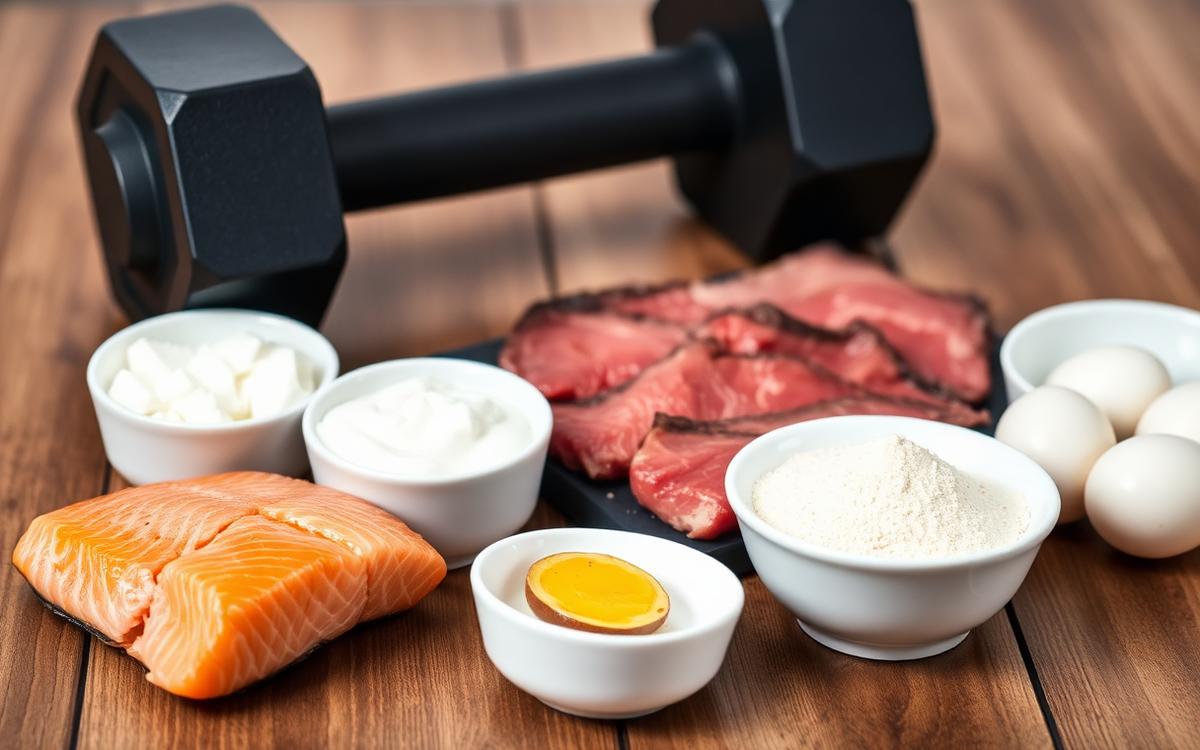
Roughly 2.5 to 3 grams of leucine per meal appears to flip that switch fully. Animal proteins reach it easily: whey, milk, eggs, meat and fish are all leucine rich. Most single plant sources are lower, which is why plant-based lifters usually need slightly more total protein and a wider mix of sources.
Soy, pea protein isolate, seitan combined with legumes, and pairings such as beans with grains all work well. The plan just needs more deliberate variety.
Does the anabolic window exist?
Sort of, but it is a garage door rather than a keyhole. The old advice to slam a shake within 30 minutes of the last rep came from studies on people training fasted.
If you ate a protein-containing meal within a few hours of training, the amino acids are still circulating and the urgency disappears. What matters far more is that you hit your daily total and that you get a solid protein meal somewhere in the few hours after training.
Training first thing on an empty stomach is the one case where eating soon afterwards genuinely helps.
How much can your body use at once?
The idea that anything over 30 grams per meal is wasted is a simplification. Excess protein is not discarded, it is oxidised for energy or used elsewhere in the body.
What is true is that muscle protein synthesis appears to saturate somewhere around 0.4 g/kg per meal for most people, so very large single servings are less efficient for growth than spreading intake out. Four moderate meals beat two enormous ones.
Building the day around real food
- Breakfast: three eggs plus a pot of Greek yogurt gets you close to 35 grams.
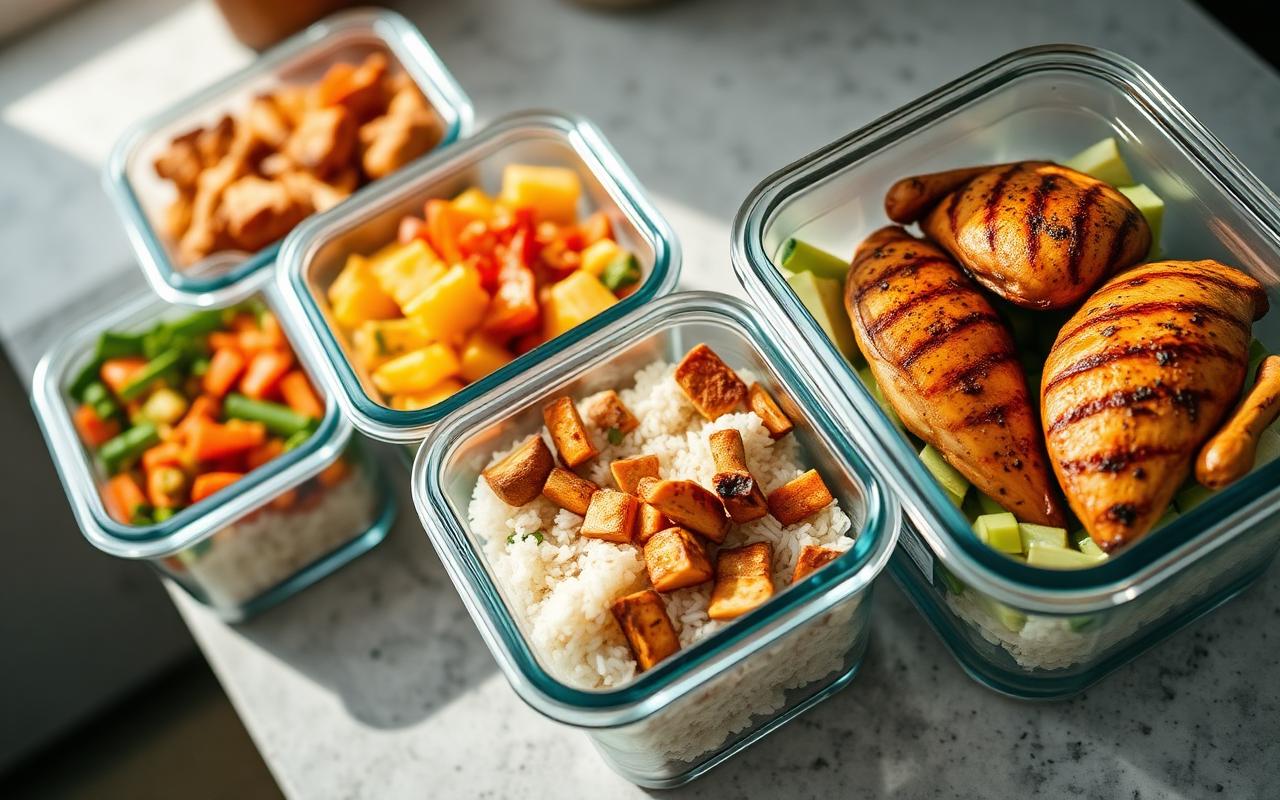
- Lunch: 150g cooked chicken in a rice bowl is around 45 grams.
- Snack: cottage cheese or a shake with milk adds 25 to 30 grams.
- Dinner: salmon, lean mince or tofu with lentils covers the final 30 to 40 grams.
That is 130 to 150 grams without anything unusual, which is why most lifters do not need a supplement stack. They need a shopping list.
Calories still decide the outcome
Protein is necessary for muscle gain but not sufficient. Building tissue requires surplus energy. A modest surplus of 200 to 400 calories a day above maintenance is enough for most people and limits fat gain.
If you eat 200 grams of protein in a calorie deficit and never progress your training loads, you will not grow. If you eat 130 grams in a slight surplus and add weight to the bar over months, you will.
Mistakes that waste protein
- Chasing 3 g/kg. Above roughly 2.2 g/kg the extra grams displace carbohydrate that fuels your training.
- Skipping carbohydrate entirely. Glycogen powers hard sets, and hard sets are the actual stimulus.
- Training without progression. Same weights, same reps, same body.
- Sleeping five hours. Recovery is where growth happens and short sleep blunts it.
- Buying blends with amino spiking. Check that the protein content comes from whole protein sources rather than added free amino acids.
How long before you see a difference?
Muscle grows slowly, and the protein change is the least visible part of it. A trained lifter in a good programme might add one to two kilograms of lean mass in a year. A beginner can double that in the first year, which is why early progress feels so much faster.
What you notice first is not size. It is that the same weights feel lighter, that recovery between sessions is quicker, and that you stop feeling ravenous on rest days. Those are the early signals that intake and training are matched.
Judge the plan on a twelve week window using strength numbers, tape measurements and photos rather than the scale, which moves for a dozen reasons that have nothing to do with muscle.
Adjusting the target as things change
- You start a cut. Raise to 2.0 to 2.2 g/kg to protect the muscle you built.
- You add a lot of cardio. Keep protein steady and raise carbohydrate rather than protein.
- You gain weight. Recalculate, because a fixed gram target quietly becomes a lower g/kg figure.
- You pass 50. Move toward 2.0 g/kg to offset the weaker anabolic response of older muscle.
- You go plant based. Add roughly 10 to 20 percent to the total and widen the range of sources.
Review the number every few months rather than every week. Bodies change slowly and constant tinkering hides whether anything is working.
The bottom line
Multiply your body weight in kilograms by 1.6 for a solid muscle building target, use 2.0 if you are dieting or over 50, and split it across four meals. Then spend the rest of your attention on progressive training, adequate calories and sleep.
Protein is the easy part of this equation. The hard part is showing up under the bar every week for a year.