Quick Answer
Most adults should aim for about 25 grams of fiber a day if you are a woman and 38 grams a day if you are a man, or roughly 14 grams for every 1,000 calories you eat.
Those targets drop with age. Women over 50 need around 21 grams and men over 50 around 30 grams, mostly because calorie needs fall.
Actual intake in the United States and the United Kingdom averages 15 to 18 grams, so the typical gap is about a third of the target rather than a small rounding error.
The official numbers, by age and sex
- Women 19 to 50: 25 grams a day.
- Women 51 and over: 21 grams a day.
- Men 19 to 50: 38 grams a day.
- Men 51 and over: 30 grams a day.
- Pregnancy: around 28 grams a day.
- Children: roughly their age in years plus 5 grams works as a rough guide, so a 7 year old is around 12 grams.
UK guidance sets a single adult target of 30 grams, which sits neatly between the two American figures. The difference is a matter of how each committee handled the evidence, not a disagreement about whether fiber matters.
Why the target is set where it is
These numbers are not arbitrary. They come from large observational studies where the risk of heart disease flattened out at intakes around 14 grams per 1,000 calories, and from trials showing improvements in cholesterol, blood glucose and bowel regularity in that range.
More is not automatically better. Beyond roughly 50 grams a day the added benefits get thin and the digestive downsides get real, particularly if the extra arrives from supplements rather than food.
What 25 to 38 grams actually looks like
The number sounds intimidating until you build a day out of it. Here is a straightforward example that lands near 35 grams:
- Porridge made from 50 grams of oats with a handful of raspberries: about 9 grams.
- Two slices of wholemeal bread with peanut butter: about 6 grams.
- A cup of lentil soup: about 8 grams.
- An apple eaten with the skin: about 4 grams.
- Roast vegetables and a small portion of brown rice at dinner: about 8 grams.
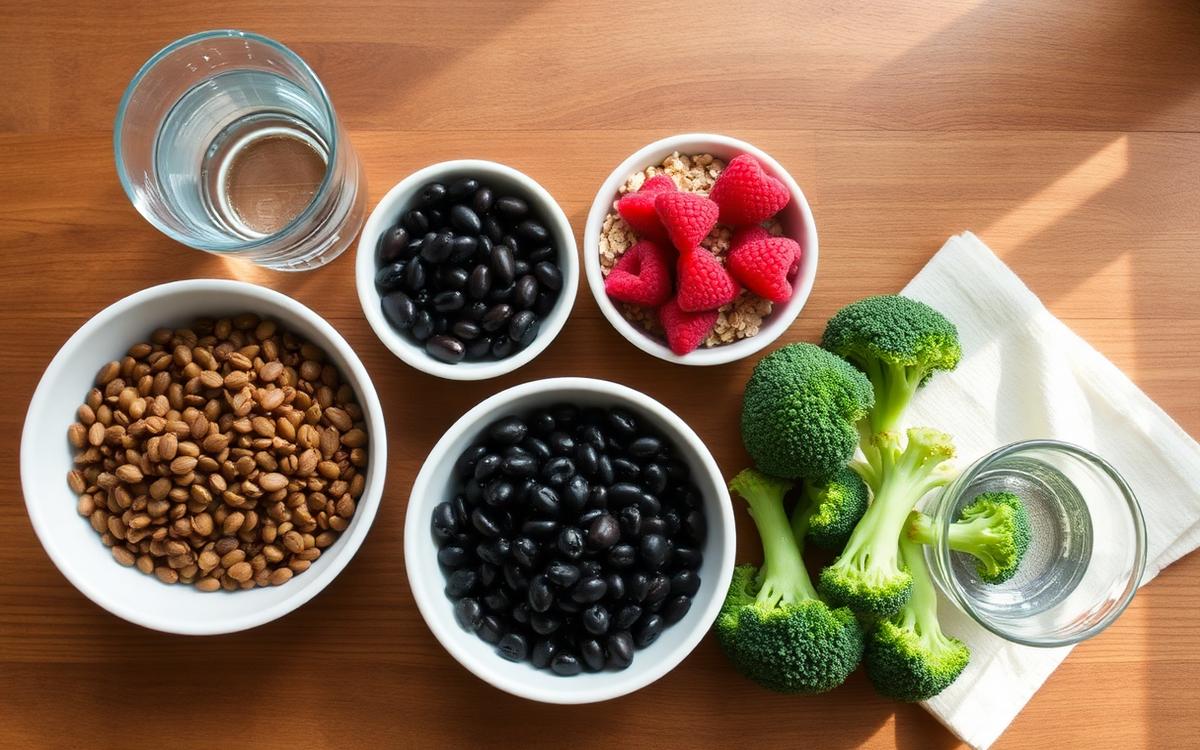
Notice that no single item is exotic and nothing is a supplement. The pattern that gets people to target is simple: a legume most days, a whole grain at two meals, fruit with skin, and vegetables at dinner.
The three habits that close the gap fastest
Swap the base of a meal rather than adding a side. Moving from white rice to barley, or from white pasta to a bean pasta, changes the fiber count of the largest thing on the plate. Adding a spoon of peas to the same white rice does much less.
Eat the skin. Peeling a potato removes about half its fiber. The same applies to apples, pears, cucumbers and even kiwis if you are willing.
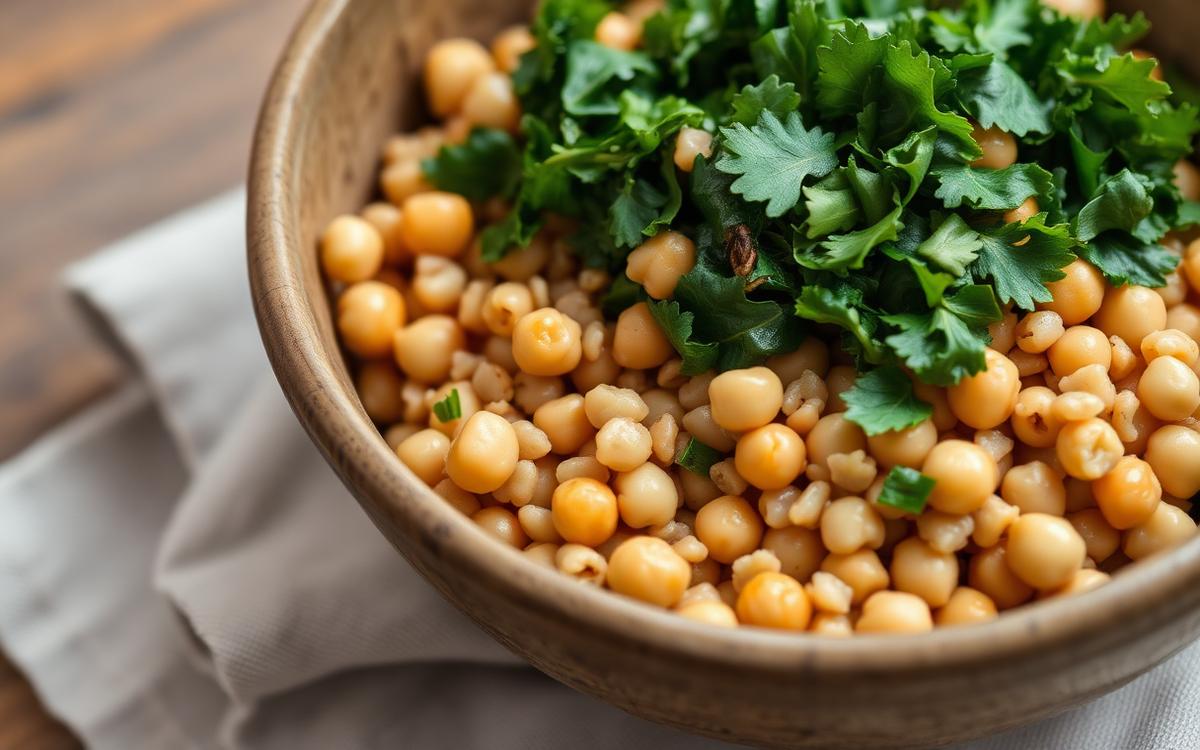
Keep a legume ready. A tin of chickpeas or a batch of cooked lentils in the fridge is the single most reliable trick, because it turns any meal into a high fiber meal in thirty seconds.
Should you use a supplement?
Food first, but supplements are not a failure. Psyllium husk has the strongest evidence of the common options, with measurable effects on LDL cholesterol and stool consistency, and it suits people who genuinely cannot eat enough volume.
What a supplement does not give you is everything else that travels with fiber in food: potassium, magnesium, polyphenols and the wide mix of fiber types your gut bacteria prefer. Treat it as a top up on the days you fall short, not as the plan.
Going up slowly matters more than the number
Jumping from 15 grams to 35 grams overnight is how people conclude that fiber does not agree with them. Gut bacteria need a couple of weeks to adjust, and until they do the fermentation produces more gas than usual.
Add about 5 grams a week, drink more water as you go, and the discomfort mostly does not happen. Fiber pulls water into the gut, so without the extra fluid a higher intake can make constipation worse rather than better.
Frequently asked questions
Does fiber on a label include added fiber?
Yes, and in the United States the label separates out added fibers such as inulin and polydextrose on some products. Isolated added fibers do not always behave like the fiber naturally present in food.
Can you count fiber from fruit juice?
Barely. Juicing strips most of the fiber out, which is the main nutritional difference between an orange and a glass of orange juice.
Is 50 grams of fiber a day too much?
For most people it is more than necessary and often uncomfortable. It is not dangerous in itself, but very high intakes can interfere with mineral absorption and cause persistent bloating.
Do you need more fiber if you eat more calories?
Yes, which is why the guideline is expressed per 1,000 calories. A large athlete eating 3,500 calories has a genuinely higher target than a sedentary adult eating 1,800.
Does cooking destroy fiber?
No. Cooking softens fiber and changes its texture, but the total amount stays essentially the same. Cooling cooked potatoes or rice actually creates resistant starch, which behaves like extra fiber.
Tracking it for a week without going mad
You do not need an app forever. Log two ordinary weekdays and one weekend day, add up the grams, and you will know your baseline within a few grams. Almost nobody guesses correctly on the first try.
The two patterns that show up again and again are a breakfast worth two grams and a snack habit built entirely from refined carbohydrate. Fix those two slots and the daily total usually rises by eight to twelve grams with no other changes.
Once you know your baseline, stop counting. Build the habits into the shopping list instead, because the fridge decides most of what you eat far more reliably than willpower does.