Quick Answer
A common range is 75 to 150 dollars per guest for a colleague or distant friend, 100 to 200 for a good friend, and 200 or more for close family.
Give what your budget genuinely allows. The old rule about covering the cost of your plate is not an obligation, and no reasonable couple is auditing the catering bill against your envelope.
Attending at all is a real cost. Travel, accommodation, outfits and time off work regularly exceed the gift itself.
Typical Amounts by Relationship
- Colleague or acquaintance: 75 to 100 dollars.
- Friend: 100 to 150 dollars.
- Close friend: 150 to 250 dollars.
- Cousin or extended family: 100 to 200 dollars.
- Sibling, or a couple you are very close to: 250 to 500 dollars.
- Parent of the couple: whatever is being contributed to the wedding itself usually stands in for a gift.
These are per household rather than per person. A couple attending together gives one gift, usually toward the upper end of the range rather than double it.

The Cover Your Plate Myth
The idea that your gift should match what the couple spent feeding you is folklore, not etiquette. Emily Post guidance has never required it.
It also produces absurd results. A couple who chose an expensive city venue would effectively be invoicing their guests, while a couple who married in a village hall would be penalised for restraint.
Use your relationship and your budget as the two inputs. If you happen to know the wedding is lavish and you can comfortably give more, then do, but not out of obligation.
Regional Differences
Amounts vary a lot by region. In high cost metro areas such as New York, Boston, San Francisco and Chicago, 150 to 200 dollars is a common baseline for a friend.
Across much of the Midwest and the South, 75 to 125 dollars is entirely normal for the same relationship.
In the UK, cash gifts are usually smaller and often replaced by a honeymoon fund contribution. Fifty to one hundred pounds per person is common for a friend.
Cash is culturally central at many Italian, Greek, Chinese, Korean, Filipino, Indian and Jewish weddings, often with its own conventions about amounts and envelopes. If you are attending a wedding in a tradition you do not know well, ask somebody in the family what is customary.
Cash, Registry or Honeymoon Fund
Cash is the most useful gift for most modern couples, who often already live together and have the household basics covered.
A registry item is equally correct where one exists. Buying from the registry is never a downgrade, because the couple listed exactly what they want.
Honeymoon funds and cash registries have become mainstream. Treat a contribution to one as identical to cash in an envelope.
A cheque is safer than notes for a large amount and gives the couple a record. Write it to one name rather than a joint married name they may not have adopted yet.
How to Present It
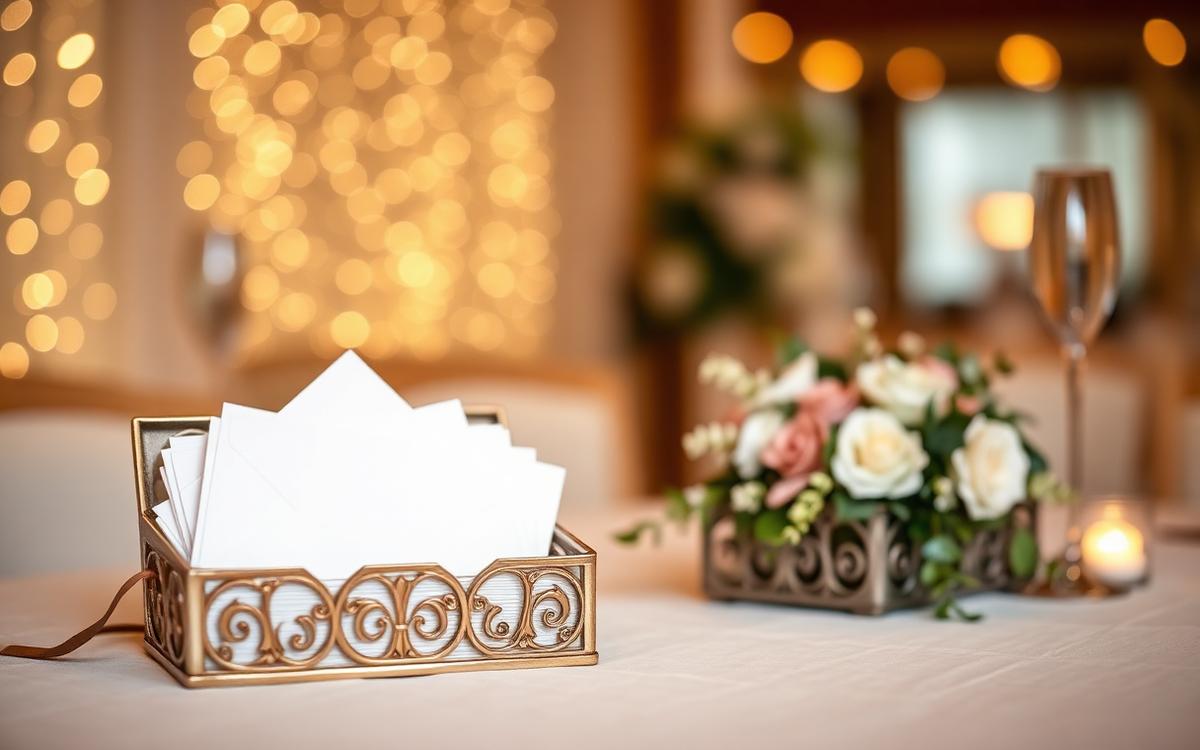
Put cash or a cheque in a card, seal it, and place it in the card box at the reception rather than handing it to the couple during the day.
Write your name clearly inside the card. Couples open a stack of envelopes weeks later and unsigned cash is impossible to thank.
Sending it before the wedding by post is also correct and, for large cheques, safer than a card box in a busy venue.
Do not put cash in a card that you then hand to somebody to carry for you. Envelopes go missing at weddings more often than anybody admits.
Destination and Multi Event Weddings
If you flew across the country or abroad, your presence is already a substantial gift. Reducing the cash amount is entirely reasonable and widely accepted.
Fifty to one hundred dollars alongside a thousand dollar trip is not stingy. The couple invited you knowing what the trip costs.
Where there are multiple events, such as an engagement party, a shower and a bachelor or bachelorette weekend, spread your total budget across them rather than treating each as a full gift.
A small gift for the shower and the main gift for the wedding is the standard split.
When Money Is Tight
Give less without apology. A 50 dollar gift with a warm handwritten card is welcome, and nobody worth being friends with will think otherwise.
Offer something you can actually provide. Photography, baking the cake, doing hair and makeup, driving guests, or building the playlist all have real value.
Group gifts work well. Four colleagues combining for one substantial item is better than four small awkward ones.
Declining the invitation because you cannot afford a gift is the wrong trade. Attend and give what you can.
If You Cannot Attend
Send a gift anyway if you are close to the couple. Something in the 50 to 100 dollar range with a card is the usual gesture.
For a distant acquaintance whose invitation you decline, a card alone is perfectly acceptable.
Gifts are traditionally welcome up to a year after the wedding, so a delayed gift is not a failure.
Frequently Asked Questions
Is 100 dollars a cheap wedding gift?
No. One hundred dollars sits squarely in the normal range for a friend in most of the US.
Do you give more if you bring a plus one?
Slightly, yes. A couple usually gives one gift somewhat above what a single guest would give, not double.
Is cash or a registry gift better?
Neither is better. Follow the couple's stated preference, and give cash when there is no registry.
Should you give cash at a second wedding?
Yes, on the same scale, though many couples marrying again ask for charitable donations or nothing at all.
How long do you have to send a wedding gift?
Up to a year is the traditional window, although sending it around the wedding date is simpler for everyone.
Bottom Line
Budget 75 to 150 dollars for a friend or colleague and more for close family, per household rather than per person.
Ignore the cover your plate rule, follow the couple's registry or fund where one exists, sign the card clearly, and scale down without guilt for destination weddings.