Quick Answer
The American Heart Association suggests no more than 25 grams of added sugar a day for women and 36 grams for men, which is about 6 and 9 teaspoons.
The Dietary Guidelines for Americans set a looser ceiling of under 10 percent of daily calories, roughly 50 grams on a 2,000 calorie diet. The NHS uses 30 grams of free sugars a day for adults.
Every one of those numbers sits below what an average adult actually eats, and a single regular soft drink can use most of the budget on its own.
Added sugar is not the same as total sugar
This distinction causes more confusion than anything else on a label. Total sugars include the lactose in milk and the fructose in whole fruit, neither of which the guidelines are trying to limit.
Added sugars are the ones put in during processing or at the table: cane sugar, high fructose corn syrup, honey, agave, maple syrup, fruit juice concentrate and glucose syrup. The UK uses the term free sugars, which also includes the sugar in fruit juice and smoothies.
A plain yogurt showing 12 grams of total sugar and zero added sugar is fine. A flavoured one showing 20 grams with 14 added is a different product entirely.
What the daily limits look like in real food
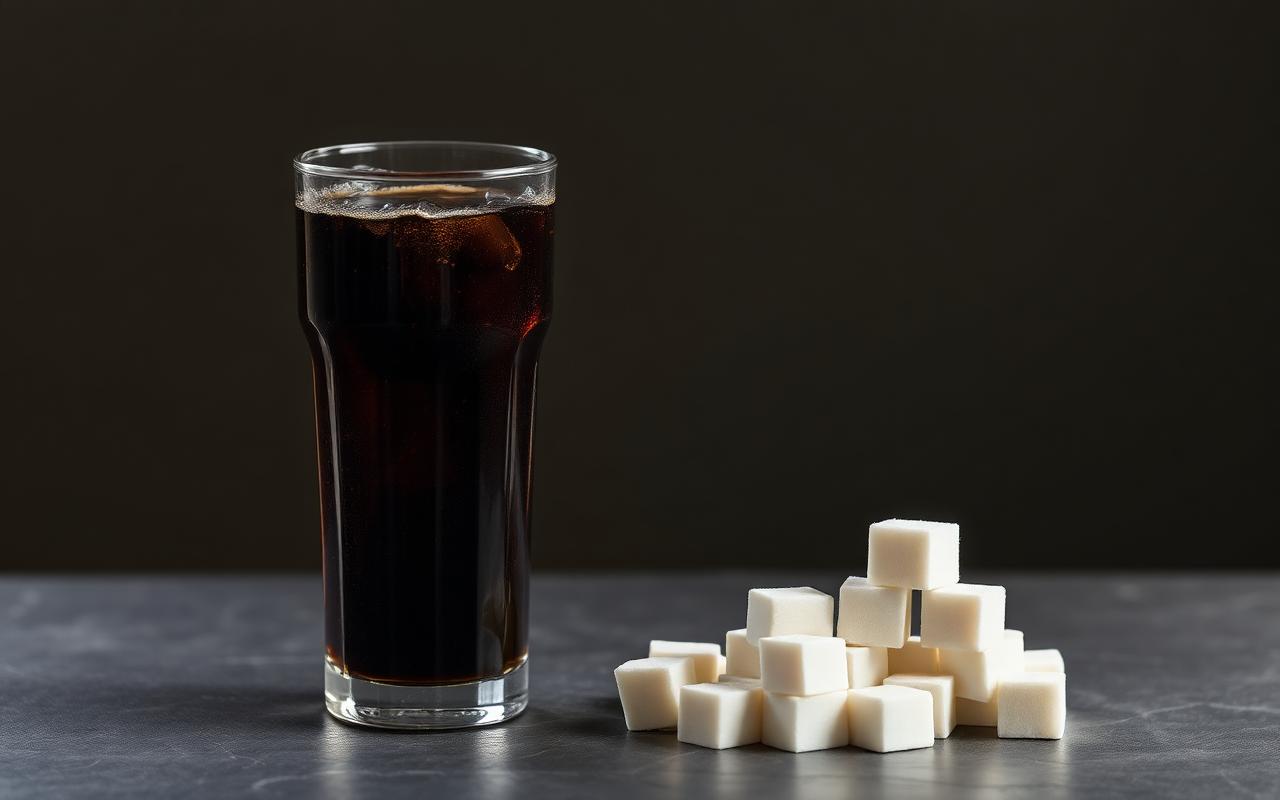
- A 12 ounce can of regular cola: about 39 grams, already past the women's limit.
- A flavoured yogurt pot: 12 to 20 grams.
- Two biscuits: 8 to 12 grams.
- A tablespoon of ketchup: about 4 grams.
- A shop bought granola serving: 8 to 14 grams.
- A large flavoured coffee drink: 30 to 45 grams.
None of those are unusual foods. That is the point: reaching the limit does not require a dessert habit, just a normal week of convenience products.

Why the limits exist
The strongest evidence links high added sugar intake to dental decay, to excess calorie intake and weight gain, and to raised triglycerides. Sugar sweetened drinks carry the clearest signal, largely because liquid calories do very little to reduce appetite at the next meal.
What the evidence does not support is the idea that sugar is uniquely toxic gram for gram. The problem is quantity and the form it arrives in, particularly drinks consumed quickly and frequently.
That framing matters, because a plan built on fear tends to collapse. A plan built on cutting the three biggest sources in your own diet usually survives.
Where it hides in savoury food
Most people account for dessert accurately and miss everything else. Pasta sauce, barbecue sauce, bread, breakfast cereal, salad dressing, baked beans, marinated meats, flavoured milk and cereal bars all commonly contain added sugar.
Sauces are the most reliable offender, because sugar balances acidity and salt. A quarter jar of some pasta sauces carries as much added sugar as a biscuit, which is why comparing two jars on the shelf pays off immediately.
Ingredient lists are ordered by weight, so a sweetener in the first three ingredients tells you a lot before you read a single number.
The names sugar hides behind
There are more than fifty of them. The common ones to recognise are sucrose, glucose, dextrose, maltose, fructose, high fructose corn syrup, invert sugar, molasses, cane juice, rice syrup, barley malt, honey, agave nectar and fruit juice concentrate.
Splitting sugar across several of these names moves each one further down the ingredient list, which is a genuine tactic. If three separate syrups appear, treat the product as sweetened regardless of where each sits.
A realistic way to cut it
Start with drinks. Soft drinks, juices and flavoured coffees are the fastest wins because nothing about the rest of your diet has to change.
Buy plain and sweeten yourself. Plain yogurt with fruit, plain porridge with cinnamon and a little honey. You will almost always use less than the manufacturer did.
Step down rather than quit. Taste adapts over roughly two to four weeks. Halving the sugar in your coffee for a fortnight then halving it again works far better than going straight to black.
Do not obsess over fruit. Whole fruit comes with fiber, water and volume, and it is not the reason anyone exceeds their sugar budget.
What about sweeteners?
Non nutritive sweeteners reduce sugar and calories, and the major food safety authorities consider approved sweeteners safe at typical intakes. The World Health Organization has advised against using them as a long term weight control strategy, because the evidence for lasting benefit is weak.
A reasonable middle position: sweeteners are a useful bridge when you are cutting a heavy soft drink habit, and a poor substitute for actually recalibrating how sweet you expect food to taste.
Frequently asked questions
How many teaspoons is 25 grams of sugar?
About six, since one level teaspoon of granulated sugar weighs roughly 4 grams.
Does honey count as added sugar?
Yes. Honey, maple syrup and agave are all counted as added or free sugars, even though they arrive with trace minerals.
Is fruit juice as bad as soda?
Nutritionally it is better because of the vitamins, but for sugar and calorie purposes it behaves similarly. UK guidance counts juice as free sugars and suggests capping it at 150 millilitres a day.
Do I need to count sugar in milk?
No. Lactose in plain milk and yogurt is not an added sugar and is not part of the limit.
What happens if I go over occasionally?
Nothing dramatic. These are averages across time, not daily thresholds with a penalty attached. Consistency across a normal week matters far more than any single day.
Finding your own top three sources
Rather than auditing everything, list the sweetened items you eat most days. For most people it is a drink, a breakfast product and one snack, and those three usually account for the bulk of the total.
Fix the largest one first and hold it for a fortnight before touching the others. Sequential changes stick where simultaneous ones tend to collapse by the second weekend.
What changes when you cut back
Dental health improves first, and dentists notice it before you do. Energy patterns often steady out within a couple of weeks, mostly because large liquid sugar hits stop punctuating the day.
Weight change is slower and depends on whether the sugar calories were replaced with something else. Swapping a daily soft drink for water removes roughly 140 calories a day, which is meaningful over months rather than days.