Quick Answer
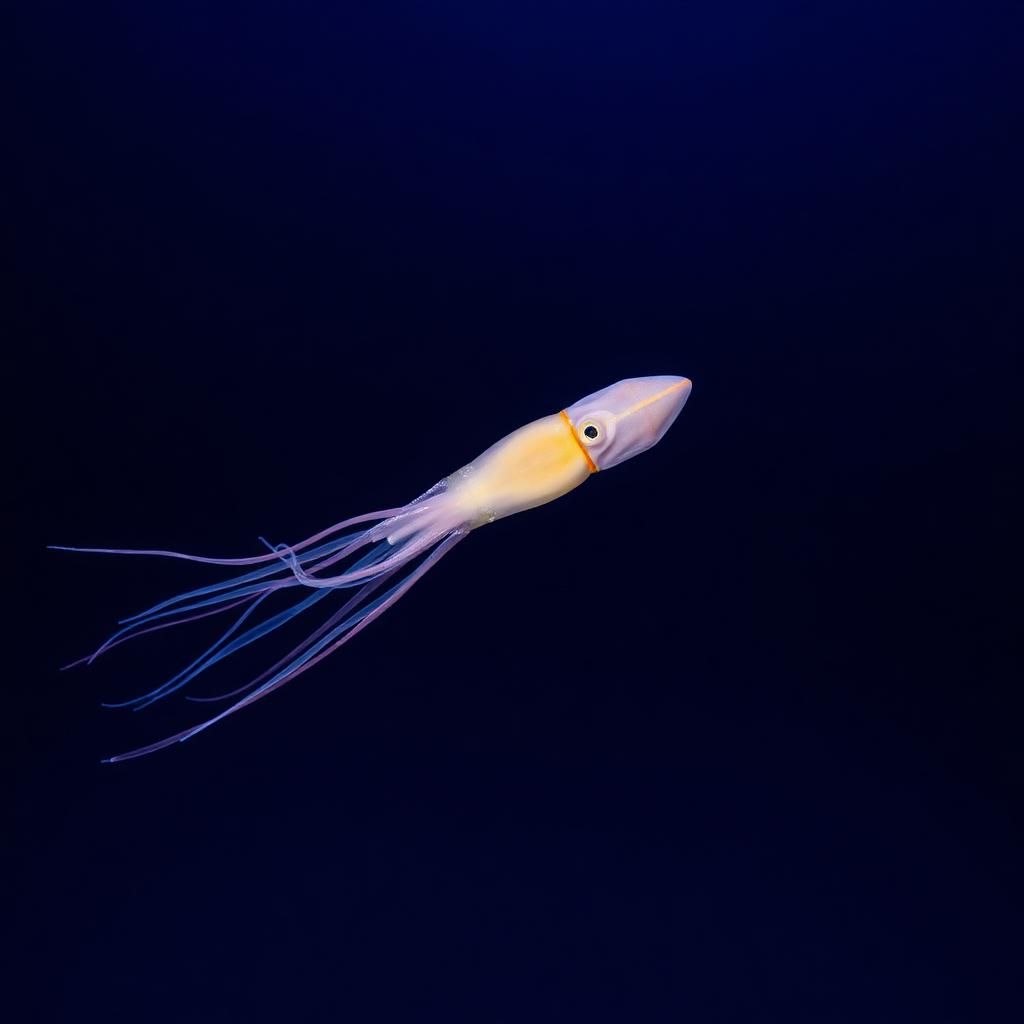
A squid has exactly two tentacles. The other eight limbs that fan out from its head are arms, not tentacles. Total limb count: ten.
The distinction is not pedantic. Arms and tentacles look different, attach differently, carry suckers in different places, and do completely different jobs during a hunt. Calling all ten "tentacles" is one of the most common mistakes in casual marine biology.
Two tentacles, eight arms, ten limbs total
Squid belong to the order Teuthida within the cephalopod class. Every member of the order carries the same basic limb layout: eight short, muscular arms, plus two long, retractable feeding tentacles that emerge from between the third and fourth pair of arms. That gives the standard total of ten appendages, which is why squid (along with cuttlefish) are grouped under the older clade name Decapodiformes, literally "ten-footed forms".
Octopuses, by contrast, sit in the order Octopoda and have only the eight arms; they lost the two feeding tentacles somewhere in their evolutionary history. Nautiluses are off to one side with dozens of small cirri instead, and they break the pattern entirely.
What makes an arm an arm
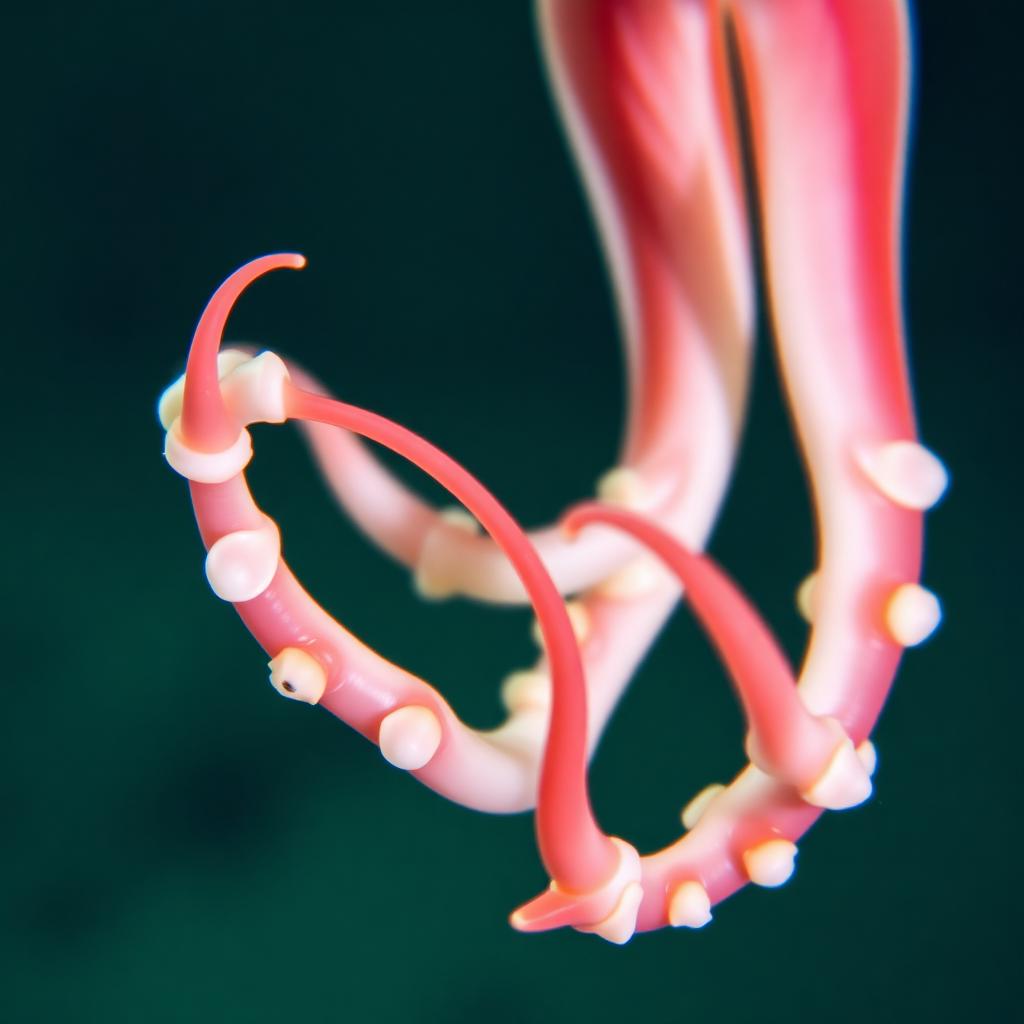
A squid arm is short, thick, and muscular. The key identifier is that suction cups (suckers) run along the entire length of the arm, from the base where it joins the head all the way to the tip. The arms are the close-range manipulation tools: once prey is dragged into reach, the arms hold it firmly while the squid's beak does the cutting and chewing.
Arms also do social work. Mating squid use specific arms (the hectocotylus, a modified arm in males) to transfer sperm packets to the female. Many species use arm postures to signal alarm, courtship or aggression to other squid.
What makes a tentacle a tentacle
A squid tentacle is much longer than the arms (often nearly the length of the body in many species), narrower, and far more flexible. Crucially, the long shaft of the tentacle is bare; suckers appear only at the very end, on a paddle-shaped widening known as the tentacular club.
The tentacles are the harpoons of the hunt. A squid stalking a small fish or shrimp glides into range, then snaps both tentacles forward at high speed, far faster than the arms could ever reach. The club tips, lined with hooked suckers (or even claws in some deep-sea species), latch onto the prey. The tentacles then retract, dragging the catch back into the waiting circle of eight arms and the central beak.
So why does everyone say "ten tentacles"?
Three reasons. First, the everyday English word "tentacle" gets used loosely for any long, flexible animal appendage; that meaning predates the strict zoological one. Second, the eight-and-two division is invisible at a glance in a fast-moving squid, especially with the tentacles fully retracted. Third, popular culture, from kraken legends to anime, has used "tentacles" as a catch-all for centuries.
Marine biologists keep the distinction because the two limb types tell you something useful about how the animal hunts and how its body plan evolved. Outside the lab, "tentacle" as a casual term for any squid limb is unlikely to disappear soon, but in any context that involves real science (a school report, a documentary script, an aquarium label) the correct count is two.
How the count varies by species
Within Teuthida, the eight arms plus two tentacles plan is essentially universal. What changes between species is the proportions and the equipment:
- Common squid (Loligo): tentacle clubs roughly twice as wide as the shaft, sucker rings smooth.
- Giant squid (Architeuthis): tentacles up to 10 metres long in mature adults, with serrated sucker rings that leave the famous circular scars on sperm whales.
- Colossal squid (Mesonychoteuthis): shorter, stouter limbs than the giant squid, but the tentacle clubs carry rotating hooks that swivel through 360 degrees.
- Vampire squid: a misnamed cousin that actually sits between squid and octopus on the family tree, with eight arms connected by a cape and two filaments rather than true tentacles.
Octopus comparison, just to nail it down
An octopus has eight arms and zero tentacles. Every limb you see on an octopus is an arm. Cuttlefish, the squid's closest culinary cousin, share the squid layout: eight arms plus two tentacles, with the tentacles tucked into pouches under the eyes between hunts.
The takeaway
Next time someone mentions the ten tentacles of a squid, you can confidently correct them: eight arms and two tentacles, working together as one of the most efficient ambush systems in the ocean. The eight do the holding. The two do the harpooning. The whole arrangement is the reason squid have thrived in nearly every ocean on the planet.