Quick Answer
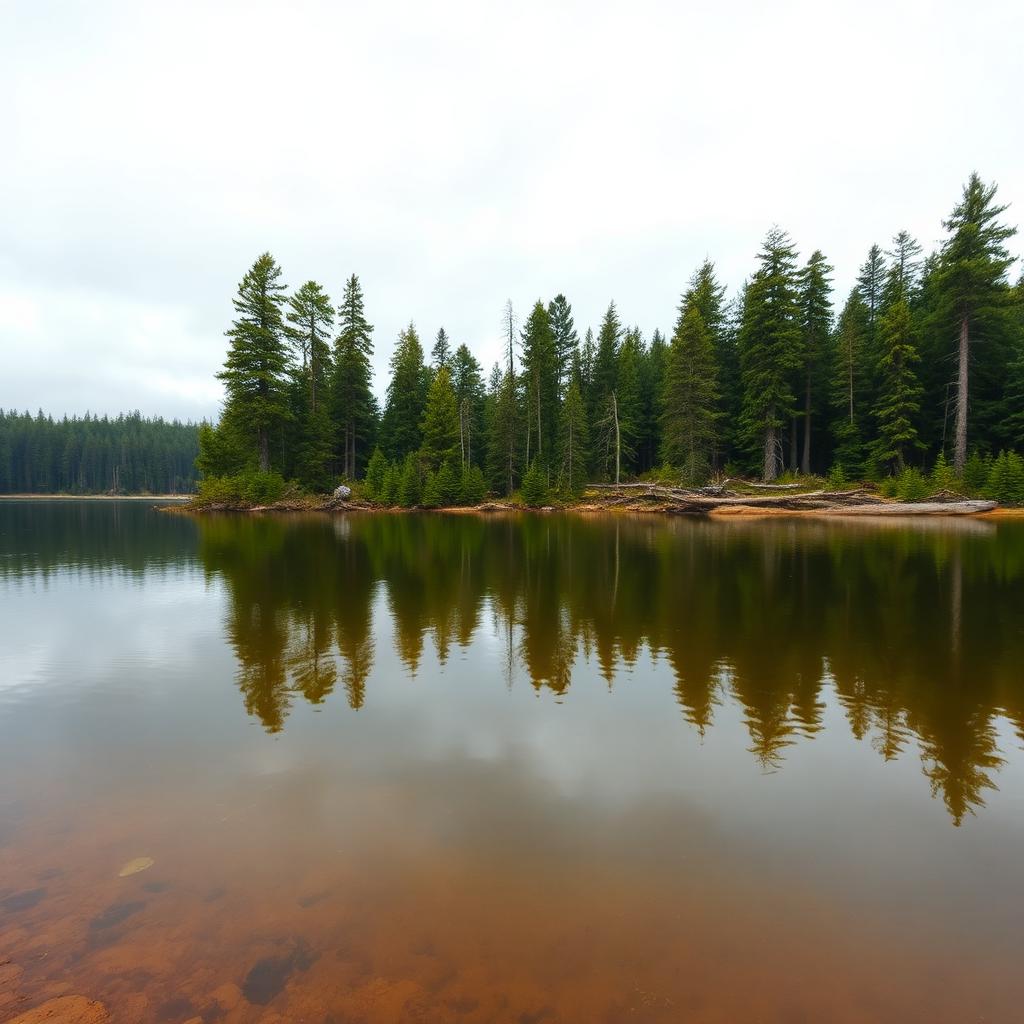
Lake browning is the steady darkening of freshwater lakes across northern Europe and North America as dissolved organic carbon (DOC) leaches out of surrounding soils. Decades of monitoring at networks like the Global Lake Ecological Observatory Network show colour values doubling or tripling in some boreal lakes since the 1980s.
The ecological consequence is a sorting effect. Sight-hunting fish such as largemouth bass, smallmouth bass, lake trout and yellow perch lose hunting efficiency in tea-stained water and decline in growth and abundance. Sensory hunters such as northern pike and walleye, which find prey by vibration or in very low light, gain ground.
What freshwater browning actually is
Browning is driven mainly by dissolved organic carbon, the same family of humic and fulvic acids that gives a peat-bog tea its colour. Three pressures push DOC upward.
- Recovery from acid rain. Reductions in sulphate deposition since the 1990s have raised soil pH, which loosens organic carbon previously bound to soil particles and releases it into runoff.
- Wetter, warmer climate. Heavier rainfall events flush more terrestrial carbon off the landscape and into lake basins.
- Land-use change. Forestry, peatland drainage and rewetting projects all alter how much carbon a catchment releases.
The visible result is water that looks like weak tea. Under the surface, the optical change is dramatic: a brown lake can lose more than 80 percent of its photosynthetically active radiation in the top few metres.
Why visual predators lose
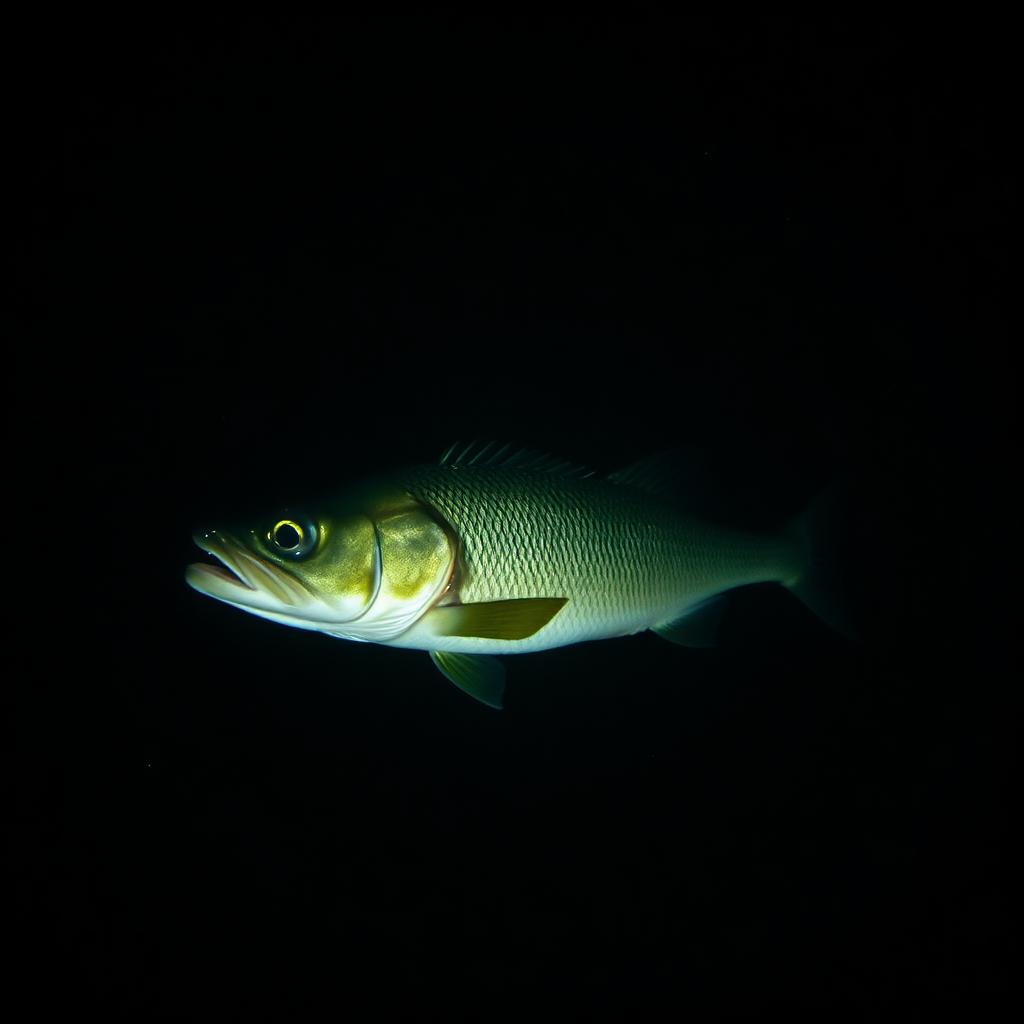
Largemouth bass, smallmouth bass and yellow perch are highly visual ambush feeders. They lock onto a swimming minnow, track it, and strike. Strip the underwater light away and the strike rate collapses. Multi-lake comparisons published in limnology journals over the past decade have consistently shown lower body condition, slower growth and reduced recruitment in bass and perch populations in browning lakes compared with clear-water reference lakes nearby.
Lake trout face an additional pressure. They are cold-adapted and depend on deep, well-oxygenated water in summer. Browning reduces light penetration, traps heat near the surface and can shrink the oxygenated cool-water layer trout need, squeezing their summer habitat from above and below.
Why pike and walleye win
Two physiological traits flip the script for these species.
Walleye and the tapetum lucidum. Walleye carry a tapetum lucidum, a reflective layer behind the retina that bounces incoming light back through the photoreceptors a second time. This is the same adaptation that makes a cat's eyes shine in headlights. In a brown lake at dusk, a walleye can still see clearly while bass and perch are effectively blind. That is why walleye fishing is best at dawn, dusk and in stained water.
Northern pike and the lateral line. Pike rely heavily on their lateral line system, a row of pressure-sensing hair cells running along each flank that detects water displacement from a swimming prey fish at distances of a metre or more. The lateral line works perfectly in zero visibility. A pike lying in weeds can sense and strike a minnow it never sees. Browning therefore costs pike almost nothing and removes their visual competitors.
What anglers are doing differently
Where browning has progressed, tackle choice shifts toward what fish can detect. The most consistent adjustments reported across European and Canadian fisheries:
- Bright chartreuse, orange and white lures replace natural silver and translucent finishes, because long wavelengths penetrate stained water better than blues and greens.
- Vibrating baits such as spinnerbaits, chatterbaits and bladed jigs outperform finesse plastics, because the lateral-line signal carries when the visual one does not.
- Scent-loaded soft plastics and live bait outfish unscented offerings, because olfaction stays useful in dark water.
- Fishing windows shift toward dawn and dusk for walleye, and any time of day for pike, while bass anglers concentrate on the shallowest, best-lit shoreline structure.
What it means for lake management
Fisheries managers in browning regions have begun adjusting stocking strategies, moving away from put-and-take rainbow trout programs in lakes whose optical character no longer supports them, and toward walleye and pike management where conditions favour those species. Some agencies also factor browning into oxygen and temperature modelling for lake trout refuge lakes, since the combination of warming and browning can render a historically productive trout lake unsuitable within a decade.
There is no easy reversal. The drivers (climate, recovery from acid rain, land use) are large-scale and slow to change. The realistic path is to manage fisheries for the species that match the new optics, not the ones that matched the old ones.
The takeaway
Lake browning is a quiet, large-scale rewrite of who eats what in northern freshwater. Bass, perch and lake trout are losing the optical conditions they evolved to exploit. Walleye and pike, with their reflective eyes and pressure-sensing flanks, are gaining ground. Whether you fish, manage water, or just love your local lake, that ecological reshuffle is already underway, and the species mix in your favourite spot in 2040 will almost certainly be different from today.