
Quick Answer
Traditions last when they are small, repeatable and tied to a fixed moment. Pick one thing, attach it to a date or a weekly slot, and do it the same way twice before you judge it.
The most durable ones cost little, need no special skill, and give every person in the room something to do.
Ambition is what kills them. A weekly pancake breakfast survives for a decade, while an elaborate annual production quietly dies after two years.
Why Most New Traditions Fail
Three failure modes account for nearly all of them.
- Too big. If it needs a week of planning, one bad year ends it.
- One person carries it. When that person is ill, busy or gone, the tradition goes too.
- No fixed trigger. "We should do that again sometime" is not a schedule.
Traditions are habits with meaning attached. Habit research is consistent on the point that a specific cue matters more than motivation, and family rituals behave the same way.
Step One: Choose the Slot Before the Activity
Decide when it happens first. First Sunday of the month, the evening the clocks change, every Friday after school, the morning of the first snow.
A recurring calendar entry is not unromantic. It is the difference between a tradition and a fond intention.
Seasonal triggers work particularly well because they arrive whether or not anyone remembers, which is exactly what you want in year three.
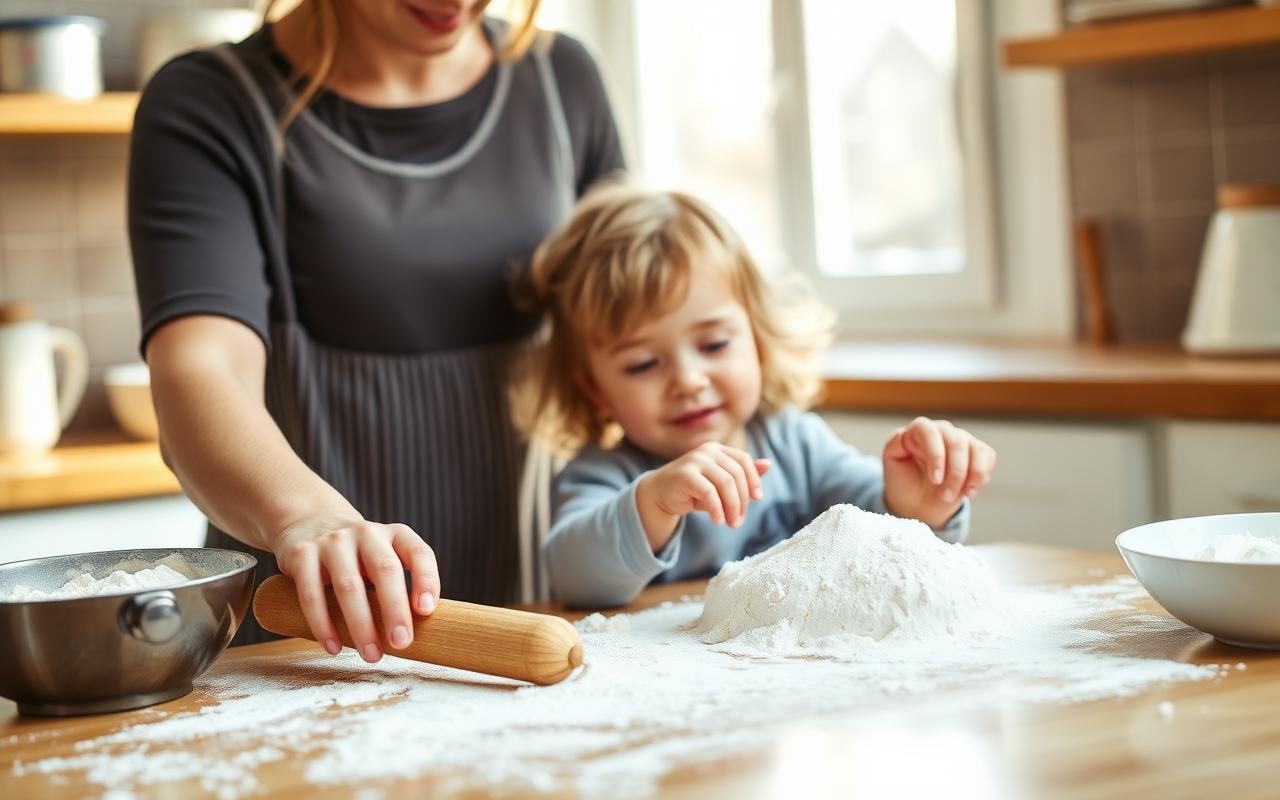
Step Two: Keep It Small Enough to Repeat on a Bad Week
The test is whether it can happen when someone is tired, ill or short of money. If the answer is no, shrink it.
Pizza on Friday, a walk on New Year's Day, one photograph in the same spot every birthday, a letter written to each child on their birthday and kept until they are eighteen. All of these survive a bad year.
Cost is a hidden fragility. An annual trip that depends on a good financial year will be skipped in a bad one, and one skip usually becomes permanent.
Step Three: Give Everyone a Job
Shared ownership is what turns your idea into the family's tradition. Children in particular defend a ritual they have a role in.
Roles can be tiny: one person chooses the music, one lights the candles, one reads the same passage, one takes the photograph, one keeps the notebook.
Rotate the roles as children grow. A seven year old who lays the table becomes a fourteen year old who cooks part of the meal.
Write the roles down somewhere. It sounds excessive until the year someone is away and nobody remembers who does what.
Step Four: Add a Small Artefact
An object gives a tradition memory. A notebook everyone signs each year, a tin of photographs, a particular dish that only comes out for this, a jar of notes opened annually.
The artefact does the emotional work over time. Year one it is a blank book. Year twelve it is the most valuable object in the house.
Keep it cheap and replaceable in principle, but store it properly. Traditions built around a single irreplaceable item become stressful.
Step Five: Let It Change
Traditions that cannot bend, break. Families grow, move, gain partners and lose people, and a ritual that refuses to adapt becomes an obligation.
Review it honestly every few years. Ask whether people still look forward to it or merely turn up.
Adapt the format, keep the meaning. A Sunday dinner can become a Sunday video call when everyone lives in different cities, and it still counts.
Bring new partners and new children in by giving them a role immediately rather than letting them watch from the edge for a decade.
Ideas That Tend to Survive
- Weekly: the same breakfast, a Friday film, a Sunday walk on the same route, a board game night.
- Monthly: a new recipe chosen by a different person, a visit to somewhere none of you has been.
- Annual: the same photo spot on the same date, a letter to each child, a first day of school breakfast, a New Year's Day swim or walk.
- Milestone: a specific meal cooked for exam results, a small ceremony when someone moves out, a named toast at every birthday.
Choose one from the weekly list and one from the annual list. Two is plenty for a family that has never had a formal tradition.
Frequently Asked Questions
How long does it take for something to become a tradition?
Three repetitions is the usual point where people start expecting it. Two years is where it becomes something a child will describe as "what we do".
Can you start a family tradition with adult children?
Yes, and it often works better because they choose to take part. Keep it low commitment and easy to attend remotely.
What if one person refuses to join in?
Do not force attendance. Keep the door open, keep the tradition going, and give them a role they might actually want rather than a duty.
Do traditions need to be cultural or religious?
No. Most enduring family traditions are entirely invented and specific to one household. That is what makes them yours.
How do you keep a tradition going after a move?
Keep the timing and the artefact, change the location. The date and the object are what carry the continuity, not the address.
Announce It Without Overselling It
Presenting a new ritual as a major family initiative puts pressure on the first attempt and makes an ordinary evening feel like a test. Simply do the thing, enjoy it, and say lightly that you would like to do it again next month.
Children respond better to repetition than to explanation. By the third time, they will be the ones reminding you it is due.
Take one photograph each time from the start. Early documentation costs nothing and becomes the evidence that the tradition has a history, which is what makes people protective of it.
Resist adding rules in year one. Complexity can grow later if everyone wants it, but a ritual that arrives fully formed is much harder to sustain.
Bottom Line
Fix the timing first, keep the activity small enough for a bad week, give everyone a role, and attach one cheap object that accumulates memory.
Then let it change shape as the family does. A tradition that adapts for twenty years beats a perfect one that lasts two.