Quick Answer
Amino spiking is the practice of adding cheap nitrogen rich ingredients such as glycine, taurine or free amino acids to a protein powder so the standard laboratory test reports more protein than the whey or casein actually delivers.
You spot it on the label by checking three things: whether nitrogen contributing ingredients appear near the top of the ingredient list, whether the amino acid profile is disclosed, and whether the arithmetic between scoop weight and protein claim is plausible.
A 30 gram scoop claiming 27 grams of protein from a flavoured, sweetened blend deserves scrutiny. A tub that publishes a full amino acid breakdown per serving rarely has anything to hide.
Why the test can be fooled at all
Protein content in food is almost never measured directly. The standard method, developed by Johan Kjeldahl in the nineteenth century and still the industry reference, measures nitrogen and multiplies it by a conversion factor, usually 6.25 for dairy protein.
That works because protein is the main nitrogen bearing component of most foods. It stops working when someone deliberately adds a non protein ingredient that happens to be rich in nitrogen.
Glycine, taurine, creatine, beta alanine and free amino acids all carry nitrogen. Add a few grams and the analysis reports more protein, even though none of it arrived as intact whey with a full spread of essential amino acids.
The four ingredients that do the work
Nothing here is illegal or unsafe in normal amounts. The issue is what they are being used for.
- Glycine: the cheapest nitrogen per dollar available and a non essential amino acid, so it contributes almost nothing to muscle protein synthesis.
- Taurine: genuinely useful in energy formulas, but useless as a protein source. It is also cheap and nitrogen dense.
- Creatine monohydrate: an excellent supplement in its own right, and often disclosed proudly. It also inflates a nitrogen reading, so protein claims should exclude it.
- Free form BCAAs: leucine, isoleucine and valine added loose. They are real amino acids, but adding them lets a manufacturer claim protein grams without buying whey.
Beta alanine and betaine appear for the same reason in some pre workout style blends. Again the ingredient is not the problem, the accounting is.
The arithmetic check anyone can do
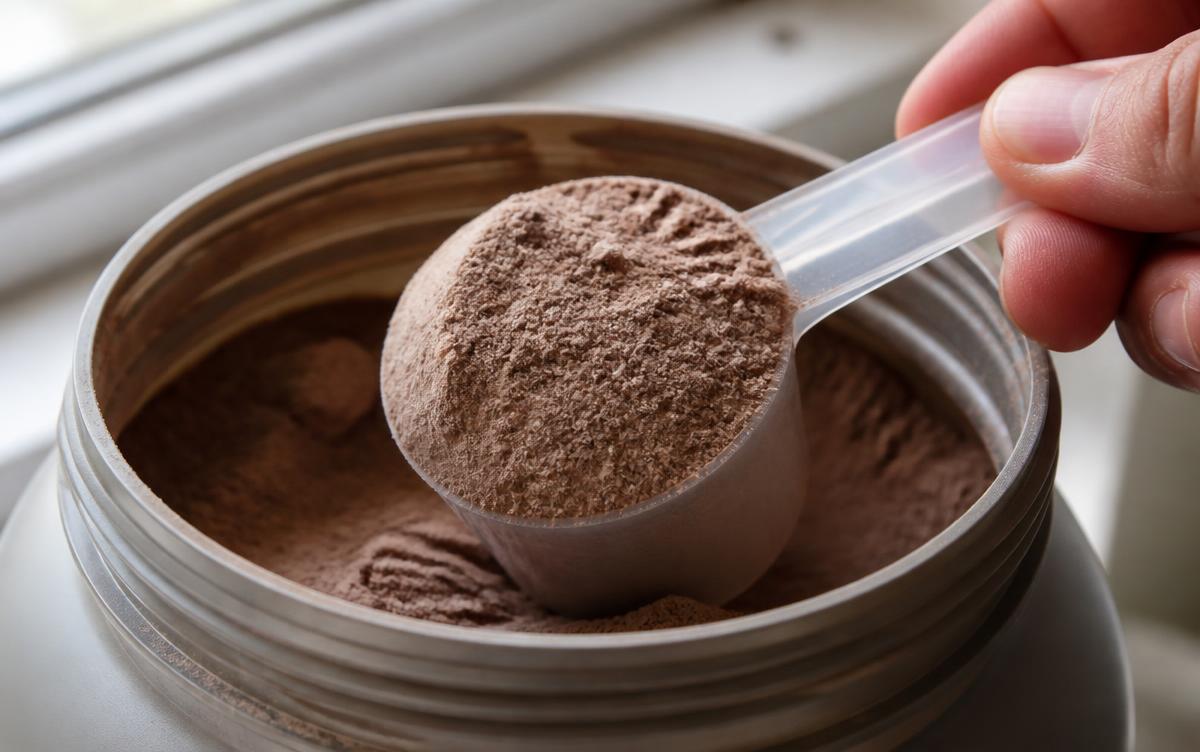
Start with the scoop weight, which the panel gives as the serving size in grams. Then look at the protein claim.
A pure unflavoured whey isolate can legitimately reach around 90 percent protein by weight, so a 30 gram serving delivering 27 grams is plausible if the ingredient list is essentially whey isolate and nothing else.
Now add flavouring, cocoa, sweeteners, thickeners, anti caking agents and digestive enzymes. Those occupy real grams. A chocolate flavoured concentrate blend at 30 grams per scoop realistically lands somewhere around 21 to 24 grams of protein. A tub claiming 27 grams from that formulation is claiming that flavour and additives weigh nothing.
Weigh the scoop yourself if you already own the tub. A supplied scoop that holds 34 grams while the panel says 30 quietly changes every number, including the cost per serving.
Reading the ingredient list in order
Ingredients appear in descending order by weight, and that ordering is where spiking becomes visible.
A clean label reads whey protein isolate, whey protein concentrate, cocoa powder, natural flavours, sunflower lecithin, sucralose. Protein sources first, everything else after.
A suspicious label reads whey protein concentrate, glycine, taurine, natural flavours, whey protein isolate. Glycine and taurine sitting above a named protein source means there is more of them than of the isolate, which is a strange choice unless the goal is a bigger number on the front.
Also watch for proprietary blend wording. A blend labelled amino matrix or protein complex that lumps whey together with free amino acids under one weight makes the split impossible to verify by design.
The amino acid profile is the honest answer
Reputable manufacturers publish a full amino acid profile, usually as milligrams per serving for all twenty amino acids. That table is the strongest signal on the whole tub.
Look at the essential amino acids as a share of the total. Whey is unusually rich in them, with leucine alone at roughly 10 to 11 percent of the protein by weight. A serving claiming 25 grams of protein should contain somewhere around 2.5 to 2.7 grams of leucine.
If the leucine figure is closer to 1.5 grams, the protein arriving is not mostly whey, whatever the nitrogen test reported. If there is no profile published at all, you are being asked to take the front of pack on trust.
Quality scoring, and why spiking undermines it
Protein quality is measured by scores such as PDCAAS and the newer DIAAS, which combine digestibility with how well the amino acid pattern matches human requirements. Whey, egg and milk protein sit at the top.
Free glycine scores essentially nothing on that basis, because the body does not need dietary glycine to build muscle in the way it needs leucine, lysine and the other essentials. So a spiked tub can be technically accurate about grams of protein and still deliver a materially worse product.
This is why the arithmetic matters more than the headline. Twenty grams of intact whey beats twenty five grams of a padded blend for muscle protein synthesis, and it usually costs less per gram of the part that works.
Practical buying rules
Compare price per gram of protein rather than price per tub, then sanity check that the grams are real using the scoop arithmetic above.
Prefer products that name their protein sources individually with no proprietary blend, publish an amino acid profile, and carry third party testing from an independent certifier. Certification schemes for banned substances also involve label content verification, which is a useful side benefit.
Unflavoured isolate is the simplest way to sidestep the whole issue. There is nowhere for filler to hide when the ingredient list has one line, and you can flavour it yourself with cocoa or fruit for pennies.
Frequently asked questions
Is amino spiking dangerous?
The ingredients used are permitted and safe at normal intakes. The harm is economic and nutritional rather than toxicological, because you pay whey prices for cheap filler and get a weaker amino acid profile.
Does glycine have any benefit?
Yes, glycine has roles in collagen, sleep research and creatine synthesis. Those are separate from its use as nitrogen padding in a protein claim.
Are added BCAAs a red flag?
Only when they are counted inside the protein total. Declared separately below the panel and priced accordingly, they are simply an added ingredient.
Does a proprietary blend always mean spiking?
No, but it removes your ability to check, which is reason enough to prefer a fully disclosed formula at a similar price.
How do I check a tub I already bought?
Weigh the scoop, compare the protein claim against the plausible ceiling for that ingredient list, and look up the published amino acid profile. If leucine is low relative to total protein, treat the claim with caution.