
Quick Answer
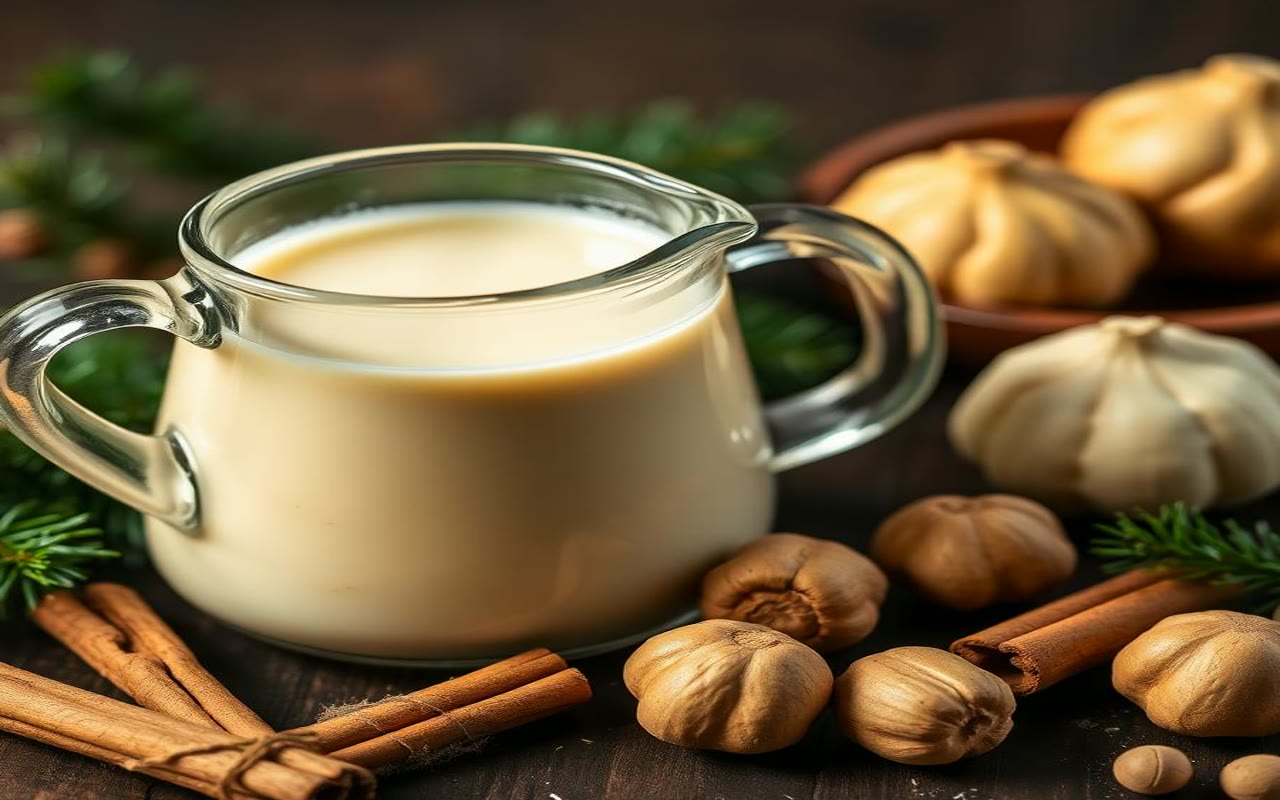
To make eggnog safely at home, heat milk until hot, slowly whisk it into beaten eggs and sugar, then cook the mixture gently until it reaches 160 F and coats a spoon.
Chill it quickly, then stir in vanilla, nutmeg and whipped cream. If you prefer an uncooked recipe, use pasteurized eggs instead of regular ones.
Adding alcohol does not make raw eggs safe, so cook the base or go pasteurized either way.
Why Does Homemade Eggnog Need to Be Cooked?
Old family recipes often use raw eggs. Iowa State University Extension points out that even clean, uncracked refrigerated eggs can carry Salmonella.
Eggs must reach 160 F to kill that bacteria. At that temperature the custard thickens just enough to coat the back of a metal spoon.
Michigan State University Extension adds that alcohol can slow bacterial growth but cannot be relied on to kill it. Young children, pregnant women, older adults and anyone with a weakened immune system face the highest risk.
What Ingredients Do You Need?
This base follows the cooked recipe MSU Extension shares from the Partnership for Food Safety Education, which makes about 6 servings:
- 1 quart milk (2 percent or whole)
- 6 large eggs
- 1/2 cup sugar
- 1/4 teaspoon salt
- 1 teaspoon vanilla extract
- 1 cup heavy cream, whipped
- Freshly grated nutmeg
Whole milk and a splash of extra cream give a richer drink. A pinch of cinnamon is a common addition.
How Do You Make Cooked Eggnog, Step by Step?
1. Heat the milk. Warm the milk in a large saucepan until steaming hot. Do not let it boil.
2. Beat the eggs. In a large bowl, whisk the eggs and salt, then gradually whisk in the sugar until smooth.
3. Temper. Pour the hot milk into the eggs in a thin stream while whisking constantly. This warms the eggs without scrambling them.
4. Cook to 160 F. Return everything to the pan over medium low heat and stir constantly. Check with an instant read thermometer.
5. Stop the cooking. As soon as it hits 160 F, set the pan in a bowl of ice water. Iowa State notes that going much higher makes the eggs curdle.
6. Chill. Stir in the vanilla, pour into shallow containers and refrigerate for several hours until cold.
7. Finish. Fold in the whipped cream right before serving and dust each glass with nutmeg.
What If My Eggnog Curdles?
Small lumps mean the eggs got too hot. Pour the mixture through a fine mesh strainer, or blend it briefly until smooth.
Next time, lower the heat and stir the bottom of the pan without stopping. Patience is the whole trick.
Can You Make Eggnog Without Cooking?
Yes, if you use pasteurized shell eggs or pasteurized liquid eggs. These are sold beside regular eggs and are already heated enough to be safe.
Iowa State and MSU both say that if a recipe folds in raw beaten egg whites, those whites should also be pasteurized.
Store bought eggnog is made with pasteurized eggs and does not need any extra cooking.
How Do You Make Spiked Eggnog?
Stir in bourbon, dark rum or brandy after the base is fully chilled. A common amount is about 1 ounce per serving, but adjust to taste.
Keep a non alcoholic pitcher for kids and anyone who is pregnant or not drinking. Label both pitchers at a party.
How Long Does Homemade Eggnog Last?
Keep it covered in the fridge and drink it within about 2 to 3 days for the best flavor and safety.
Do not leave a punch bowl of eggnog out for more than two hours. Set the bowl in a larger bowl of ice, or refill from the fridge in smaller batches.
Can You Make Dairy Free Eggnog?
Yes. Full fat oat milk or canned coconut milk work best because they are creamy. Thin coconut milk with a little almond milk if it feels too heavy.
Follow the same cooking steps so the eggs still reach 160 F. For an egg free version, thicken plant milk with a spoonful of cornstarch instead.
How Many Calories Are in Eggnog?
Homemade eggnog made with whole milk and cream is rich, often in the range of 200 to 350 calories per cup depending on how much cream and sugar you add.
Using 2 percent milk, less sugar and lightly whipped cream cuts that noticeably without losing the classic flavor.
How Do You Serve Eggnog at a Party?
Chill a punch bowl or glass pitcher in the fridge for an hour before guests arrive. A cold bowl keeps the eggnog cold much longer than one straight from the cupboard.
Set the bowl inside a larger bowl of crushed ice, and refill it from the fridge in small batches instead of pouring the whole batch out at once.
Offer toppings on the side: grated nutmeg, ground cinnamon, a few cinnamon sticks and a small bowl of whipped cream. Guests can make each glass their own.
What Mistakes Should You Avoid?
- Heating the custard over high heat, which scrambles the eggs.
- Skipping the thermometer and guessing at doneness.
- Folding in raw, unpasteurized egg whites for froth.
- Leaving the bowl out on the table all evening.
- Adding alcohol and assuming it makes raw eggs safe.
Avoid those five and your eggnog will be smooth, rich and safe for every guest.
Frequently Asked Questions
Does alcohol kill Salmonella in eggnog?
No. It may slow growth, but it is not a reliable way to make raw eggs safe.
Do I need a thermometer?
It is the most reliable check. The spoon test helps, but a thermometer removes the guesswork.
Can I freeze eggnog?
You can, but the texture may separate. Blend it after thawing.
When does eggnog season start?
Stores often stock it from October through the end of December.
The Bottom Line
Safe homemade eggnog comes down to one number: 160 F. Cook the egg and milk base gently to that temperature, or use pasteurized eggs, then chill it fast.
Add vanilla, nutmeg and whipped cream at the end, and you will have a thick, festive drink that is safe for everyone at the table.