
Quick Answer
To make creamy mashed potatoes, peel and cut Yukon Gold or russet potatoes into even chunks, cover them with cold salted water and simmer until a fork slides in easily, about 15 to 20 minutes.
Drain well and let them steam dry for a minute. Mash with a hand masher or ricer, then fold in warm butter and warm milk or cream.
Never use a blender or food processor. It breaks the starch and turns potatoes gluey.
What Ingredients Do You Need?
For about 6 servings:
- 3 pounds Yukon Gold or russet potatoes
- 1 tablespoon salt for the cooking water
- 6 to 8 tablespoons butter
- 3/4 to 1 cup whole milk, half and half or cream
- Salt and pepper to taste
- Chives for topping (optional)
Which Potatoes Make the Best Mashed Potatoes?
Yukon Gold potatoes are naturally buttery and creamy, with a dense, smooth texture. They are my top pick.
Russets are starchier and make a lighter, fluffier mash that soaks up lots of butter and milk.
Red potatoes are waxy and make a firmer, chunkier mash. Leave the skins on for rustic smashed potatoes.
A mix of half Yukon Gold and half russet gives a mash that is both creamy and fluffy.
How Do You Make Mashed Potatoes, Step by Step?
1. Cut evenly. Peel the potatoes and cut them into 1 1/2 to 2 inch chunks so they all cook at the same speed.
2. Start in cold water. Put the potatoes in a large pot and cover by an inch with cold water. Add the salt. Starting cold lets the outside and center cook evenly, so you do not get mushy edges and hard middles.
3. Simmer. Bring to a boil, then lower to a steady simmer. Cook for 15 to 20 minutes, until a fork or knife slides through with no resistance.
4. Warm the dairy. While the potatoes cook, heat the butter and milk together in a small pot or the microwave until the butter melts.
5. Drain and dry. Drain the potatoes, return them to the hot pot and let them sit over low heat for 1 to 2 minutes. This steams off extra water, which would dilute the flavor.
6. Mash. Mash with a hand masher, or press through a ricer or food mill for the smoothest texture.
7. Fold in the dairy. Pour in the warm butter and milk in two or three additions, folding gently with a spatula. Stop when they are creamy.
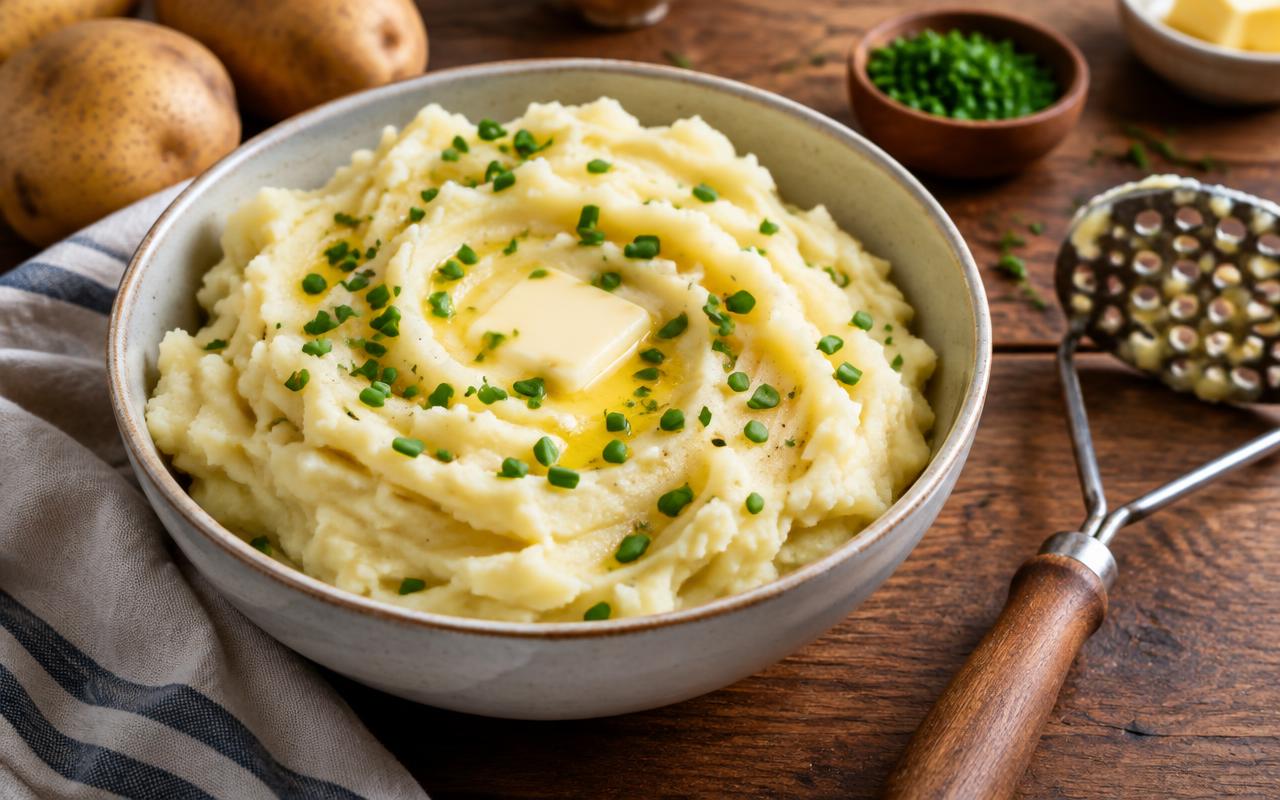
8. Season. Taste and add salt and pepper. Top with a pat of butter and chives.
Why Do Mashed Potatoes Turn Gluey?
Potato cells are full of starch. Gentle mashing keeps most of them whole. Fast, sharp blades, like a blender, food processor or even an electric hand mixer used too long, burst the cells and release sticky starch.
Overmixing with a spatula does the same thing more slowly. Mash once and fold just until combined.
Waterlogged potatoes also go gluey. Do not overcook them until they fall apart, and always let them steam dry.
Why Should the Butter and Milk Be Warm?
Cold milk cools the potatoes and is harder for them to absorb, so you end up stirring more. More stirring means more gluey starch.
Warm dairy blends in quickly and keeps the potatoes hot for serving. Adding the butter before the milk also helps, since fat coats the starch and keeps the texture silky.
Masher, Ricer or Mixer: Which Tool Is Best?
- Potato ricer or food mill: the smoothest, fluffiest result with the least risk of glue.
- Hand masher: classic and slightly rustic, with a few small lumps.
- Electric hand mixer: works on low speed for a short time, but it is easy to overdo.
- Blender or food processor: avoid. These almost always make paste.
What Flavor Variations Can You Try?
- Garlic: simmer 4 peeled garlic cloves with the potatoes and mash them in.
- Cream cheese or sour cream: fold in 4 ounces for extra tang and richness.
- Brown butter: cook the butter until nutty and golden before adding it.
- Herb: stir in chopped chives, parsley or thyme.
- Loaded: add shredded cheddar, crumbled bacon and green onion.
- Dairy free: use olive oil or plant butter and warm unsweetened oat milk with some of the cooking water.
Can You Make Mashed Potatoes Ahead?
Yes. Make them up to 2 days ahead, cool and refrigerate. Reheat in a covered baking dish at 350 F for about 30 minutes, stirring in a splash of warm milk.
For a holiday, a slow cooker on low keeps them warm for 2 to 3 hours. Add a few pats of butter on top and stir once an hour.
How Do You Store and Reheat Mashed Potatoes?
Refrigerate leftovers within 2 hours and use them within 3 to 4 days, as USDA FSIS advises for leftovers. Reheat to 165 F.
Stir in a little warm milk or butter as they reheat, since they firm up in the fridge. Leftover mash also makes great potato pancakes or a topping for shepherd's pie.
How Do You Fix Mashed Potatoes That Went Wrong?
Too thin: stir them over low heat to cook off moisture, or fold in a little instant potato flakes.
Gluey: spread them in a buttered dish, top with cheese and breadcrumbs and bake into a casserole, which hides the texture.
Bland: add salt a pinch at a time, plus more butter. Potatoes need more salt than most people think.
Frequently Asked Questions
Should I peel the potatoes?
For the creamiest mash, yes. Thin skinned Yukon Golds can stay unpeeled for a rustic style.
How much salt goes in the water?
About 1 tablespoon for a large pot. It seasons the potatoes all the way through.
Can I freeze mashed potatoes?
Yes, if they are rich with butter and cream. Thaw in the fridge and reheat while stirring.
How many potatoes per person?
Plan on about 1/2 pound raw potatoes per person.
The Bottom Line
Creamy mashed potatoes come from starting the right potatoes in cold salted water, drying them well and mashing gently.
Use warm butter and milk, fold instead of whipping and keep the blender in the cupboard. That is all it takes for smooth, fluffy, never gluey potatoes.