Quick Answer
Keep it to three to five minutes, use a simple structure, tell one real story, and finish by raising a glass to the couple.
Write it out, cut a third of it, then practise out loud at least five times.
The best wedding toasts are specific and warm. The worst ones are long, in jokes nobody follows, or about the speaker rather than the couple.
The Structure That Always Works
One, introduce yourself. Half the room does not know who you are. "For those who do not know me, I am Dan, and I have been Aisha's best friend since we were eleven."
Two, tell one story. A single specific story that shows something true about them. One story told well beats four told quickly.
Three, bring in the partner. Say what changed when they met, or what you saw the first time you watched them together.
Four, raise the glass. One clear sentence of good wishes, then "please join me in raising a glass to Aisha and Tom."
That is the whole shape. Everything else is decoration on top of it.
How Long
Three to five minutes. That is roughly 450 to 750 spoken words.
Nobody has ever complained that a wedding speech was too short. Plenty of guests remember one that was too long.
Time yourself out loud rather than estimating from the page. People speak more slowly with a microphone in front of a room.
If there are several speakers, coordinate. Four speeches at seven minutes each is nearly half an hour of a reception.
Finding the Story
Pick the story that shows character rather than the one that gets the biggest laugh. Kindness, loyalty, stubbornness, generosity: those make the room feel something.
Choose something the whole room can follow with no background. If you have to explain three people and a place before the story starts, choose another one.
Specific details are what make it land. The exact car, the exact town, the thing they said. Vague warmth is instantly forgettable.
If you are struggling, ask a parent or an old friend for a memory you were not there for. It usually unlocks the right one.
Write down what the story proves and say that out loud at the end of it. That sentence is the bridge into the rest of the speech.
Jokes: What Works and What Does Not
Aim for warmth first and laughs second. A speech that is only funny leaves nothing behind.
Gentle teasing is fine when it is clearly affectionate and the couple has heard it before.
What reliably fails: ex partners, drunken stories, anything sexual, jokes about the marriage failing, digs at the in laws, and jokes about how long the bride took to get ready.
In jokes are the biggest killer. If only six people in a room of 120 understand it, it reads as an inside conversation the rest have been excluded from.
Test material on somebody who was not there. If they do not laugh without explanation, cut it.
Writing It
Write a full draft without editing, then cut it by a third. The cut is where the speech actually gets good.
Write the way you speak. Read it aloud and change anything you would never say in conversation.
Open with something concrete rather than a joke about being nervous or a dictionary definition of marriage. Both are the oldest openings there are.
Name both partners several times. A speech that is entirely about one of them and mentions the other twice is noticeable from every seat.
Avoid a long list of thank yous unless that is your assigned role, and check with whoever is running the speeches so nothing is duplicated.
Delivering It
Practise out loud at least five times, and at least once standing up in front of somebody.
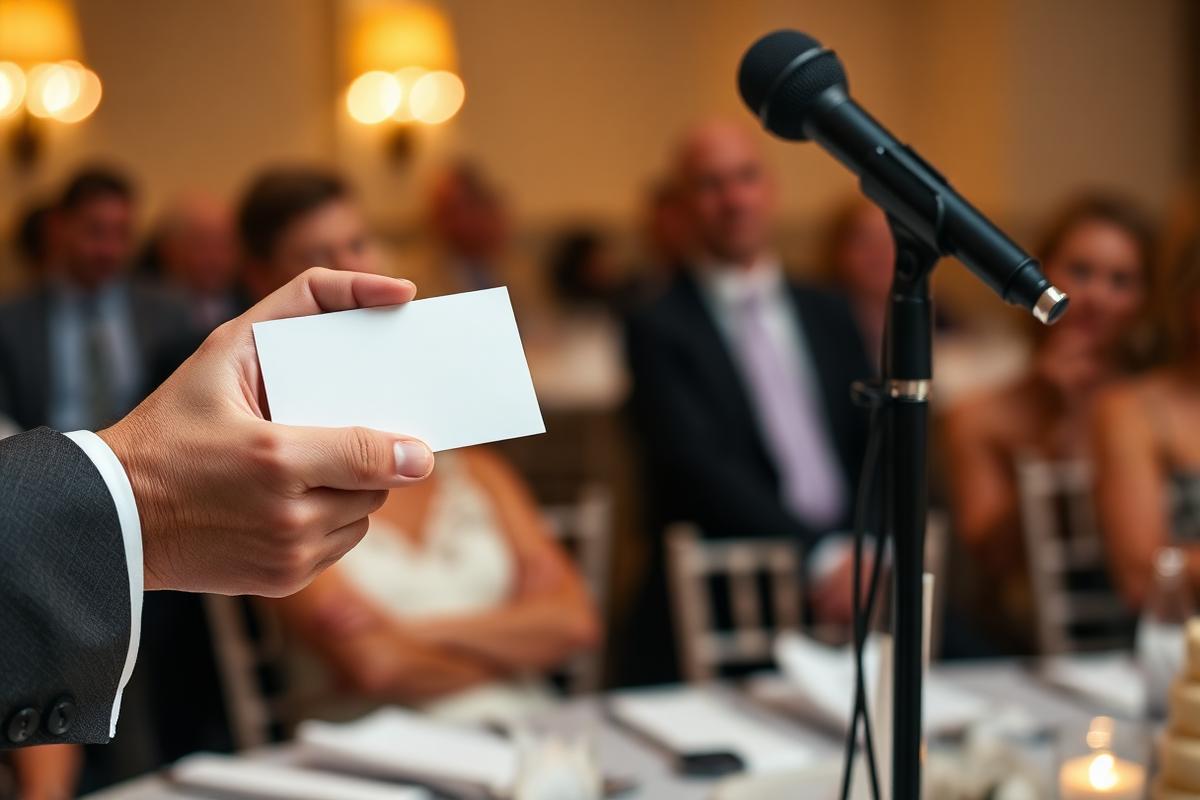
Bring notes on small cards and use them. Nobody minds notes, and everybody minds a speaker who loses their place.
Hold the microphone close, about a hand's width from your mouth, and speak slightly more slowly than feels natural.
Look up at the room, then at the couple, then at the room. Reading the whole thing down at the paper drains it.
Pause after your best lines. Silence is what lets a room react.
Limit alcohol before the speech to one drink. The idea that a couple more helps is the single most common cause of a bad wedding speech.
If You Get Emotional
Stop, breathe, take a drink of water and carry on. Nobody in that room minds.
Emotion is part of a wedding speech and a pause reads as sincerity rather than failure.
If you know you will struggle with a particular line, put it early rather than at the end so you can recover.
Have a printed copy in your pocket even if you plan to speak from cards, so somebody can pick up the last paragraph if you truly cannot finish.
The Toast Itself
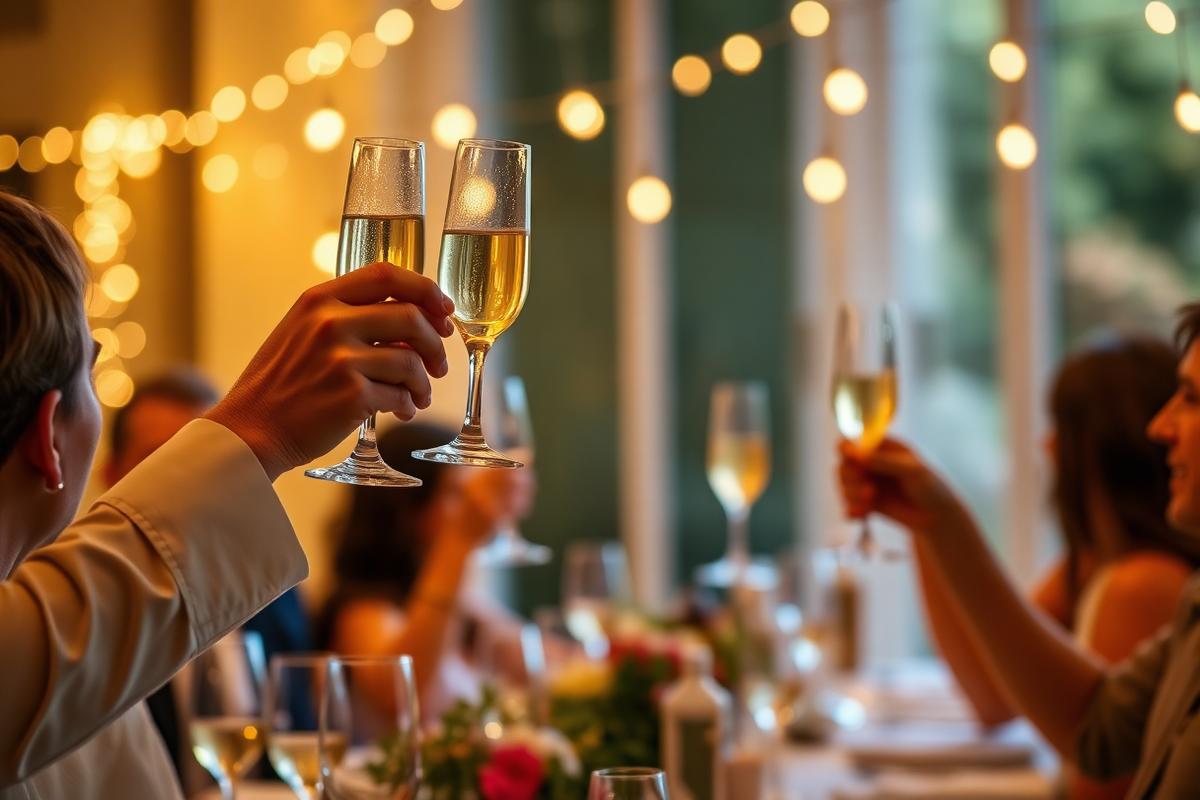
Signal it clearly: "Please, everybody, charge your glasses and stand."
Say the names last and say them clearly. "To Aisha and Tom" is the line the room repeats.
Raise your glass and hold it up while the room responds, then take a sip. Do not down the drink.
Sit down straight afterwards rather than adding one more thought. The toast is the ending.
Frequently Asked Questions
How long should a wedding toast be?
Three to five minutes, which is roughly 450 to 750 spoken words. Shorter is always safer than longer.
Is it acceptable to read from notes?
Yes. Small note cards are completely normal and far better than losing your place halfway through.
What should you never say in a wedding speech?
Anything about ex partners, anything sexual, jokes about divorce, digs at the in laws, and in jokes that most of the room cannot follow.
Who gives the toasts at a wedding?
Traditionally the father of the bride, the groom and the best man, but modern weddings vary widely and anybody close to the couple may be asked.
How do you start a wedding speech?
Say who you are and how you know the couple. It orients the room immediately and beats a joke about being nervous.
Bottom Line
Introduce yourself, tell one specific story, bring the partner in, and raise the glass. Three to five minutes, notes in hand, one drink beforehand.
Cut the in jokes and anything about exes, practise out loud until it flows, and finish with both names said clearly.