Quick Answer
Pick a duration from 1 to 60 minutes (or set custom hours, minutes and seconds), then choose your start and end bell tone (Tibetan, Crystal, Gong, Chime or Wood). A short prep countdown lets you settle before the opening bell rings.
Layer an ambient soundscape (rain, ocean, forest or binaural beats in Delta, Theta or Alpha) with an optional background music drone, each on its own volume slider. Add interval bells at fixed spacing or random intervals as gentle attention anchors.
The built in Stats tab tracks your day streak, total minutes and completed sessions. The Journal tab logs mood and reflections after each sit, and you can opt in to a daily browser reminder. Everything runs client side and is stored only on your device, no account needed.
Meditation Timer
Bells, soundscapes, binaural beats and a private journal.
Why use a meditation timer?
The biggest barrier for new meditators is the urge to check the clock. A dedicated timer removes that friction so you can fully surrender to the practice, knowing a gentle bell will bring you back when the time is up.
Interval bells (a soft chime at set points during the session) act as anchors. If your mind has wandered, the chime gently calls it home without judgement.
Choose your style
The timer itself is style agnostic, just a clean stopwatch with bells, ambient sound and music, but the practice you run on top of it makes all the difference. Below is a quick reference, followed by a deeper explanation of each tradition.
| Style | Best for | Typical duration |
|---|---|---|
| Mindfulness | Stress reduction, focus, present moment awareness | 10 to 20 minutes |
| Vipassana | Insight, reactivity reduction, equanimity | 30 to 60 minutes |
| Zazen | Stillness, posture discipline, mental clarity | 20 to 40 minutes |
| Metta | Compassion, mood lift, reduced anger | 10 to 20 minutes |
| Body Scan | Tension release, grounding, sleep prep | 10 to 30 minutes |
Mindfulness
Mindfulness is the modern, secular shorthand for paying open, non judgemental attention to whatever is happening right now. You usually anchor on the breath, notice when the mind drifts, and gently return without scolding yourself.
It is the style behind programmes like MBSR (Mindfulness Based Stress Reduction) and is the most evidence backed entry point for beginners. Set a 10 to 20 minute timer, turn on a soft start bell, and just keep coming back to the breath.
Vipassana
Vipassana means insight in Pali and is the original Buddhist practice from which most modern mindfulness is derived. After settling on the breath, you systematically scan bodily sensations and watch them arise and pass, without clinging to the pleasant or pushing away the unpleasant.
It tends to be longer and quieter than mindfulness, classical retreats use 45 to 60 minute sits in silence. Use a single end bell and avoid music so nothing distracts from raw sensation.
Zazen
Zazen is the seated meditation of the Zen tradition. You sit upright with a soft downward gaze, eyes half open, hands in the cosmic mudra, and simply allow thoughts to pass like clouds without following them.
Posture is taken seriously, so the timer's posture reminders are useful here. Two 25 minute sits separated by a short walking break (kinhin) is the traditional pattern.
Metta (Loving Kindness)
Metta is an active practice of generating warmth and goodwill, first toward yourself, then a loved one, a neutral person, a difficult person and finally all beings. You silently repeat phrases such as may you be happy, may you be safe, may you be at ease.
Research links regular metta practice to higher positive emotion, lower self criticism and improved social connection. Pair it with the guided cues option for gentle prompts every few minutes.
Body Scan
The body scan moves attention slowly from the crown of the head down to the toes (or vice versa), noticing temperature, pressure, tingling or numbness in each region. The goal is not to relax the body but to befriend it as it is.
It is the most reliable style for releasing physical tension and is especially good before sleep. Use interval bells every two or three minutes as soft markers to move to the next region.
The 4 week progressive plan
| Week | Session | Focus |
|---|---|---|
| Week 1 | 3 to 5 minutes | Simple breath focus, no judgement. |
| Week 2 | 10 minutes | Add a single mid-point interval bell. |
| Week 3 | 15 minutes | Combine body scan and breath focus. |
| Week 4 | 20+ minutes | Unstructured Vipassana or Zen. |
Posture and setup
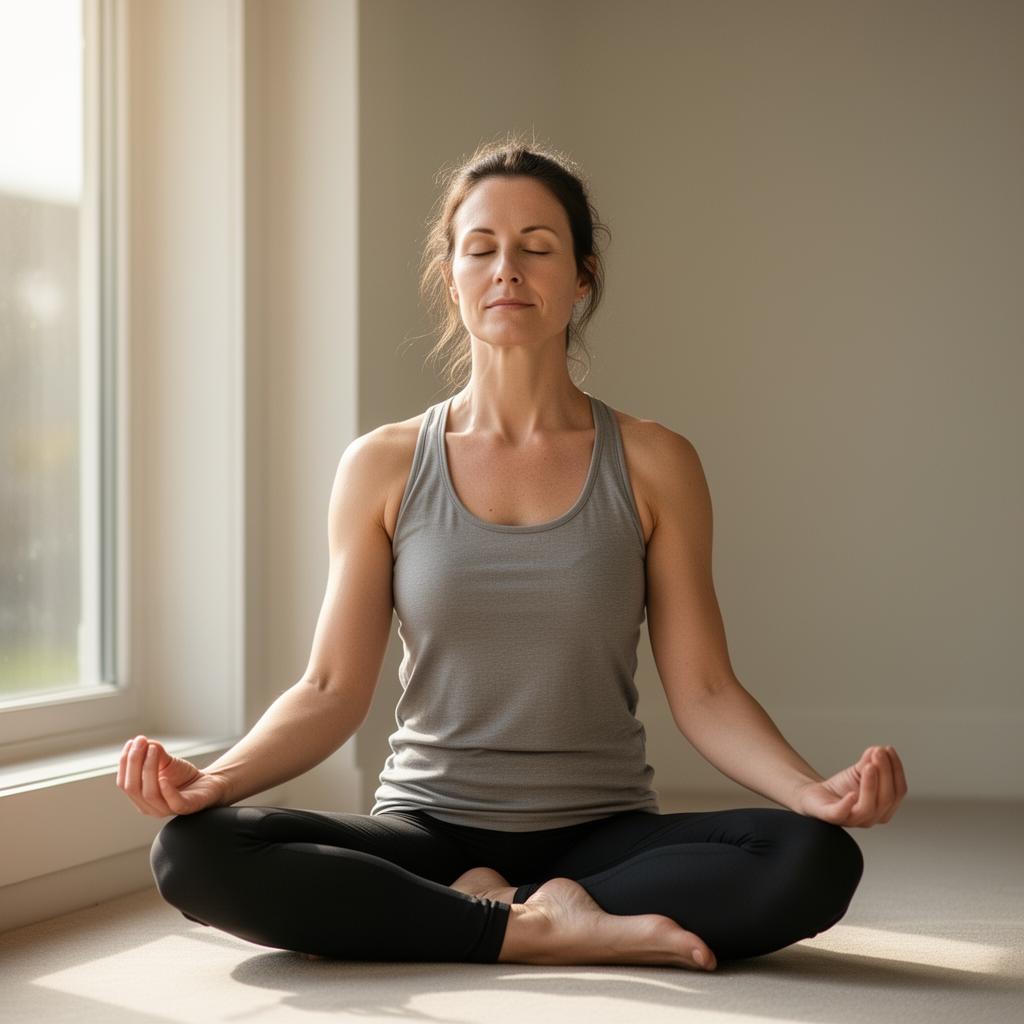
- Spine: upright with a natural curve. Imagine a string pulling the crown of your head upward.
- Hands: resting comfortably on your knees or in your lap.
- Shoulders: soft and dropped, jaw relaxed.
- Eyes: closed for Vipassana and body scans, half-open and gazing softly downward for Zen.
The neuroscience in plain English
- Smaller amygdala: regular practice reduces the size of the brain's fear centre, lowering baseline anxiety.
- Quieter Default Mode Network: the DMN is the brain region responsible for rumination and worry. Meditation actively turns the volume down.
- Thicker prefrontal cortex: long-term practice grows grey matter in the area that runs decision making, focus and emotional regulation.
Frequently asked questions
Is this meditation timer free?
Yes. The whole tool runs in your browser. No download, no account, no paywall. Bookmark the page for daily use.
How does a meditation timer actually work?
It tracks your session duration and plays gentle audio bells at the start, at any custom interval points and at the end. That removes the urge to check the clock so your attention can stay on the breath.
Should I use a timer when meditating?
Yes, especially as a beginner. A clear boundary around the session trains the mind to settle in for the full duration instead of escaping early.
Can I add interval bells?
Yes. Set the number of interval bells in the calculator and the timer spaces them evenly across the session, like a traditional gong or singing bowl.
Are physical or analog meditation timers better?
Some practitioners prefer a physical or analog timer to keep their phone out of the room. Premium devices like the Enso are popular but expensive. A web-based timer gives you the same boundary and customisation for free.
Will the timer keep working if my screen goes to sleep?
Some mobile browsers pause background scripts to save battery. For longer sessions, lock the screen on or extend your auto-lock setting.
How do I finally start meditating?
Lower the barrier. Commit to 2 or 3 minutes right after an existing habit (brushing your teeth, making coffee). Use the timer so the only decision left is to sit down.
How long should a beginner meditate?
3 to 5 minutes a day. The biggest mistake is jumping to 30 minute sessions, feeling restless and quitting. Build the habit first, lengthen later.
Who should be cautious with meditation?
People with severe trauma, active PTSD or psychiatric conditions like schizophrenia should speak to a mental health professional before starting solitary practice. Quiet introspection can surface intense emotions.
What is the best time of day to meditate?
The time you can do every day. Morning is ideal because it sets a calm baseline before daily stressors begin.
When is a bad time to meditate?
Right after a heavy meal (digestion makes you drowsy). Highly focused or energising breathwork right before bed can also stimulate the nervous system and delay sleep.
Why do some traditions favour 3am to 6am?
In yogic traditions this window is called the Ambrosial Hour. The world is still, distractions have not begun and the brain is in a deeply receptive state.
What happens after 20 minutes?
Brainwave activity shifts more firmly from active Beta into calmer Alpha and Theta waves. Cortisol (the main stress hormone) drops noticeably and you feel a deeper bodily release.
What are the 4 traditional postures?
Sitting, standing, walking and lying down. Sitting is most common for focused attention. Walking meditation extends mindfulness into movement.
Eyes open or closed?
Vipassana and body scans typically use closed eyes. Zen (Zazen) is traditionally practiced with eyes half-open, gazing softly downward at about 45 degrees.
What should I avoid while meditating?
Do not judge yourself for having thoughts. Do not force your mind to be empty. Do not hold your breath, and do not slump (it restricts deep diaphragmatic breathing).
What is the golden rule of meditation?
Notice, let go, and return. Every time you catch a wandering mind and bring it back, you are doing the practice correctly.
What is the 3-3-3 grounding rule?
Identify 3 things you can see, 3 things you can hear and move 3 specific parts of your body. A quick anti-anxiety reset that pairs well with a 1 minute timer.
What is 3 point meditation?
Anchor your attention to three physical points in sequence: cool air at the tip of the nose, the rise and fall of the chest and the contact of your body with the chair or floor.
What is 555 meditation?
Either a breath pattern (inhale 5 seconds, hold 5, exhale 5) or a 555 Hz audio frequency people listen to during practice for relaxation.
What is 11:11 meditation?
An informal practice rooted in numerology: pause for a deep mindful breath or set an intention at exactly 11:11 AM or PM. Treated as a small, auspicious moment.
How do I tell if I am doing it right?
Mind wandering is the practice, not a failure. If you notice your mind drift and choose to return to the breath, you are doing it correctly. Every return is a rep for your attention.
What are the signs of deep meditation?
A loss of the perception of time, very subtle breathing, physical stillness with no urge to fidget and a sense of spaciousness in the mind.
What chemicals does meditation release?
It boosts serotonin (mood), dopamine (focus and reward), endorphins (natural painkillers) and melatonin (sleep), while lowering cortisol (stress).
What are the 7 stages of meditation?
Models vary by tradition, but a common arc is: 1) noticing chaos, 2) brief moments of focus, 3) extended concentration, 4) physical tranquility, 5) unified awareness, 6) self-insight, 7) liberation.
How the timer works
- Style presets: each preset preloads a sensible duration, prep countdown and number of interval bells.
- Prep countdown: a short window to settle your posture before the start bell.
- Interval bells: spaced evenly across the session as gentle attention anchors.
- Audio: a soft layered chime generated in your browser, no audio file needed.
- Privacy: the timer runs entirely client side. Nothing is stored or transmitted.
Related tools
- Breathing Timer for Box Breathing, 4-7-8 and HRV resonance pacing.
- Stress Calculator to see how much load your practice needs to offload.
- Sleep Calculator to pair an evening body scan with the right bedtime.
- IQ Test to benchmark cognitive performance before and after a regular practice.
Wellbeing disclaimer
Meditation is a wellbeing practice, not a medical treatment. For most people it is safe and beneficial, but a small number of people (especially those with a history of trauma, dissociation, psychosis or severe anxiety) can find intensive practice destabilising. If that is you, work with a trauma-informed teacher or therapist rather than relying on a self-guided timer.
This tool and article are not a substitute for professional mental health care. If you are in crisis, contact your local emergency services or a helpline at findahelpline.com.
See the full site-wide Disclaimer & Notice for the complete terms that apply to every calculator and tool on dmbio.