Quick Answer
Water itself does not expire. The expiration date on a bottle of water is really a date for the plastic container.
Over time the polyethylene terephthalate, or PET, that most bottles are made from begins to leach trace chemicals into the water, especially when stored in heat or sunlight. The water inside is chemically the same molecule it was a year ago.
The short answer
Water itself does not expire. The expiration date on a bottle of water is really a date for the plastic container. Over time the polyethylene terephthalate, or PET, that most bottles are made from begins to leach trace chemicals into the water, especially when stored in heat or sunlight.
The water inside is chemically the same molecule it was a year ago. What changes is the environment around it: the plastic, the air gap above the water, the seal on the cap and the cleanliness of the bottle once it is opened.
Why bottlers print a date at all?
In several countries, regulations require a date on every food and beverage product, including water. The European Union, the United Kingdom and Australia all require a "best before" date on packaged drinks. To stay consistent across markets, manufacturers print a uniform best by date even though the water inside is chemically stable indefinitely.
The date is also a useful marker for warehouse rotation. It guarantees stock is sold within a window in which the bottle is still considered fresh and the label is still valid for the listed product.
What actually changes inside the bottle?
- Plastic leaching: Compounds like antimony and acetaldehyde can migrate from PET into the water in tiny amounts.
- Taste shift: Acetaldehyde gives older bottled water a faintly sweet, plastic like flavor. The threshold for human perception is very low, around 20 to 40 micrograms per liter.
- Algae or biofilm: If the bottle is opened and reused, microorganisms can grow inside.
- CO2 loss in sparkling water: Carbon dioxide slowly escapes through the bottle walls, so older sparkling water tastes flat.
- Cap seal weakening: Over years, the rubber liner inside the cap can dry out and let air in.
Why heat is the real enemy?
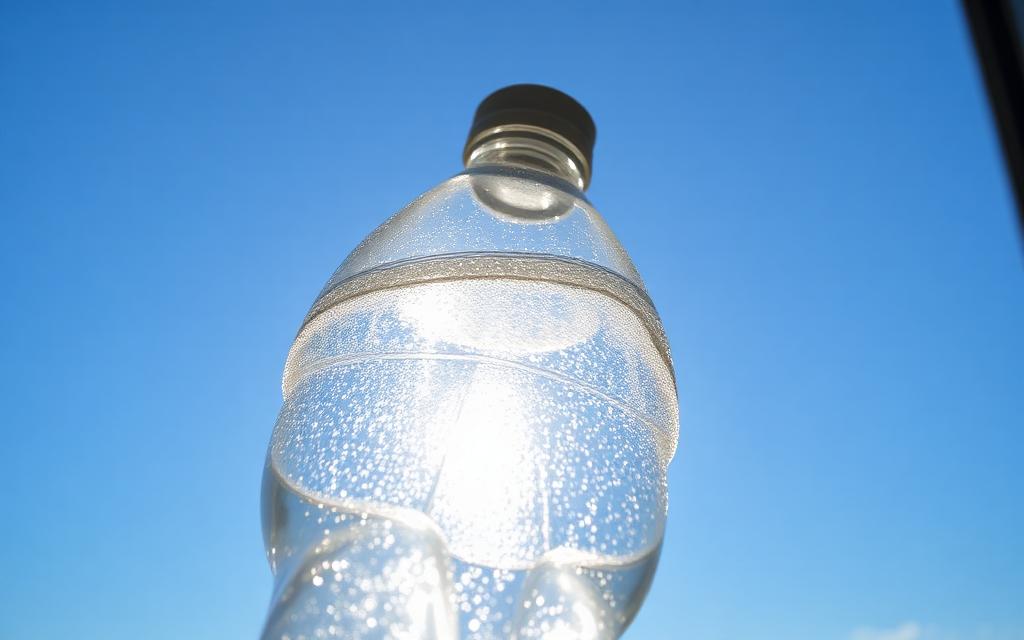
Heat speeds up chemical migration. A case of water left in a hot car or garage can develop noticeable taste changes in weeks rather than months. Studies have measured antimony levels in bottled water roughly tripling after several weeks at 65 degrees Celsius, although the absolute amounts remain well below safety limits set by the World Health Organization.
Cool, dark storage keeps the water and the bottle stable for far longer. A pantry shelf, a basement or a temperature controlled garage are all far better than a sunny porch or a warm car trunk.
What about glass and metal bottles?
Water in glass bottles is essentially shelf stable. Glass does not leach into the contents, and as long as the seal holds, the water can sit for years without changing. Stainless steel is similar, though older bottles with damaged interior coatings can develop a faint metallic taste.
This is why long term emergency water supplies are usually recommended in glass, food grade polyethylene jerry cans or specially designed long storage containers, rather than in standard PET bottles.
Is old bottled water dangerous?
For unopened, properly stored PET bottles, the answer is almost always no. The trace compounds that migrate into the water remain well within safety limits, and the water itself does not host pathogens because it was sterilized before bottling and the seal is intact.
The picture changes once the bottle is opened. Bacteria from your mouth, hands or the air can enter, and they grow steadily in the warm, nutrient poor liquid. Within a week, an opened bottle left at room temperature can develop measurable bacterial growth, although usually not enough to cause illness in a healthy person.
Practical guidance
- Store unopened bottled water in a cool, dark place. It is safe long past its printed date if conditions stay cool.
- Once opened, drink it within a few days to limit microbial growth, especially if you drink directly from the bottle.
- For long term storage, choose glass or stainless steel containers rather than plastic.
- Do not refill single use plastic bottles repeatedly. Their interior surface is harder to clean than a reusable bottle and develops biofilm quickly.
- If a bottle smells plastic like, sour or musty, throw it out regardless of the date.
How to store water for emergencies?
If you keep bottled water for emergency preparedness, the storage location matters more than the date on the label. The official guidance from public safety agencies is to store sealed commercial bottled water in a cool, dark place and rotate it every one to two years. Replace any bottles that have been exposed to direct sunlight, heat or freezing.
For longer storage, food grade plastic jerry cans designed for water are a better fit than retail bottles. They have thicker walls, tighter caps and additives in the plastic that resist UV degradation. Some households use stainless steel containers for the very long term, which trade weight for near indefinite shelf life.
The microplastic question
Recent research has detected microplastic and nanoplastic particles in commercially bottled water, including major brands. The amounts are small, and the long term health effects are still being studied, but the trend is enough that many health agencies suggest using glass or stainless steel for daily drinking water when possible.
Heat and time both increase the rate of microplastic shedding. A bottle stored cool and consumed soon after purchase contributes far less than a bottle that has been sitting in a hot car for months.
Common myths worth ignoring
- "Water freezing in a plastic bottle releases dioxins." There is no scientific evidence for this. Cold actually slows leaching.
- "Reusing a bottle once is dangerous." Once is fine if the bottle is rinsed and refilled with cool water.
- "All bottled water is the same." Mineral content, source and treatment vary widely between brands.
The takeaway
The expiration date on bottled water is really a story about the bottle, not the water. Keep it cool, keep it sealed, and the contents stay perfectly drinkable for years. Leave it baking in a hot car and the plastic will tell you, in flavor and aftertaste, that its time is up.
Quick recap
Use this as the short version to save or share. The key facts above explain the why and the how, but the practical takeaway is simple: small habits and small ingredient choices compound. Make the change once, and your future routine gets a little easier and a little better every time you repeat it.
If you found this helpful, browse the related answers below for more everyday questions broken down the same way. Every article on dmbio is researched and updated when new evidence comes in, so you can come back to the same page months later and trust that the answer still holds.