Quick Answer
If you are new to working out, the safest and most effective starting plan is 150 minutes of moderate aerobic activity per week plus two short strength sessions of 20 to 30 minutes each. That follows the U.S. Physical Activity Guidelines and the World Health Organization recommendations for adults, and it covers cardiovascular health, muscle strength, and bone density in less than 4 hours per week.
The single biggest predictor of success is consistency. Five 30 minute sessions a week, sustained for 12 weeks, change body composition and resting heart rate more than one or two punishing 90 minute sessions a week.
Start slower than you think you should. Soreness for the first week is normal, but if you cannot walk down stairs or sleep properly, you went too hard.
The weekly framework that works

| Training style | Weekly target | Primary benefit | Beginner examples |
|---|---|---|---|
| Zone 2 cardio | 150 minutes | Lower resting heart rate, build capillary density | Brisk walking, easy cycling, swimming |
| Resistance training | 2 to 3 sessions | Build muscle, preserve bone density | Bodyweight squats, push ups, lunges, dumbbell rows |
| Mobility | 10 minutes daily | Joint range, injury prevention | Hip openers, shoulder dislocates, ankle circles |
| Rest | 1 to 2 days | Recovery and adaptation | Walking, easy stretching, sleep focus |
Why zone 2 cardio is the foundation
Zone 2 is the intensity at which you can hold a conversation in full sentences but feel slightly out of breath. It works on your aerobic base, which improves the heart's stroke volume, the mitochondrial density in your muscles, and your ability to burn fat at rest. The American College of Sports Medicine recommends starting with 150 minutes per week and progressing to 300.
For most beginners, that is five sessions of 30 minutes, or three sessions of 50. Brisk walking is enough. You do not need to run.
Why strength training is non negotiable
From the age of 30, untrained adults lose about 3 to 8 percent of muscle mass per decade. Strength training reverses that trend and protects bone density, which matters even more after 50. Two 30 minute sessions a week, hitting all major muscle groups, are enough to produce measurable strength gains in the first 12 weeks.
A simple full body session covers six movement patterns:
- Squat (bodyweight squat, goblet squat)
- Hinge (Romanian deadlift, kettlebell swing)
- Push (push up, dumbbell press)
- Pull (dumbbell row, lat pulldown)
- Carry (suitcase carry with one dumbbell)
- Core (plank, dead bug)
Aim for 2 to 3 sets of 8 to 12 repetitions per movement, with the last 2 reps feeling genuinely hard.
The progression principle
Your body adapts to the load you give it. The trick is to make the load slightly bigger every week or two. Strength coaches call this progressive overload. There are four ways to apply it:
- Add weight. Move from 5 kg dumbbells to 7 kg.
- Add reps. Go from 8 push ups to 12.
- Add sets. Go from 2 rounds to 3.
- Reduce rest. Cut a 90 second break to 60 seconds.
Pick one variable at a time and change it gradually.
The 12 week beginner plan
Here is a clean structure you can run for the first three months without any equipment beyond a single pair of dumbbells.
| Day | Session |
|---|---|
| Monday | 30 min brisk walk |
| Tuesday | 25 min full body strength |
| Wednesday | 30 min brisk walk |
| Thursday | Rest or 20 min mobility |
| Friday | 25 min full body strength |
| Saturday | 45 min easy bike or longer walk |
| Sunday | Rest |
Sleep, nutrition, and recovery
- Sleep. Seven to nine hours. Muscle repair and hormone regulation happen during deep sleep, not in the gym.
- Protein. Aim for 1.4 to 1.7 grams per kilogram of bodyweight per day, spread across three or four meals. That is roughly 100 to 130 grams for a 70 kg adult.
- Hydration. 30 to 40 ml of water per kilogram of bodyweight per day, more when training in heat.
- Active recovery. Walking, gentle yoga, or stretching on rest days clears soreness faster than full rest.
The most common beginner mistakes
- Starting too hard. Lifting heavy or running fast in week one usually leads to injury or a two week stoppage. Start at 60 percent of what you think you can handle.
- Skipping warm ups. Five minutes of light cardio plus a few mobility drills lowers injury risk dramatically.
- Chasing soreness. Soreness is not a measure of progress. Steady improvement on the same exercise is.
- All cardio, no strength. Cardio alone does not preserve muscle. You need both.
- Restarting from zero every Monday. Missing a session is fine. Missing a whole week, every week, is what blocks progress. Aim for 80 percent consistency, not 100.
Tracking progress without obsessing
The scale is the noisiest signal you can pick. Better markers include resting heart rate measured first thing in the morning, the number of push ups you can do in a row, the distance you walk in 30 minutes, and how you feel climbing two flights of stairs. Tracking those every fortnight gives you a more honest picture than daily weigh ins.
Frequently asked questions
How long until I see results?
Most beginners feel a meaningful difference in energy and sleep within three weeks. Visible changes in body composition usually appear at 8 to 12 weeks with consistent training and decent nutrition.
Do I need a gym?
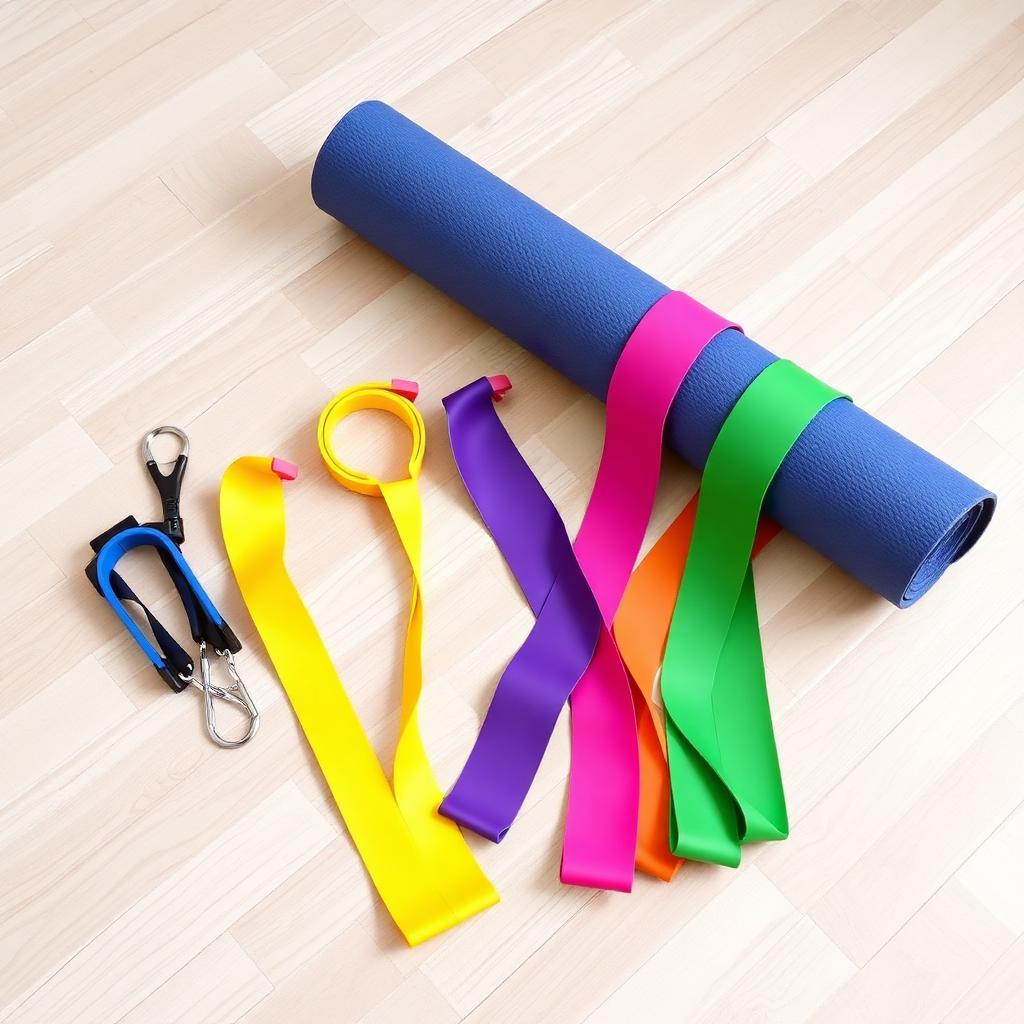
No. A pair of dumbbells, a yoga mat, and a quiet corner are enough for the first three months. A gym becomes useful when you outgrow the load you can buy at home.
Is it safe to start in my 50s?
Yes, and it is one of the highest impact health decisions you can make at any age. Talk to a doctor first if you have a heart condition or have been sedentary for years.
Should I do cardio or weights first?
Whichever you care more about that day. If you mix them in one session, do weights first while you are fresh, then finish with 15 to 20 minutes of easy cardio.