Quick Answer
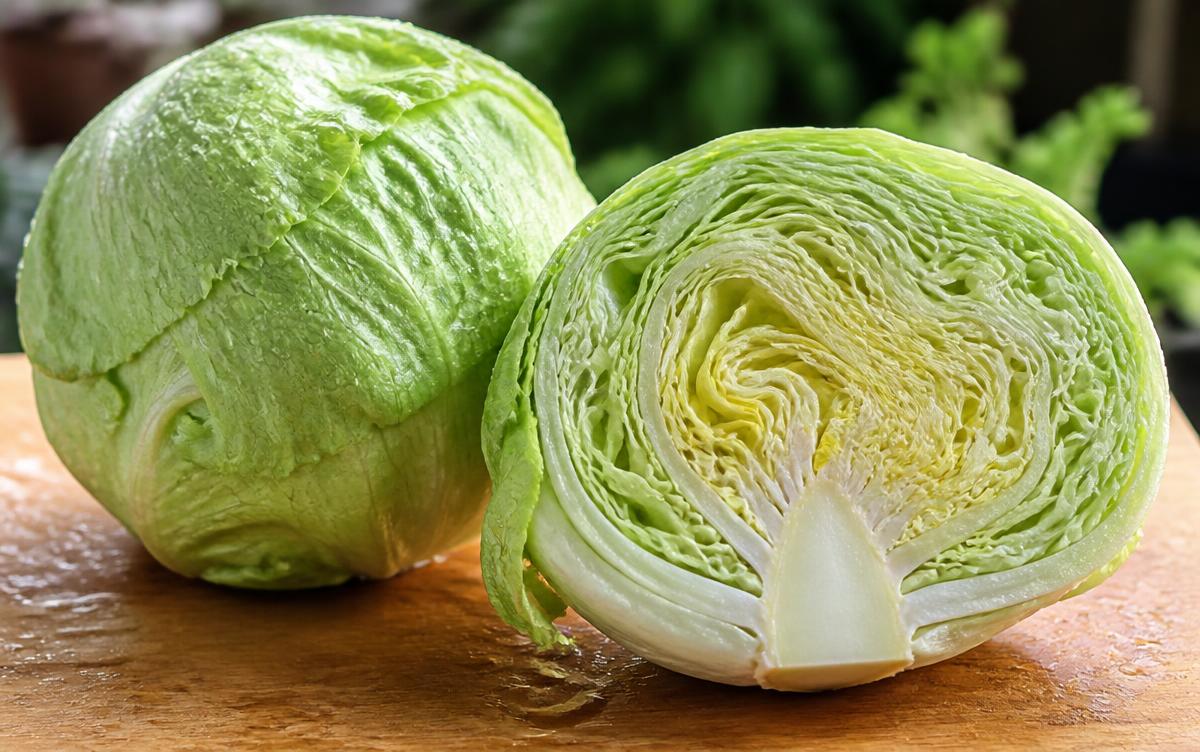
Iceberg lettuce has real but modest nutritional value. It is roughly 96 percent water, and a cup of shredded leaves supplies about 10 calories along with small amounts of vitamin K, vitamin A activity, folate and potassium.
It is not nutritionally worthless, it is simply diluted. Weight for weight, romaine has several times the vitamin A activity and folate, and spinach several times more again.
Where iceberg earns its place is hydration, crunch, cheapness and shelf life. As the base of a salad that also contains tomatoes, beans, egg or chicken, it does a perfectly good job.
What is actually in iceberg lettuce
A cup of shredded iceberg weighs about 72 grams. That serving delivers roughly:
- Calories: around 10.
- Water: about 69 grams, which is why it is so light.
- Fiber: around 0.8 grams.
- Vitamin K: roughly 17 micrograms, a useful share of the daily target.
- Folate: about 21 micrograms.
- Vitamin A activity, potassium, manganese and vitamin C: present in small amounts.
None of those figures are impressive on their own. Together they add up to a food that contributes something for almost no energy cost, which is a genuine if unglamorous virtue.
Why it looks bad next to darker leaves
Nutrient density in leafy greens tracks pigment fairly closely. Chlorophyll and carotenoids sit in the same tissue, so pale leaves generally carry less of both.
Iceberg is bred for a tight, pale, crisp head that ships well. The interior leaves see very little light, so they develop little pigment and correspondingly little carotenoid content. Romaine, which grows in an open upright head, keeps more of its leaves exposed and shows it in the numbers.
Per 100 grams, romaine offers several times the vitamin A activity and folate of iceberg, and spinach and kale sit higher again on iron, calcium, vitamin K and antioxidants. That comparison is what generated the reputation, and it is accurate as far as it goes.
The argument in favour of iceberg
Four things count in its favour, and they are practical rather than nutritional.
It holds water. In hot weather a large iceberg salad contributes meaningfully to fluid intake, and hydration is a real nutritional consideration rather than a technicality.
It keeps. A whole head stored properly stays usable for one to two weeks, where a bag of spinach turns to sludge in four days. Food that survives long enough to be eaten beats food that gets thrown away.
It is cheap. Cost per serving matters for anyone feeding a family, and iceberg is among the cheapest fresh produce in most supermarkets.
It has texture. Crunch is why people eat salad at all in many households, and a base people enjoy is a base that carries tomatoes, peppers, chickpeas and grilled chicken into the meal.
The dressing problem is the real problem
A bowl of iceberg is about 10 to 15 calories. Two tablespoons of ranch or a creamy caesar dressing can add 130 to 150 calories and a substantial dose of sodium.
That is where a wedge salad quietly becomes a rich dish, and it has nothing to do with the leaf. The same dressing on romaine does the same thing.
Use a vinaigrette made with olive oil and dress lightly, and there is a bonus. Carotenoids and vitamin K are fat soluble, so a little oil actually improves absorption of what the salad does contain.
Handling, storage and food safety
Buy heads that feel heavy for their size with no browning at the base. A tight head has been cut recently.
Store the head whole and unwashed in the crisper drawer, ideally in a vented container or a loosely closed bag. Washing before storage traps moisture against the leaves and starts them rotting.
Cut edges brown because of enzymatic oxidation, not spoilage. Tearing by hand or using a ceramic blade slows it, and a browned edge is cosmetic rather than dangerous.
Bagged, pre washed and chopped lettuce carries a slightly different risk profile because processing creates cut surfaces and handling steps. Follow the use by date, keep it cold, and do not rewash bagged salad labelled ready to eat, since your kitchen sink is unlikely to be cleaner than the processing line.
A better way to think about it
The useful question is not whether iceberg is nutritious, it is what iceberg is displacing.
If it replaces spinach in a salad you were going to eat anyway, you lose real nutrients for no gain. If it replaces chips or nothing at all, it is straightforwardly an improvement.
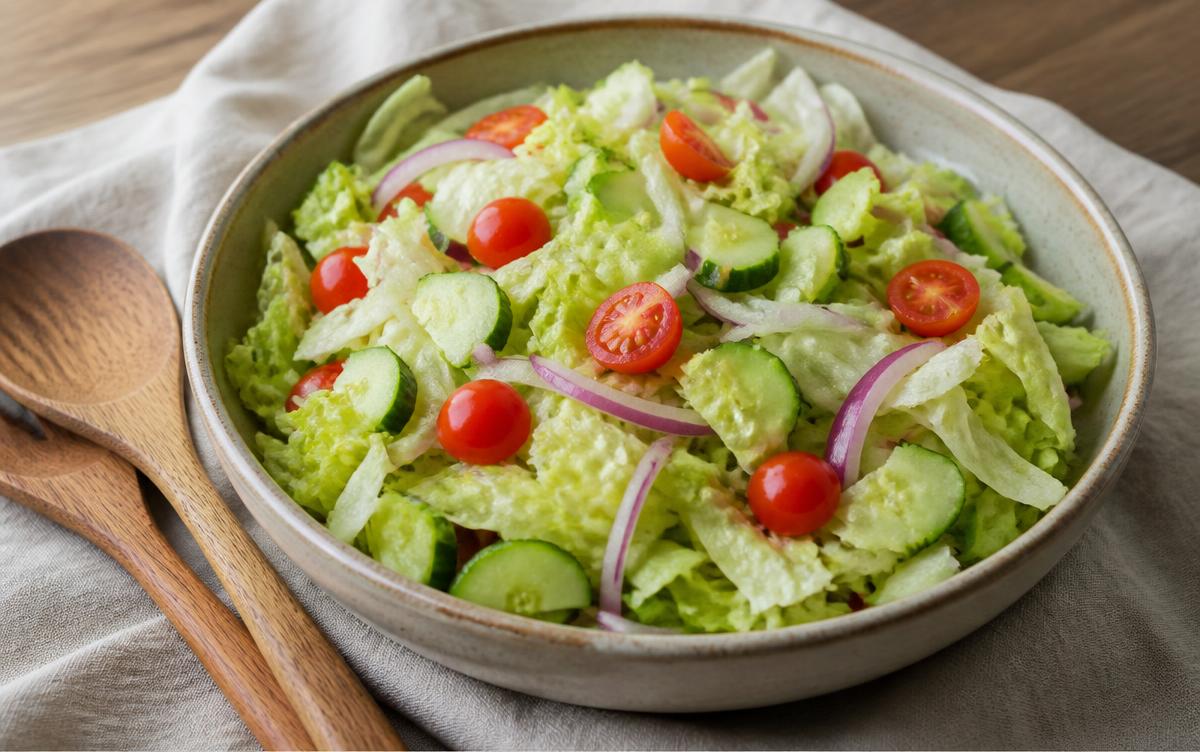
The easiest fix is mixing. Half iceberg for crunch and half romaine, rocket or spinach for density gives you a salad that both survives the fridge and carries some actual micronutrients. Add colour with tomato, pepper and red onion, add protein with egg, tuna, beans or chicken, and the leaf becomes the least important part of the bowl.
Where iceberg beats everything else
There are dishes where no other leaf works. Lettuce wraps and cups need a rigid, cupped, low moisture leaf that does not tear, and iceberg is the only common variety shaped for it.
Burgers and sandwiches need a leaf that stays crisp under heat and sauce for the twenty minutes between assembly and eating. Rocket wilts, spinach goes limp, iceberg holds.
Wedge salads exist entirely because of iceberg structure. These are not nutritional arguments, but they explain why the leaf has survived every wave of criticism and still outsells most alternatives.
Frequently asked questions
Is iceberg lettuce just water?
It is about 96 percent water, but the remaining 4 percent still contains fiber, vitamin K, folate and potassium in small amounts.
Is romaine much better than iceberg?
Yes on a nutrient per gram basis, particularly for vitamin A activity and folate. Both are fine foods and mixing them is the simplest upgrade.
Does iceberg lettuce have fiber?
A little, around 0.8 grams per cup shredded. It contributes to a daily total but should not be your main fiber strategy.
Why does cut lettuce turn brown?
Enzymes in the cut surface react with oxygen, producing brown pigments. It affects appearance rather than safety, and tearing by hand slows it down.
Should I wash bagged salad again at home?
If it is labelled washed and ready to eat, no. Rewashing adds handling risk without adding safety.