Quick Answer
The best sous vide machines for home cooks in 2026 are the Anova Precision Cooker 3.0 (about $170 to $200) for the best blend of app control, dual-band Wi-Fi stability, and a dishwasher-safe stainless skirt, the Breville Joule Turbo (about $240 to $260) for the smallest, fastest immersion circulator with a predictive turbo cooking algorithm, and the Instant Accu Slim (about $80 to $100) for a reliable no-app manual pick under $100.
A sous vide machine locks a water bath to a target temperature with tenth-of-a-degree accuracy. Your food cannot get hotter than the water, so edge-to-edge doneness is essentially automatic.
You do not need the most expensive circulator. You need one with at least 1,000 watts, real circulation flow, and a stable connection.
How a sous vide immersion circulator actually works
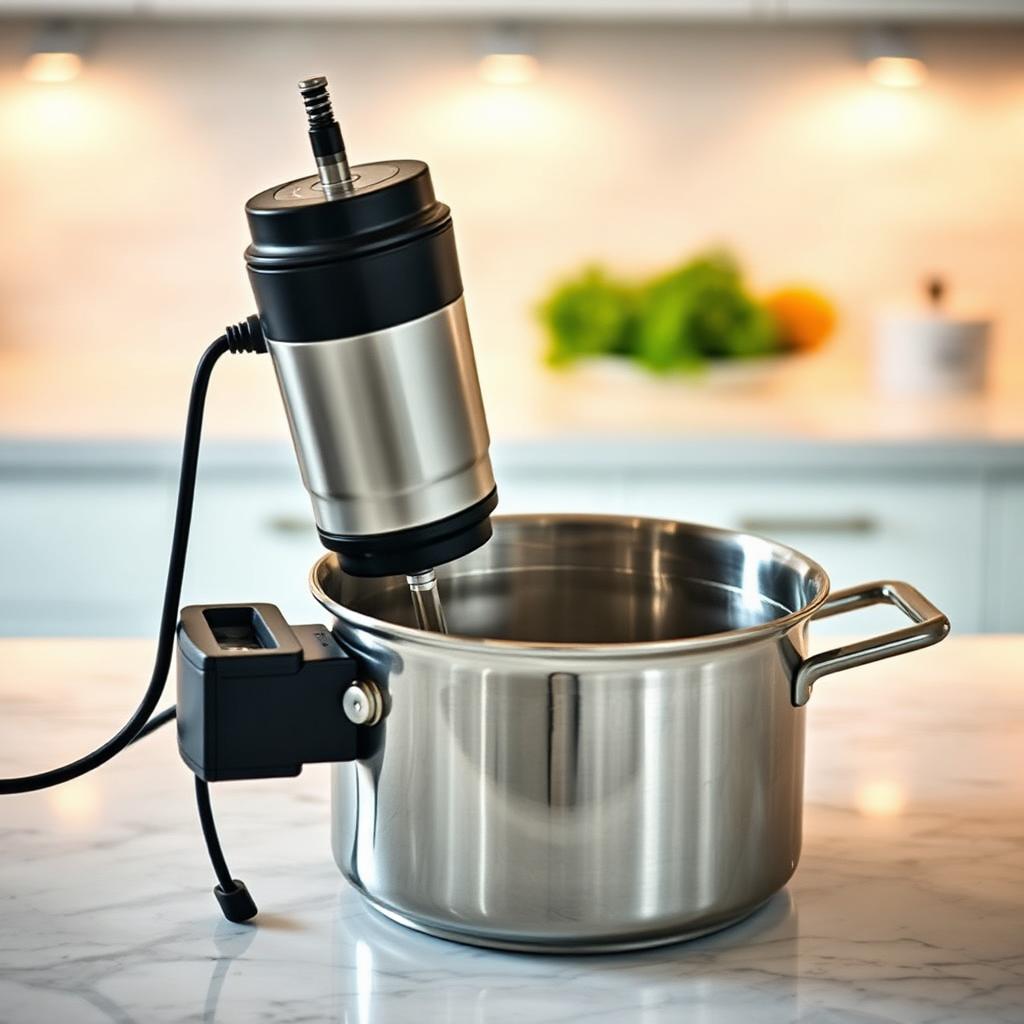
The device clamps to the side of a stockpot or plastic container filled with tap water. A heating element warms the water, and an internal impeller pump moves it in a loop around the vessel so every part of the bath reaches the same temperature. You seal your food in a zip-top or vacuum bag, drop it in, and the machine holds temperature for as long as you set the timer.
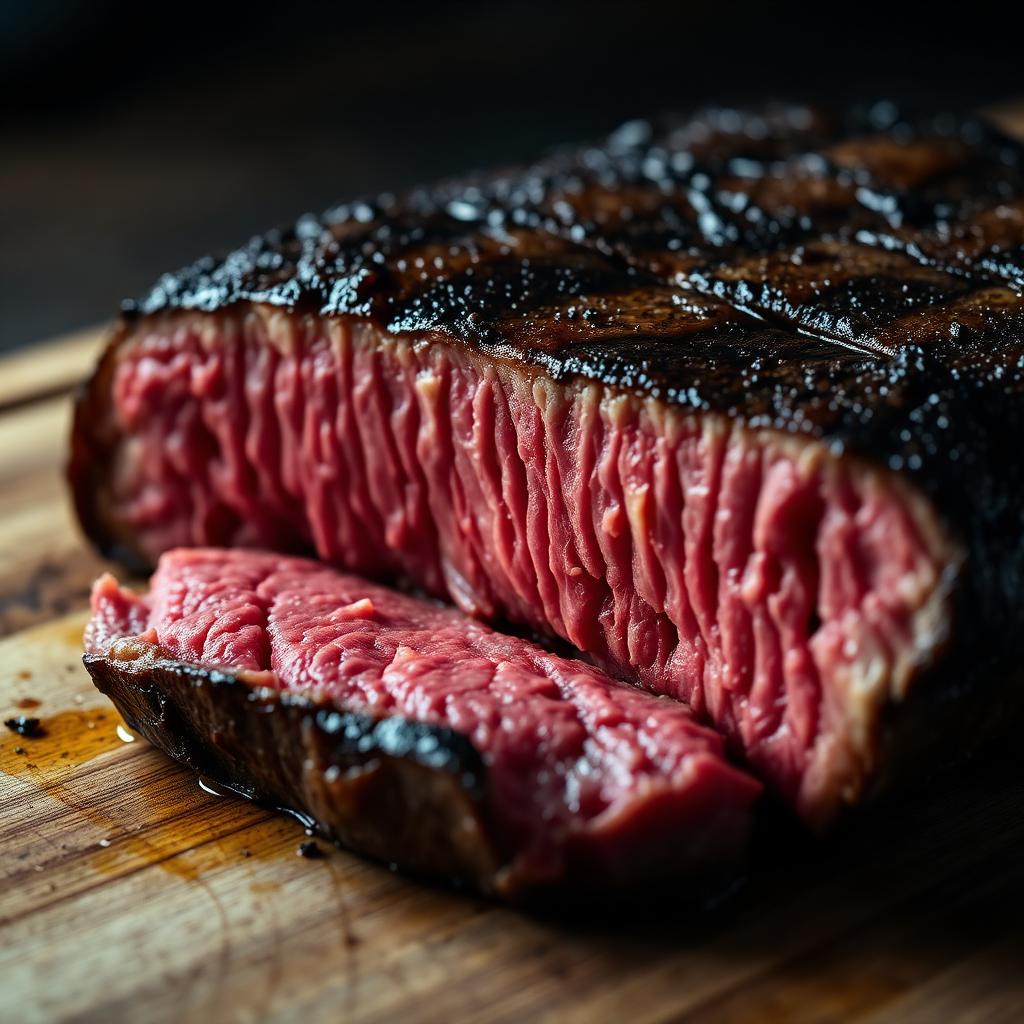
The reason this technique is impossible to beat with a pan is math. If your target is a 133 F medium-rare steak and the water is 133 F, the steak literally cannot climb past 133 F no matter how long it sits. The gray overcooked band that forms in pan-seared steaks disappears entirely. All you add at the end is a 60-second sear in a screaming-hot cast-iron skillet for the crust.
The three specs that actually matter
- Wattage. 1,000 to 1,200 watts is the sweet spot for a home stockpot. Under 800 watts and warm-up is painfully slow, and the machine cannot recover temperature after dropping cold meat into the bath.
- Circulation flow. A directional impeller (not just convection) is what prevents cold pockets. Anova and Joule both push real flow.
- Connectivity that matches your habits. Wi-Fi is only useful if the connection is stable. Bluetooth-only models drop as soon as you leave the kitchen. Manual models with a button and knob never fail.
Best overall: Anova Precision Cooker 3.0
The current Anova 3.0 is the model I recommend to most people. It runs at 1,100 watts, holds temperature within about 0.1 C, and uses dual-band Wi-Fi that is far more stable than the older Bluetooth-first versions. A clean two-line display shows target and current temperature at the same time, and the buttons on the head let you cook without ever opening the app.
The genuinely useful update on the 3.0 is a detachable stainless steel lower skirt. You twist it off, drop it in the dishwasher, and you are done. The older plastic skirts collected mineral scale over time and were awkward to clean by hand.
Best compact splurge: Breville Joule Turbo
The Joule Turbo is smaller and lighter than any competitor at about 11 inches tall and 1.3 pounds. It uses a magnetic foot that clips onto steel pots, which means it takes almost no drawer space. The Turbo cooking algorithm intentionally overheats the water at the start of the cook to reach a "steady safe" internal temperature faster on steaks and pork chops, cutting typical times by up to 50 percent.
The catch: the Joule has zero buttons or screen. It is 100 percent app-controlled. If your phone battery is dead or Wi-Fi is out, so is the cooker. For most people that is not a problem. For anyone who wants a physical fallback, the Anova is a better fit.
Best budget: Instant Accu Slim
For under $100, the Instant Accu Slim is the least glamorous but most durable budget pick. It skips Wi-Fi and Bluetooth entirely, using a big front-panel dial and LCD. Wattage is around 800, so it warms up a bit slower than the Anova, and its stated accuracy is closer to plus or minus 0.2 C, still fine for anything you cook at home. Zero app dependency means it will still work in ten years.
A 24-hour sous vide brisket you can actually do at home
- Season a 3 to 4 pound flat-cut beef brisket with kosher salt, coarse pepper, and a little garlic powder.
- Seal it in a heavy-duty vacuum bag or a zip-top bag using the water-displacement method.
- Clamp the Anova onto a large 16 quart stockpot filled with tap water. Set it to 155 F (68 C) for a firmer, more traditional brisket texture, or 135 F for something closer to sliced roast beef.
- Cook for 24 hours. Cover the pot with foil or plastic wrap and top up water as evaporation drops the level.
- Pull the bag out, pat the surface dry with paper towels, and sear each side for 60 to 90 seconds in a screaming-hot cast-iron pan or under a broiler to build the crust.
Over 24 hours at low temperature, the collagen in the brisket breaks down into gelatin without the muscle fibers ever exceeding your target doneness. You get texture that used to take a full-day smoker and dedication.
Safety and pouch material
Food safety here is not about temperature spikes; it is about time at low temperature. The USDA sous vide safety tables put anything cooked above about 130 F for over an hour in a pasteurization-safe zone. Below 130 F is not safe for extended cooks. Use food-grade zip-top or vacuum bags rated for cooking, not thin sandwich bags, and avoid cooking with the plastic touching a hot pot side.
Bottom line
For most home cooks, the Anova Precision Cooker 3.0 is the machine to buy: fast, accurate, stable Wi-Fi, easy to clean, and priced reasonably. If you want the smallest possible tool and the fastest cook times and you live inside an app-first kitchen, the Breville Joule Turbo is the splurge pick. If you refuse to make an account just to cook a steak, the Instant Accu Slim will run forever for under $100.