Quick Answer
The best meat thermometers for grilling in 2026 are the ThermoWorks Thermapen ONE (about $105 to $109) for one-second instant reads and lab-grade accuracy, the MEATER 2 Plus (about $110 to $130) for a fully wireless leave-in probe with app tracking, and the ThermoPro TP19H (about $25 to $32) for a rugged budget instant-read that punches way above its price.
Guessing doneness by poking your steak with a finger is how expensive cuts get overcooked. A real thermometer is the single kitchen tool that stops that.
Instant-read versus leave-in wireless
There are two useful categories for grilling. Pick one or own one of each.
- Instant-read (handheld). A fold-out probe on a handheld body. You open the lid, poke the meat, get a read in one to three seconds, remove the probe, and close the lid. Perfect for steaks, burgers, chicken breasts, and anything that cooks in under 30 minutes.
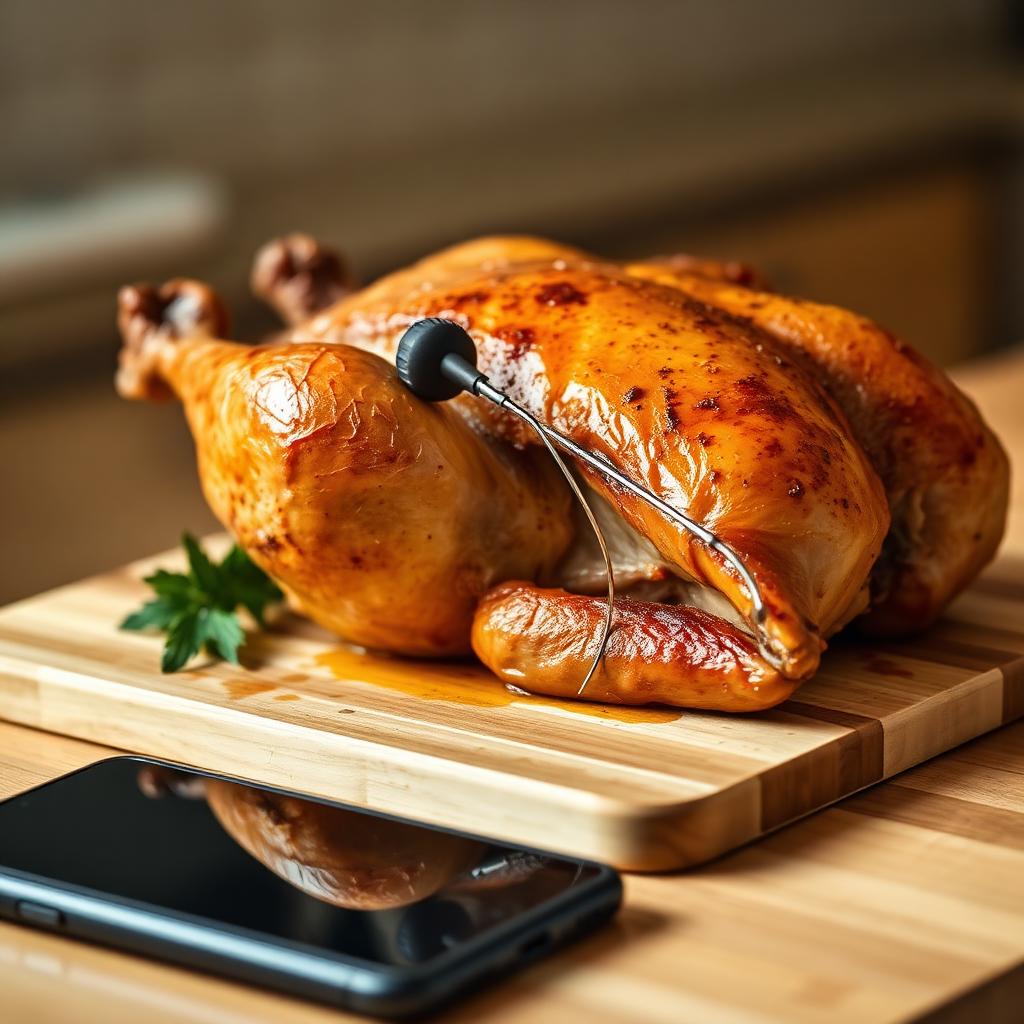
- Wireless leave-in probe. A metal probe you insert once at the start of the cook. It stays in the meat and streams temperature to your phone over Bluetooth. Ideal for smoked brisket, pork shoulder, whole birds, and prime rib where you do not want to keep opening the lid.
What matters when you buy
- Response speed. Instant-read means one to three seconds at most. Cheaper thermometers claim instant but need eight to ten seconds to stabilize. That matters when your hand is hovering over a hot grill.
- Accuracy. Look for plus or minus 0.5 to 1 degree Fahrenheit. Anything looser and you cannot dial in medium-rare reliably.
- Waterproofing. IP67 rating survives dishwashers, rain, and grease splash. Anything less will die in a season.
- Battery. Coin-cell or AAA is fine for instant-read. Wireless probes need at least 24 hours of continuous run time to cover a full smoker session.
- Range. If it is wireless, check the honest range. Bluetooth in open air is very different from Bluetooth through two walls and a grill lid.
Best overall instant-read: ThermoWorks Thermapen ONE
The Thermapen is the gold standard, and the ONE version is the fastest they have made. Its independently verified accuracy is plus or minus 0.5 F. Reads stabilize in about one second. The body is IP67 waterproof, has an auto-rotating backlit display that reads correctly in either hand, and the internal motion sensor wakes it up the moment you pick it up.
It is not cheap, but it is the last thermometer most people buy. I have used mine for years across cast iron, kettle grills, and pellet smokers. The probe folds into the body when not in use, so it slides into a drawer without bending the tip.
Best wireless leave-in: MEATER 2 Plus
MEATER launched the fully wireless probe category and the 2 Plus is the current version. There are no cables running out of the grill. The metal probe has two sensors, one at the tip that reads the meat and one at the ambient cap that reads the grill temperature at the grate. The app tracks both and predicts your cook time so you can rest the meat correctly.
Bluetooth range is honest around 165 feet in open air. Pair it with the optional MEATER Link or a wifi phone left near the grill and you can watch the cook from anywhere in the house. Battery lasts long enough for a full brisket cook.
Best budget instant-read: ThermoPro TP19H
The TP19H is the value pick I recommend to everyone starting out. It reads in about 2 to 3 seconds with plus or minus 0.9 F accuracy, has an IP65 waterproof body, a bright backlit display, a magnetic backing you can slap on the grill, and a hook to hang it in the kitchen.
It is not as fast or as bulletproof as a Thermapen, but for under thirty dollars it is the fastest way to stop overcooking your food. Buy it, use it for a year, and if you outgrow it, upgrade.
Doneness temperatures I actually use
Pull the meat off the heat 3 to 5 degrees before your target. Carryover cooking finishes the rest while the meat rests.
- Beef and lamb, rare: 125 F final. Pull at 120 F.
- Beef and lamb, medium-rare: 135 F final. Pull at 130 F.
- Beef and lamb, medium: 145 F final. Pull at 140 F.
- Pork chops and roasts: 145 F final with a three-minute rest.
- Chicken breast: 160 F final. Pull at 157 F, carryover to 165 F while resting.
- Chicken thighs: 175 F for that fall-apart texture.
- Ground beef and pork: 160 F final, no rest.
- Smoked brisket and pork shoulder: internal 203 F is not about doneness, it is about the collagen probing like warm butter.
Chicken temperatures follow USDA guidance, which lists 165 F as the safe minimum. Poultry pasteurizes in seconds at 165 F and over several minutes at 155 to 160 F, which is why chef targets can sit slightly lower with a rest.
Where to actually put the probe
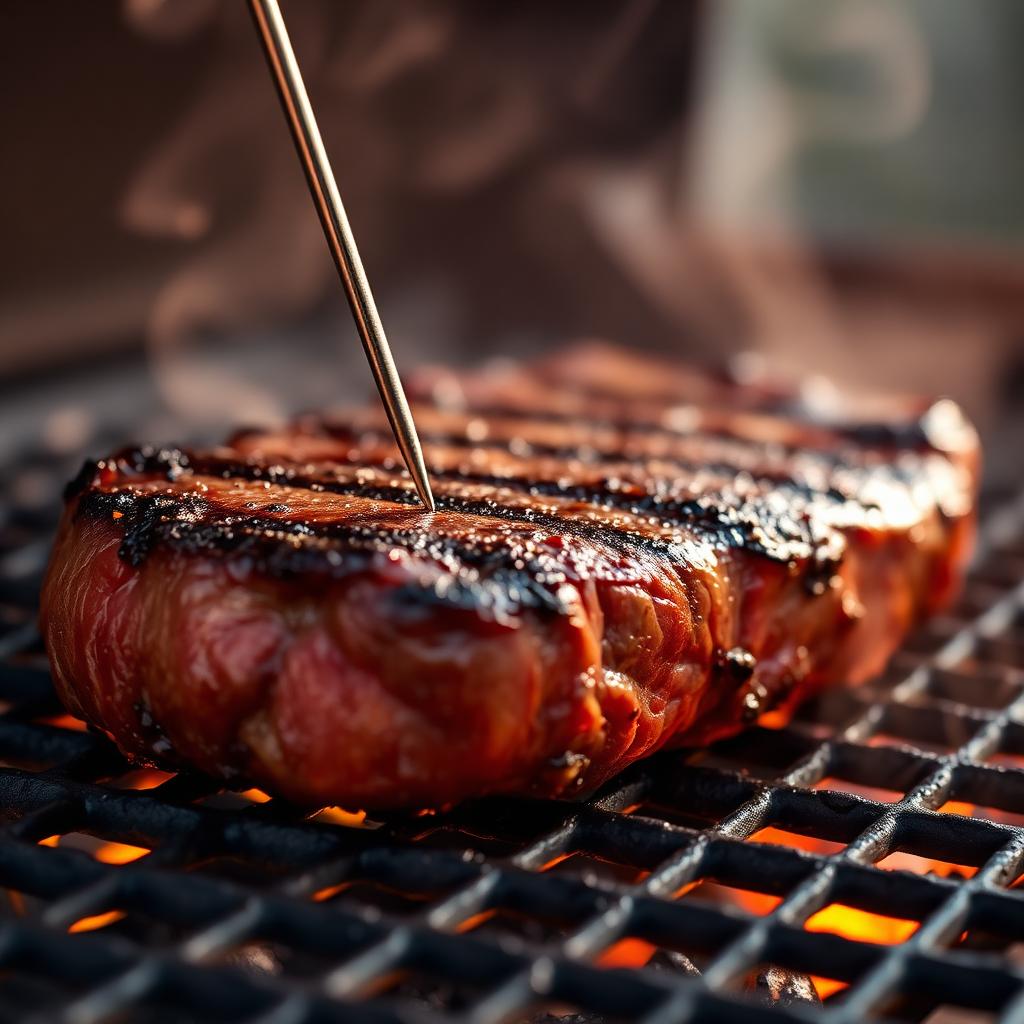
Insert into the thickest part of the muscle. Avoid bone (bone conducts heat and gives false-high readings) and avoid fat pockets (they read low). On a whole bird, aim for the deepest part of the breast, not touching the ribcage, and separately check the thigh joint. On a steak, poke horizontally from the side into the middle of the widest section.
Bottom line
If you cook steaks and chicken on a grill more than once a month, the ThermoWorks Thermapen ONE is worth every dollar. If you smoke, roast, or cook briskets and pork shoulders, add a MEATER 2 Plus so you can monitor from indoors. And if you just want one great tool for thirty bucks, the ThermoPro TP19H is the value pick I recommend without hesitation.