Quick Answer
The OXO Good Grips 11 lb Stainless Steel Scale is the best all-round kitchen scale for baking and macro tracking. Its pull-out digital display slides forward on a coiled cable, so wide mixing bowls never hide the readout, and it reads down to 1 gram or 0.1 ounce with a removable brushed stainless deck that goes straight in the sink.
On a tighter budget, the Escali Primo is the workhorse. It has been in commercial kitchens for years, uses two sealed buttons instead of moving parts, and holds the same 1 gram resolution up to 11 lb. For minimal footprint, the Greater Goods Digital Scale gives you a slim tempered-glass panel that wipes clean in one swipe.
Why volume measuring wrecks baking and macros
A dry measuring cup dipped into a bag of all-purpose flour packs the powder down, and a "1 cup" scoop can weigh anywhere from 120 g to 170 g depending on how you scoop and level. King Arthur Baking treats 1 cup of flour as 120 g in every recipe on its site for exactly this reason. On the macro side, eyeballing a chicken breast at "about 6 oz" can hide 60 to 120 kcal per serving, and across a week that is a full pound of body weight worth of miscounted energy.
Weighing to the gram takes that variable out. You get repeatable bakes, honest macro logs, and one dirty bowl instead of five dirty cups.
What actually matters in a kitchen scale
1 gram resolution and a four-corner load cell
Look for 1 g / 0.1 oz resolution up to at least 11 lb (5 kg). That range covers a 3 lb sourdough boule, a 5 lb pot of stew, and a full protein-shake bottle. Cheap scales use a single strain-gauge sensor that drifts if you set a bowl off center. Any scale sold as "four sensor" or with a proper platform (OXO, Escali, Greater Goods) reads the same weight anywhere on the deck.
Display placement
This is the biggest ergonomic trap. A flat glass scale with the readout tucked at the front edge disappears the second you put a 10 in mixing bowl on it. Pull-out displays (OXO), raised control faces (Escali), or displays offset to the side of the platform all solve it.
Tare button and auto-off timing
Tare zeroes the display so you can weigh the next ingredient into the same bowl. Auto-off should be at least 3 to 4 minutes, otherwise the scale dies mid-pour of honey.
Cleanability
Egg whites, olive oil, and honey are going to hit the deck. A removable stainless plate (OXO) or a fully flat glass top (Greater Goods) beats a plastic scale with seams that trap flour.
Best overall: OXO Good Grips 11 lb Stainless Steel Scale
The OXO is the pick because of one detail no other scale gets right: the display panel pulls forward on a coiled cable about three inches, so it sits in front of your bowl instead of under it. Capacity is 11 lb (5 kg), resolution is 1 g / 0.1 oz, the backlit LCD stays on for a long auto-off window, and the brushed stainless top lifts off for sink washing. It runs on four AAA batteries, which last around a year of daily use.
Best budget workhorse: Escali Primo
The Primo has been sold since 2007 and still reads accurately after years of abuse in cafes and home kitchens. The plastic body is sealed against spills, the two-button control (Tare and Unit) is idiot-proof, and it holds 1 g precision up to 11 lb. It also comes in dozens of colors if you actually want your scale to match your KitchenAid.
Best slim design: Greater Goods Digital Food Scale
Under $20, tempered glass top, one flat piece you can wipe with a disinfectant cloth. Perfect for macro trackers who weigh a chicken breast and a tablespoon of peanut butter and want the scale to disappear into a drawer.
The continuous tare trick that saves five bowls
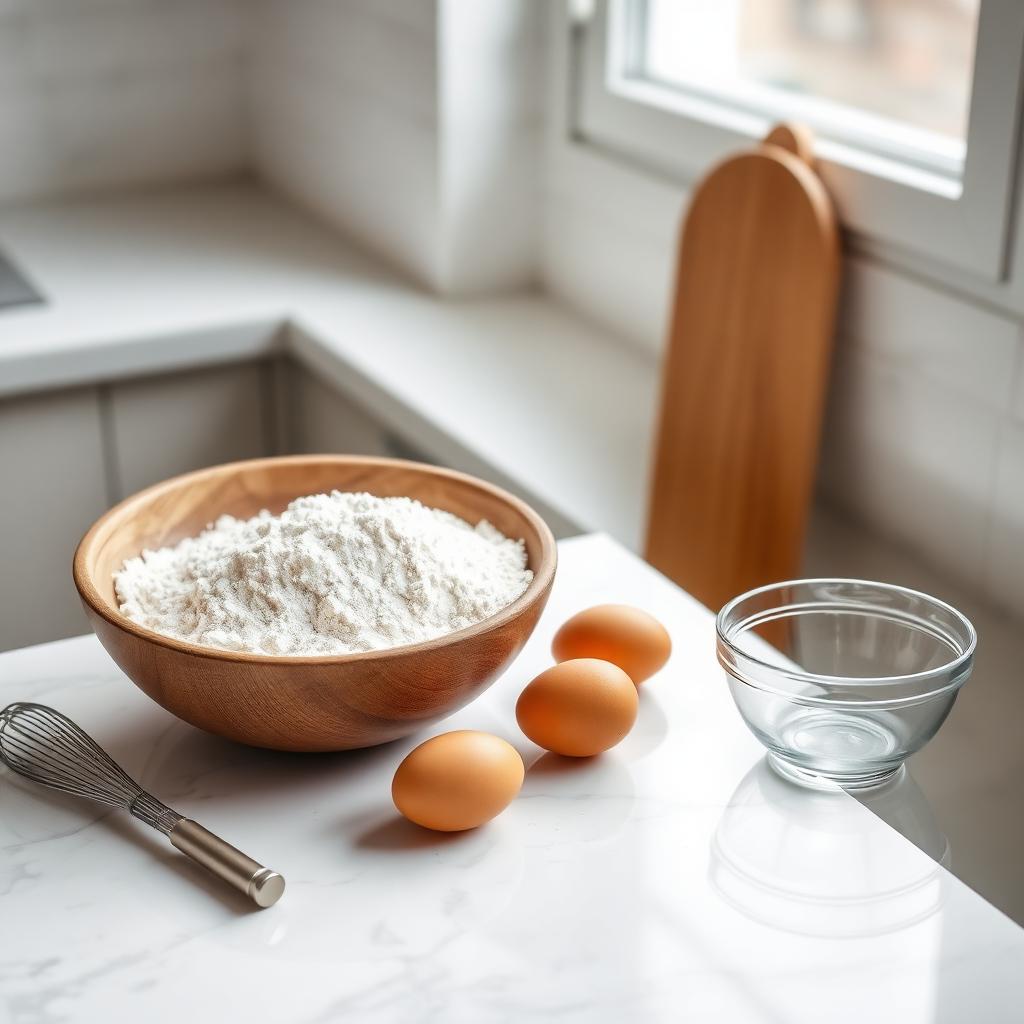
This is the reason bakers use scales instead of cups: you build a whole recipe in one bowl.
- Put your mixing bowl on the scale. Press Tare to zero it out.
- Pour in 200 g flour. Press Tare again to zero.
- Pour in 50 g sugar. Press Tare.
- Add 5 g salt, 7 g baking powder, 240 g milk, 60 g butter, taring between each.
Every ingredient lands in the same bowl at the exact weight, and your dishwasher stays empty.
Macro tracking: weigh cooked or raw?
Log the state the food is in when you weigh it. If a food label says "100 g raw chicken breast, 165 kcal, 31 g protein", weigh it raw. If it says "per cooked serving", weigh it cooked. Cooked meat can be 20 to 30 percent lighter than raw because of water loss, and mixing raw and cooked weights is the single most common macro tracking error.
Calibration and battery life
Every kitchen scale drifts a few grams over time. Once a year, put a known 500 g object (an unopened bag of sugar or a set of gym plates) on the scale. If it reads within plus or minus 2 g, you're fine. If it drifts further, most models have a calibration button in the manual, or you replace the batteries first because low voltage makes the readout drift.
Bottom line
Pick the OXO Good Grips 11 lb scale if you bake regularly or use wide bowls, and you want the pull-out display to solve the shadow problem for good. Pick the Escali Primo if you want a sealed, indestructible daily driver at half the price. Pick the Greater Goods Digital Scale if you just need a thin, cheap tool to weigh macros. Any of the three, paired with the continuous tare trick, will change how you cook.