Quick Answer
Pasta nutrition labels are listed for the uncooked, dry product unless the package explicitly says otherwise.
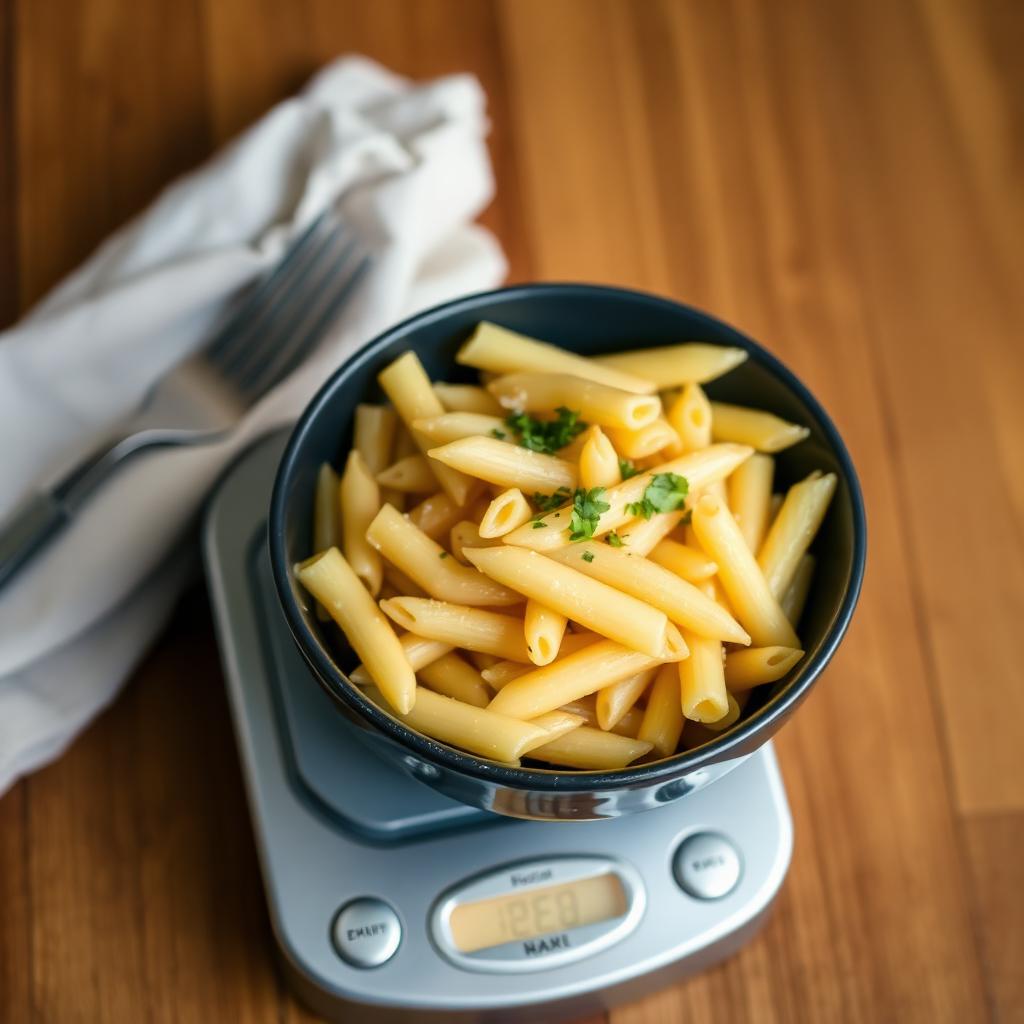
A standard serving on a box of dry pasta is 2 ounces or 56 grams uncooked. After boiling, that 56 gram portion roughly doubles in weight to about 140 grams, because cooked pasta absorbs water. The calories, carbs, protein and fat numbers on the label do not change. The food simply weighs more in the bowl.
Why This Matters for Portion Tracking
This is one of the most common calorie counting mistakes. If you weigh out 56 grams of cooked pasta thinking it matches the label, you are actually eating roughly half a serving. To match the label exactly, weigh the pasta dry before cooking, or weigh the cooked pasta and divide by 2.5 to estimate the dry equivalent.
Typical Numbers per 2 oz / 56 g Dry Serving
- Calories: 200 to 210 kcal
- Carbohydrates: 42 to 45 g
- Protein: 7 to 8 g
- Fat: 1 to 1.5 g
- Fibre: 2 to 3 g (refined), 6 to 7 g (whole wheat)
USDA FoodData Central uses the same 56 g dry serving as its reference for traditional semolina pasta, which is where almost every label gets its baseline numbers.
Why Cooked Weight Is Unreliable
The amount of water pasta absorbs is not fixed. Al dente pasta absorbs about 1.5 times its dry weight. Soft, overcooked pasta absorbs over 2 times. Pasta cooked into a baked dish or soup absorbs even more. This is why packaging never uses cooked weight: the number would not be reproducible.
When Labels Are for Cooked Pasta
A few exceptions exist:
- Fresh refrigerated pasta: labels are usually for the cooked product because the dough already contains water and eggs. Always check the label.
- Pre cooked microwave pouches: nutrition is per cooked serving as packaged.
- Frozen ready meals: per cooked serving as plated.
- Restaurant menu labelling: per serving as served.
How to Estimate Without a Scale
If you do not have a scale, the rule of thumb is:
- A bunch of dry spaghetti the diameter of a US quarter or a UK 2p coin is about one 56 g serving.
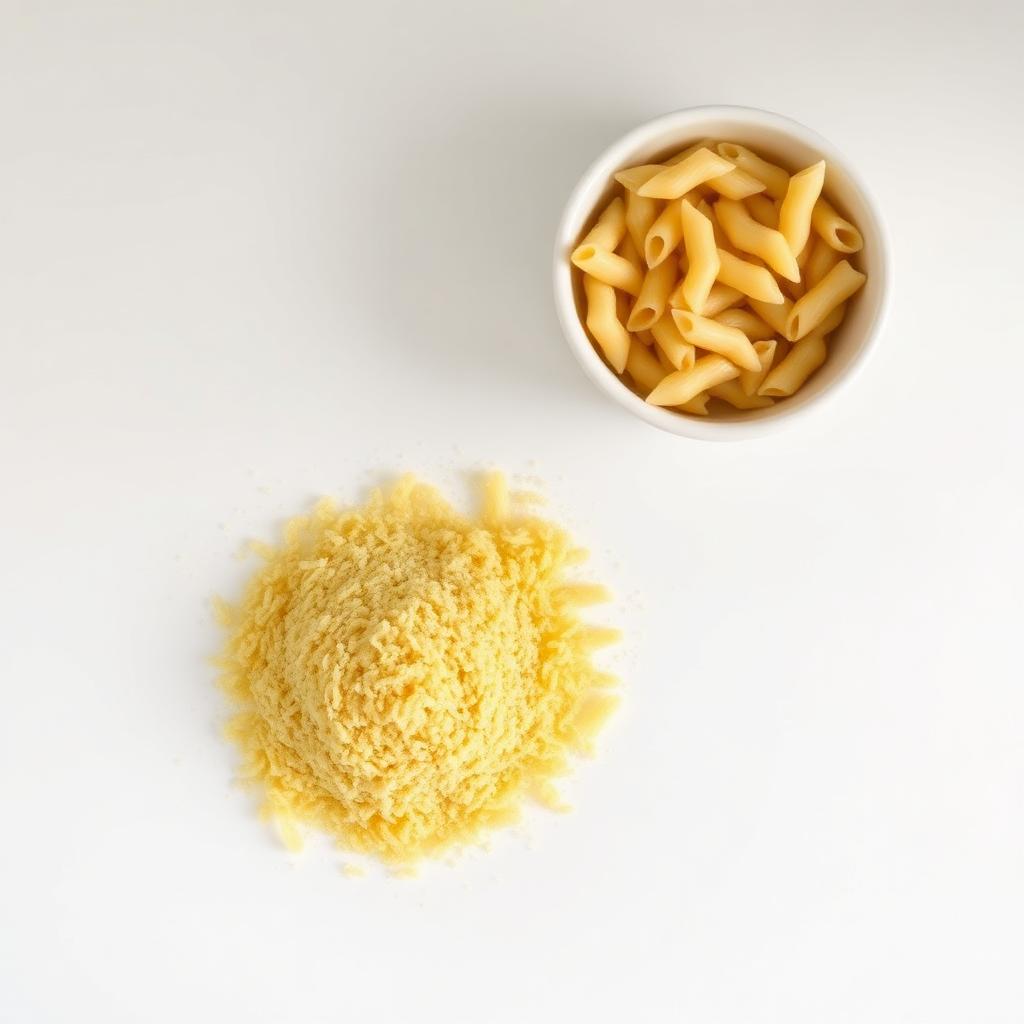
- About half a cup of dry short pasta shapes (penne, fusilli, macaroni) is about one 56 g serving.
- About 1 cup of cooked pasta is the same one serving.
Why the Dry Weight Convention Exists
Manufacturers label the product in the state it leaves the factory, and dry pasta is stable. Cooked weight is not, because it depends on how long you boiled it, how much water the shape absorbed and whether you rinsed it.
Two people cooking the same 56 g of dry penne can end up with 140 g and 170 g of cooked pasta depending on doneness. The calories are identical, which is exactly why labels do not use the cooked figure.
Converting Cooked Back to Dry
The general rule is that pasta roughly doubles to two and a quarter times in weight when cooked. So 150 g of cooked pasta is around 65 to 70 g dry, or a little over one standard serving.
If you are tracking accurately, weigh the pasta dry before it goes in the pot. It takes five seconds and removes the entire estimation problem. When you cannot, weigh the cooked portion and divide by 2.2 for a reasonable approximation.
Bottom Line
Pasta nutrition facts on a dry pasta box reflect the uncooked weight. Cooked pasta gains volume and weight from absorbed water without changing calories or macros. Weigh dry whenever possible, and treat cooked weight as a rough guide only.
Pasta Nutrition Facts: Frequently Asked Questions
Are pasta nutrition facts cooked or uncooked?
Almost all packaged pasta nutrition labels show dry, uncooked values. A standard serving is 2 oz or 56 g dry.
How much does 2 oz of dry pasta weigh cooked?
About 140 g or one cup cooked. The water absorption roughly doubles or triples the weight.
Do calories change when pasta is cooked?
No. Cooking only adds water. A 200 calorie dry portion is still 200 calories cooked.
How do I weigh cooked pasta accurately?
Drain it, let it stand for a minute, then weigh. A kitchen scale is more reliable than a measuring cup.
Is fresh pasta nutrition different?
Yes. Fresh egg pasta is denser and slightly higher in calories per gram cooked because it absorbs less water.
What about whole wheat pasta?
Same total calories but more fibre, more protein and a lower glycaemic load.
Weighing and Tracking Pasta: More Reader Questions
Why do cooked weights vary so much?
Different pastas absorb different amounts of water. Long thin pasta absorbs less than tubes.
Is volume measuring accurate for pasta?
Less accurate than weighing. A cup of penne and a cup of fusilli differ by 20 grams or more.
How do calorie tracker apps handle this?
Most default to dry weights for raw entries and cooked weights for cooked entries. Read the unit carefully.
Does sauce affect the displayed calories?
Yes. Always log sauce separately. A creamy sauce can add more calories than the pasta itself.
What is a sensible everyday portion?
For most adults 70 to 90 grams dry weight is enough as a main when paired with vegetables and protein.
Practical Tips and Final Notes
Finally, trust your senses. Sight, smell, and a small careful taste will tell you more than any printed date or internet rule. Cook often, ask why something worked, and your judgement will sharpen with every meal.