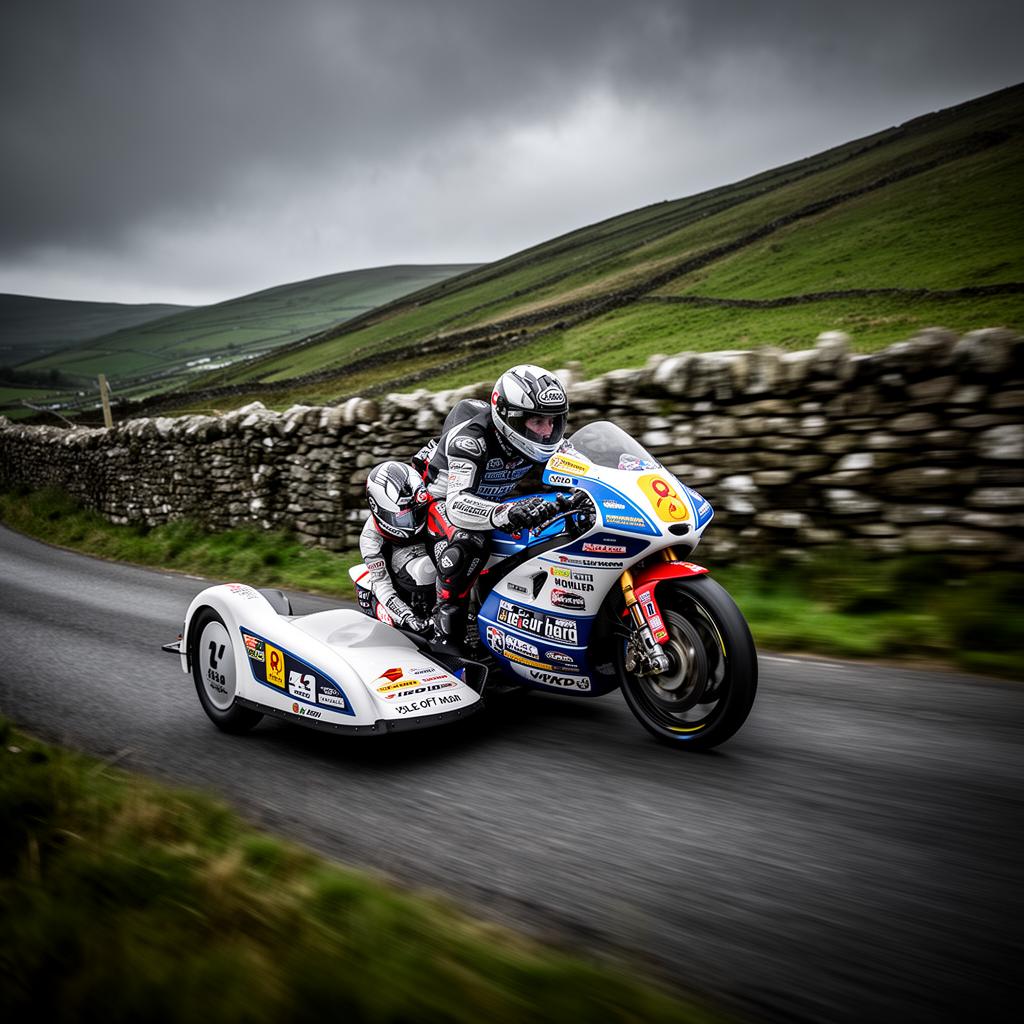
Quick Answer
On the afternoon of May 28, 2026, the Isle of Man TT Race Organisation, acting jointly with the Event Promoter, announced the immediate suspension of the entire Sidecar class for the remainder of the 2026 meeting. The decision was described officially as a precautionary measure.
The trigger was a series of severe high speed crashes during the opening qualifying sessions, most notably the May 27 incident involving the Crowe brothers at Crosby and the May 26 crash involving Maria Costello and Shaun Parker. With multiple competitors in serious condition at Noble's Hospital, organisers paused the class while engineers investigated whether the new 2026 standardised restrictor plate had altered the handling characteristics of the sidecar outfits.
What Happened on the Mountain Course
The 37.73 mile Snaefell Mountain Course is the most unforgiving racing circuit in the world, and the Sidecar class is one of its most technically demanding disciplines. The 2026 meeting was barely 48 hours into qualifying when the safety picture began to unravel.
On the evening of May 26, Maria Costello and passenger Shaun Parker crashed heavily during the second qualifying session. Costello was airlifted to Noble's Hospital with head injuries and remains in serious but stable condition. Parker was admitted to intensive care with chest, leg, arm, and facial trauma.
Twenty four hours later, on the evening of May 27, the third Qualifying Session was red flagged after a catastrophic high speed crash at Crosby involving Manx brothers Ryan and Callum Crowe. The Crowe outfit had been dominating the leaderboard, sitting roughly 47.2 seconds clear of the nearest competitor after the opening session.
- Callum Crowe, passenger. Underwent extensive emergency shoulder surgery for structural damage.
- Ryan Crowe, driver. Sustained a broken wrist and severe friction burning across his back.
Their father, TT icon Nick Crowe, confirmed via family channels that both boys were extremely fortunate to be alive given the speed of the incident.
Why Organisers Pulled the Class
Two serious accidents inside 48 hours involving experienced top tier sidecar outfits is not a pattern organisers can ignore. The Race Organisation locked down the paddock, paused all sidecar running, and convened a joint technical and operational review with the Event Promoter.
The decision to cancel the rest of the Sidecar programme for 2026 rather than simply delay it reflects how difficult it is to confidently resume a class on the Mountain Course once a technical question has been raised. There is no margin for guesswork on a circuit where average lap speeds exceed 120 mph and the closest barrier is often a stone wall.
The Restrictor Plate Question
The most discussed factor in the paddock is a major 2026 rule change that mandated a standardised restrictor plate across all sidecar engines. The intent of the rule was straightforward and reasonable. Organisers wanted to curb the relentless climb in top end straightaway speeds and to keep the class financially accessible by levelling the engine performance playing field.
The practical effect on the bikes, however, is what is now under the microscope. Independent paddock engineers have raised concerns that the restrictor plate alters the subtle throttle response telemetry and power delivery curve of the highly tuned sidecar engines. In sidecar racing, the synchronisation between the driver's throttle inputs and the passenger's weight shifting around the chassis is what keeps a three wheeled outfit stable through high speed bends.
If the new power delivery profile introduces even a small amount of latency or unexpected surging, the result can be a sudden upset to chassis balance precisely at the point a passenger is committed to a weight shift. That is the failure mode engineers are now trying to confirm or rule out through telemetry review.
The Wider Safety Context
The Isle of Man TT has always lived in a different safety category than circuit racing. There are no run off areas, the surface is public road, and the consequences of a small mistake at high speed are usually severe. The event survives because the organisers, the riders, and the wider racing community accept an ongoing trade off between the unique character of the Mountain Course and the inherent risk of racing on it.
Cancelling a class mid event is a serious step, but it is also a sign that the modern safety culture around the TT is functioning. The decision puts rider welfare ahead of championship points, sponsor commitments, and a real financial blow to the independent teams and travelling fans who had built their year around the 2026 sidecar campaign.
What Happens to the Rest of the Meeting
Solo motorcycle classes are scheduled to continue as planned. Race control will monitor weather and track conditions on the usual day by day basis, and the broader programme of Superbike, Superstock, Supersport, and Senior races will run on the existing schedule.
The technical investigation into the sidecar incidents will continue beyond the close of the 2026 event. Any rule revisions that emerge, including possible adjustments or withdrawal of the standardised restrictor plate, would be considered for the 2027 regulations rather than the current meeting.
What to Watch Next
- Hospital updates. The recovery of Callum and Ryan Crowe, Maria Costello, and Shaun Parker is the immediate human story and the only thing the paddock is genuinely focused on right now.
- The official technical report. Whatever the investigation concludes about the restrictor plate will shape the 2027 sidecar rulebook.
- Team responses. How sidecar teams react to the cancellation, particularly the smaller independent outfits who depend on TT prize money and exposure, will tell you whether the class is structurally healthy heading into 2027.
The Takeaway
Cancelling the 2026 Sidecar class is one of the more consequential safety calls in recent Isle of Man TT history. It is also the right one. Two serious crashes in 48 hours involving elite outfits, with an unanswered technical question hanging over the new restrictor plate, is exactly the situation that warrants stopping a class on the world's most dangerous circuit. The focus now belongs entirely to the recovery of the riders involved and to the engineering review that will shape whether sidecars return to the Mountain Course in 2027.