Quick Answer
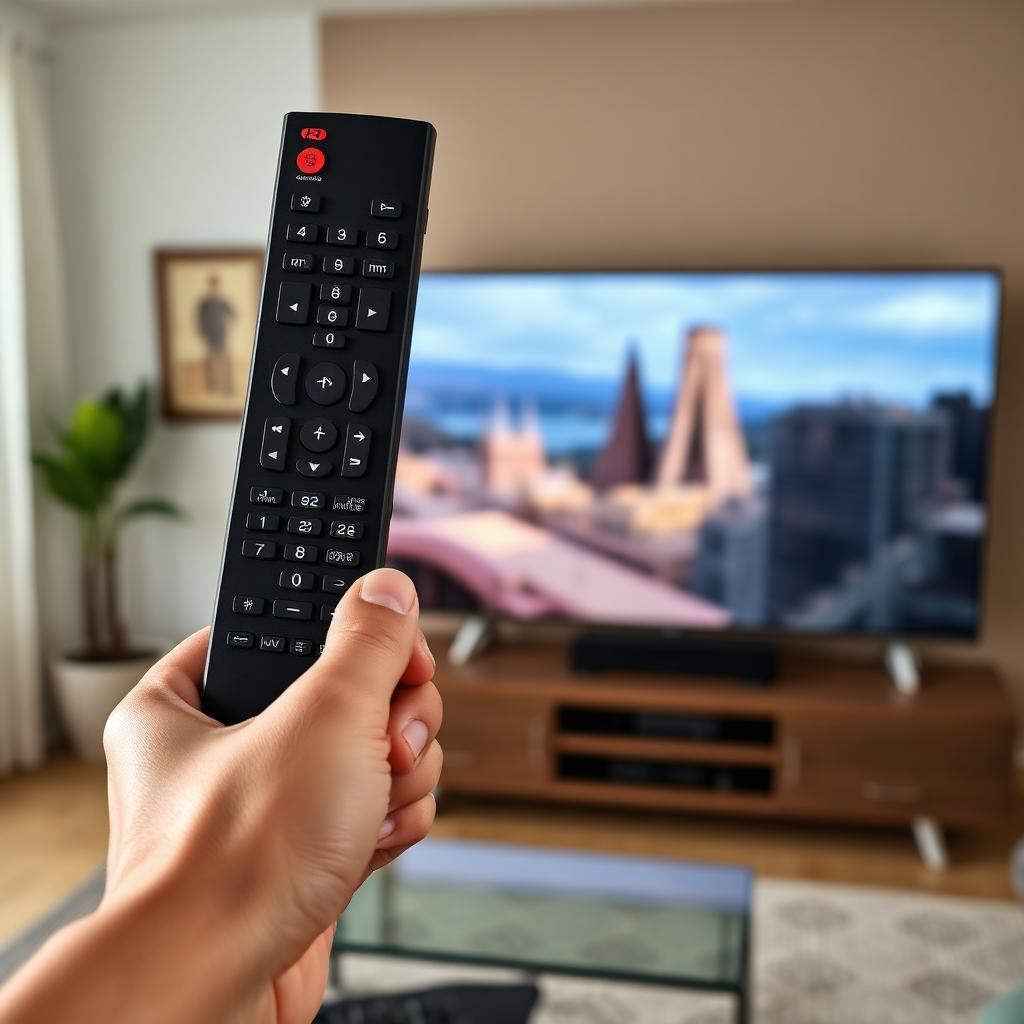
A remote that only works when held upside down almost always has a cracked solder joint at the base of the infrared LED bulb. Held normally, gravity pulls the leg slightly away from the broken pad and the circuit is open. Flipped over, gravity pushes the leg back into contact and the signal flows again.
The second most common cause is a dislodged lens cap on the LED that bends the beam at an odd angle, so the only way to hit the TV sensor is to invert the remote. Less often, ambient infrared in the room is so bright that only a reflected, scattered beam off a wall gets through.
The permanent fix is to open the remote, locate the LED at the tip, and reflow the two solder joints at its base with a soldering iron for one second each.
Reason 1: a cracked LED solder joint
The infrared LED sits at the very tip of the remote and takes the impact of every drop onto the coffee table or floor. The two leads from the LED are soldered to small pads on the circuit board. Over years of impacts, microscopic cracks form in those joints. The connection is good enough to pass continuity when the leg is pressed firmly into the pad, and open when it lifts even half a millimetre.
+-------------------------------------------------------------+
|              GRAVITY VS A CRACKED SOLDER PAD                |
+-------------------------------------------------------------+
| Held normally  -> gravity pulls LED leg AWAY from pad       |
|                 -> circuit OPEN, no IR pulse                |
| Held inverted  -> gravity pushes LED leg INTO pad           |
|                 -> circuit CLOSED, signal works             |
+-------------------------------------------------------------+
That is why the behaviour is so consistent. It is not a software fault and not random; it is mechanical.
Reason 2: a cracked or shifted collimator lens
The clear plastic dome over the LED is not just a cover. It is a collimator lens that focuses the wide cone of infrared light from the LED into a narrow beam aimed straight ahead. A hard drop can crack this lens or push it sideways inside its retainer. The result is a beam aimed at the floor or ceiling instead of forward. Flipping the remote rotates the misaligned beam back toward the TV sensor.
Reason 3: ambient IR overload
Direct sun through a window, halogen downlights, or cheap LED bulbs flood a room with broad spectrum infrared. The TV sensor sees a wash of noise and cannot pick out the remote's 38 kHz pulses unless the signal is very strong. A reflected, scattered beam (the result of pointing the remote backward at a wall) sometimes slips around the bright spots and hits the sensor at an angle the direct beam cannot. Closing the curtains usually proves this theory in under a minute.
Confirming the cause
- Open your phone's selfie camera and point the remote at the lens. Press any button.
- If you see a bright purple flash only when the remote is inverted, the LED solder joint is the culprit.
- If you see a steady purple flash in both positions but the TV only responds when inverted, the lens is misaligned or ambient IR is too high.
- Close the curtains and turn off LED bulbs. If the normal grip suddenly works, ambient IR is the cause.
The permanent fix
- Remove the batteries.
- Find the seam around the remote and run a guitar pick or thin plastic spudger along it. Most consumer remotes are clipped, not glued.
- Lift the circuit board out and inspect the LED at the tip. If you press the LED gently sideways with a fingernail and one of the leads moves, that is your bad joint.
- Set a soldering iron to 320 to 350 C with a fine tip. Touch the joint for one second with a tiny dab of fresh leaded solder. Both legs.
- Reassemble and test. The remote should now work in any orientation.
If you do not own a soldering iron, the alternative is a $10 universal replacement. The repair takes about three minutes once the case is open.
Frequently asked questions
Could it be the batteries?
Weak batteries cause short range, not an orientation issue. If swapping batteries did not help, the problem is mechanical.
Why does the same trick work on a TV remote and on a car key fob?
The same physics applies. Most key fobs have a solder joint failure on the RF chip or the button dome. Some only work when squeezed at a specific angle, which is the gravity story again.
Can heat or cold cause this?
Yes. A solder crack opens and closes with thermal expansion. A remote left in a sunny window may fail after warming up and then start working again once it cools.
The takeaway
The upside down trick is not a bug, it is gravity holding a cracked solder joint closed. Diagnose with a phone camera test, then either reflow the two LED pads with a soldering iron or replace the remote. While you are inside, also check that the lens dome over the LED is centred and undamaged.