Quick Answer
Chocolate chip banana bread sinks in the middle for three main reasons. The oven temperature is too low, the leavening is exhausted or out of balance, or the chocolate chips are weighing down a batter that did not have enough structural rise to support them.
The fix is usually mechanical, not mystical. Verify the oven hits 350 F (176 C) with an oven thermometer, use fresh baking soda within 6 months of opening, and toss the chocolate chips in a teaspoon of flour before folding them in so they suspend evenly through the loaf instead of sinking to the bottom.
If the sink is severe, it is almost always underbaking. The loaf needs 50 to 60 minutes at 350 F. Pull it too early and the centre collapses as it cools.
What a sunken loaf is actually telling you
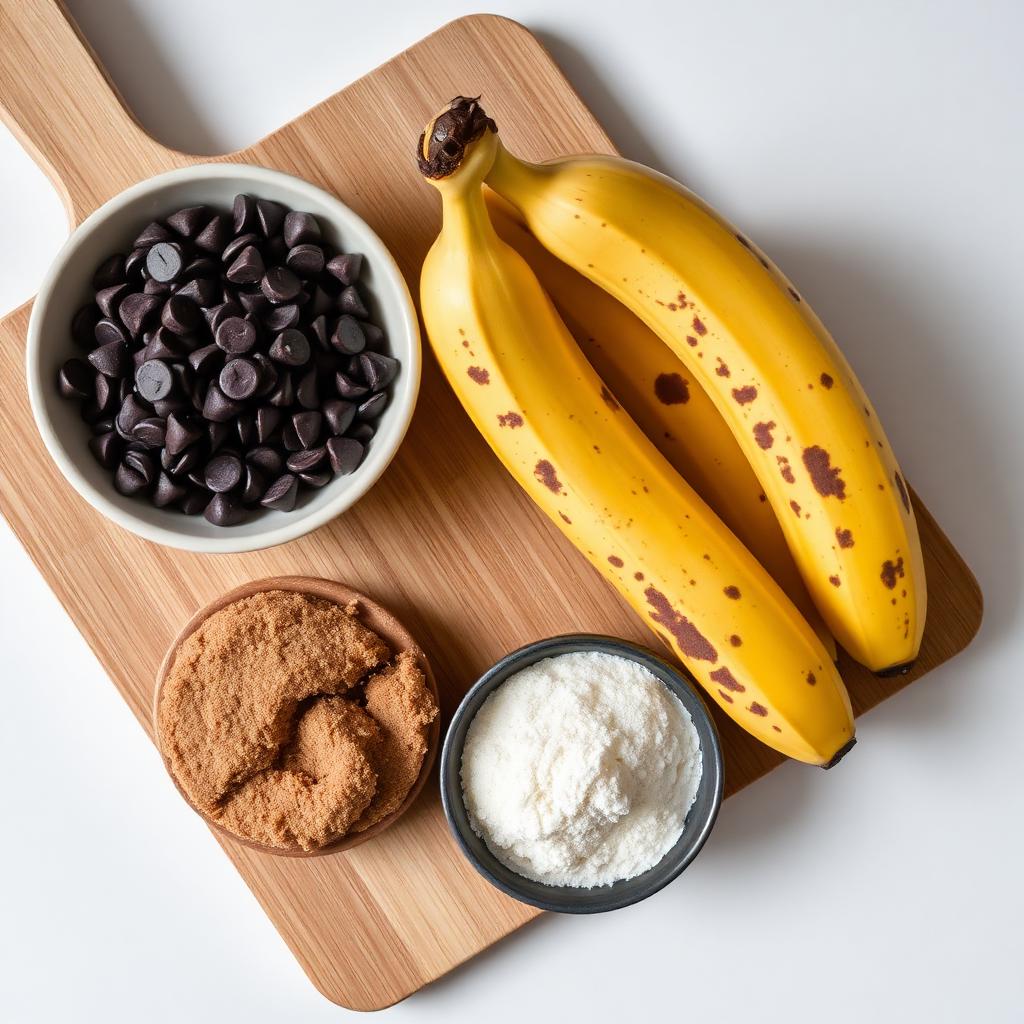
A sunken centre means the loaf rose and then collapsed before the crumb could set. The rise comes from carbon dioxide trapped inside the batter. The structure that holds the rise in place comes from set egg proteins and gelatinised starch. If the gas escapes faster than the structure forms, the top falls in.
That gives you a short list of culprits to check. Each one is fixable and most of the time only one is the real cause.
Cause 1: oven temperature is wrong
Home ovens are notoriously inaccurate. A dial that reads 350 F can be running at 320 F or 380 F. Buy a 10 dollar oven thermometer and place it on the rack you bake on. If the reading is more than 15 F off, dial the oven up or down to compensate.
A cool oven means the outside of the loaf bakes faster than the inside. The crust looks done long before the centre is set. When you pull it, the unset centre sinks.
Cause 2: leavening is dead or unbalanced
Baking soda loses potency within about 6 months of opening, faster in humid kitchens. Test it by sprinkling a quarter teaspoon into a tablespoon of vinegar. If it fizzes vigorously, it is alive. If it barely bubbles, replace it.
Banana bread relies almost entirely on baking soda because the bananas provide the acid. If a recipe calls for 1 teaspoon and you cut it to half, the rise will not hold. If you doubled the banana, the extra acidity needs more soda to react with, not less.
Cause 3: chocolate chips weigh the centre down
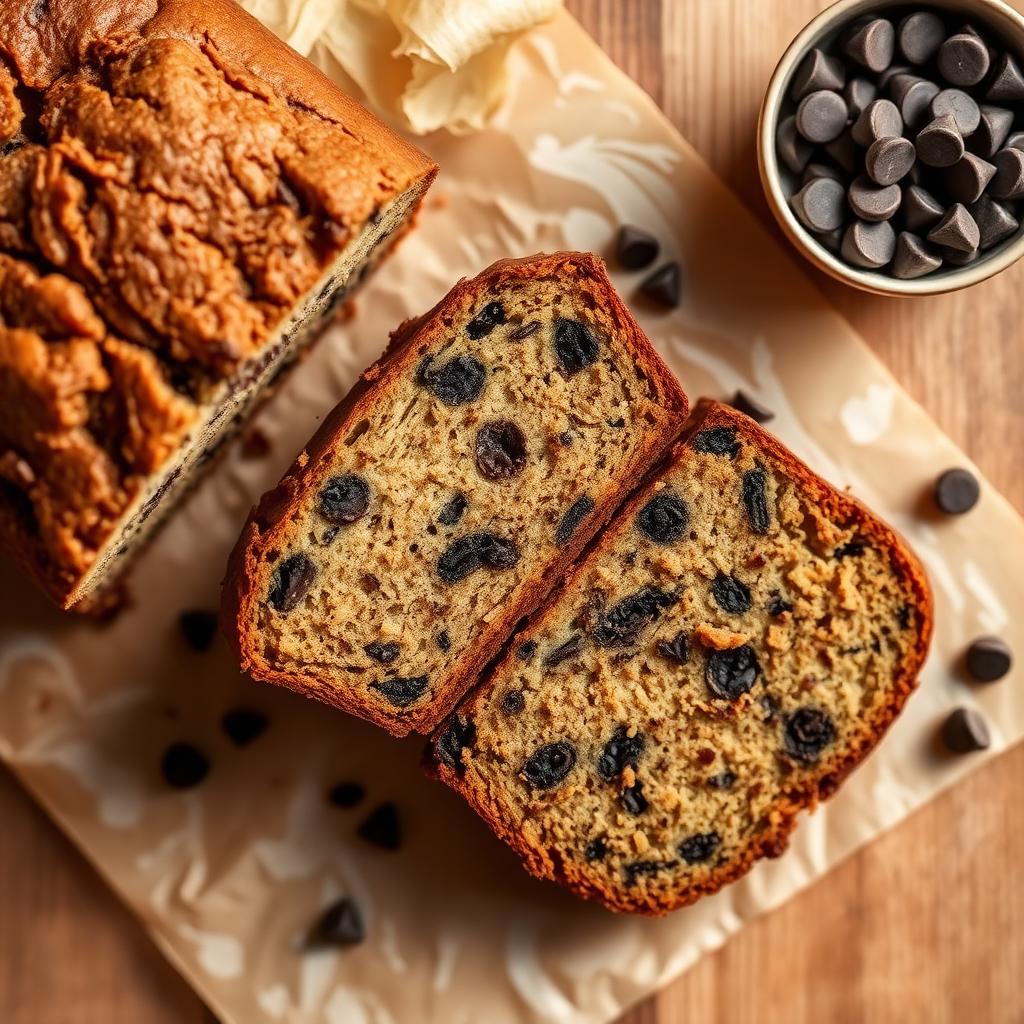
Standard semi sweet chocolate chips weigh about 4 g each. A three quarter cup is roughly 130 g of dense weight added to a relatively light batter. Without help, those chips drop straight to the bottom of the loaf as the batter rises, and the top is left structurally weaker than it should be.
Two fixes work. Toss the chips in a teaspoon of the recipe's flour before folding them in. The coating helps them grip the batter and stay suspended. Or reserve a portion for the top, where they double as decoration.
Cause 4: under or over mixed batter
Under mixing leaves dry flour pockets that absorb moisture unevenly and pull down the surrounding crumb. Over mixing develops gluten, which makes the batter rubbery and traps gas in tough cells that pop and collapse when the heat hits. Fold by hand with a spatula just until the flour disappears, then stop.
Cause 5: too much banana
Adding a fourth banana on top of a three banana recipe shifts the wet to dry ratio. The extra moisture has nowhere to go and the loaf stays gummy in the middle even with a longer bake. Stick to the recipe weight, around 300 g of mashed banana for a standard 8.5 by 4.5 inch loaf.
Cause 6: pulling the loaf too early
A toothpick that comes out with thick wet batter is not done. The loaf needs to come out with a few moist crumbs clinging but no glossy raw batter. If in doubt, leave it for another 5 minutes. Banana bread is forgiving on over baking and unforgiving on under baking.
How to tell the loaf is fully baked
- Toothpick comes out with moist crumbs, not wet batter.
- Internal temperature reads 200 to 205 F (93 to 96 C) on a probe thermometer.
- The top springs back when pressed gently.
- The edges have pulled slightly away from the pan.
The cooling matters too
Let the loaf cool in the pan for 10 minutes, then transfer to a wire rack. The rack allows air to circulate underneath, which prevents the bottom from steaming and softening. A loaf that cools on a solid surface can develop a dense band at the base that pulls the centre down as it sets.
Quick troubleshooting checklist
- Oven thermometer reading 350 F? Yes or adjust.
- Baking soda fresh and within date? Yes or replace.
- Bananas measured to 300 g? Yes or scale back.
- Batter folded until just combined? Yes or fix next time.
- Chocolate chips floured? Yes or coat next batch.
- Baked for the full 50 to 60 minutes? Yes or extend.
- Cooled on a wire rack? Yes or transfer next time.
Frequently asked questions
Can I rescue a sunken loaf?
Once cool, slice around the sunken centre and trim it out. The remaining edges are still excellent for toast or French toast.
Does using a glass loaf pan change the bake time?
Yes. Glass holds heat longer. Drop the oven to 325 F (163 C) and add 5 to 10 minutes to the bake.
Will adding more flour stop the sinking?
No. Extra flour gives you a drier, tougher loaf without fixing the underlying rise problem.
Why does the sink only happen in the middle?
The edges set first because they are closest to the hot pan. The centre is the last area to finish baking, so any weakness in structure shows up there.