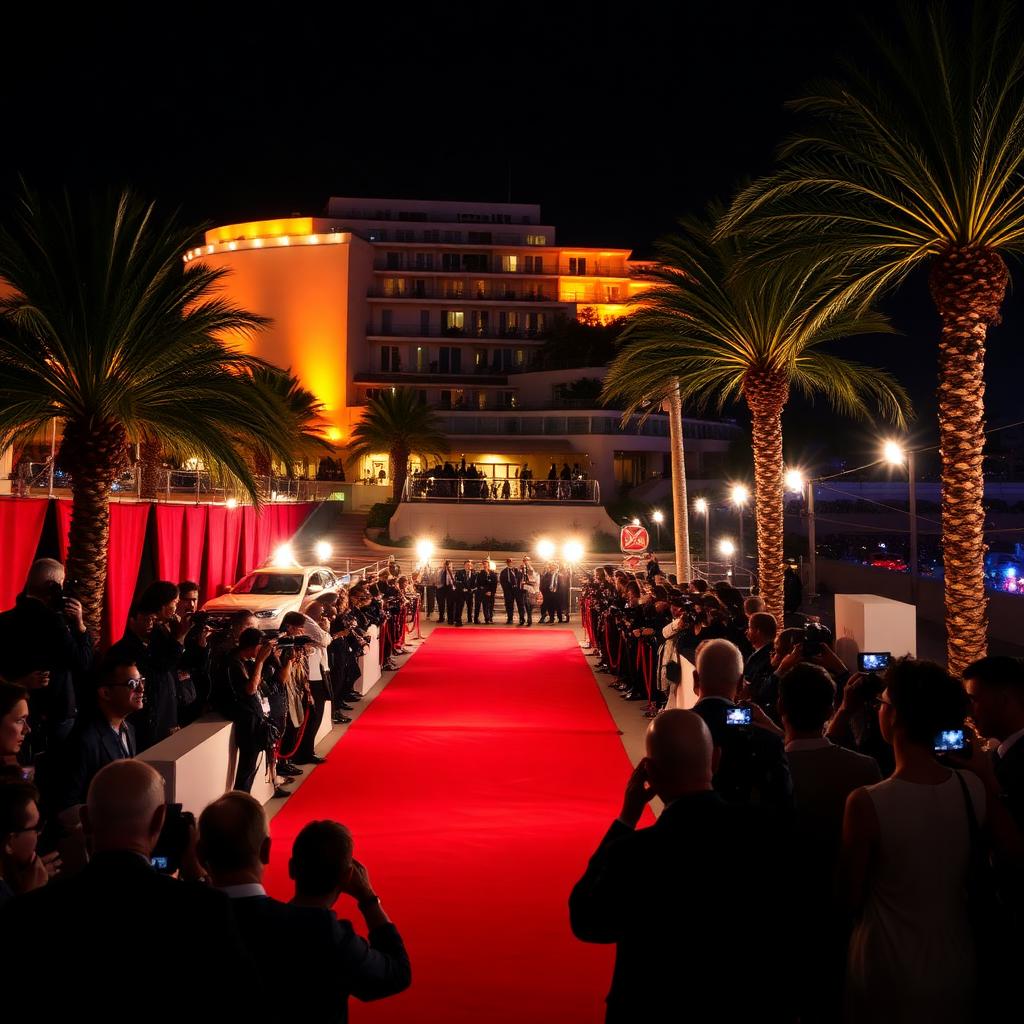
Quick Answer
Cristian Mungiu's Fjord won the Palme d'Or at the 2026 Cannes Film Festival. The Romanian Norwegian co production also took the FIPRESCI International Critics Prize, the Ecumenical Jury Prize and the François Chalais Prize, making it one of the most decorated single films in the festival's recent history.
The win makes Mungiu only the eleventh director ever to win the Palme d'Or twice. His first was for 4 Months, 3 Weeks and 2 Days in 2007. Neon picked up United States distribution, extending its streak of Palme d'Or releases to seven consecutive years dating back to Parasite in 2019.
The festival also delivered a shared Best Director award, a politically charged Grand Prix acceptance speech, and a wider thematic shift toward grounded character driven storytelling.
The Full 2026 Main Competition Winners
The jury split its honors across eight major categories. The biggest single beneficiary was Fjord, but four other films took home headline prizes.
- Palme d'Or. Fjord, directed by Cristian Mungiu (Romania / Norway).
- Grand Prix. Minotaur, directed by Andrey Zvyagintsev (Russia, independent).
- Best Director (shared). Javier Calvo and Javier Ambrossi for The Black Ball (Spain).
- Best Director (shared). Pawel Pawlikowski for Fatherland (United Kingdom / Poland).
- Best Screenplay. Alice Rohrwacher for The Silent Echo (Italy).
- Best Actress. Noémie Merlant for The North Line (France).
- Best Actor. Franz Rogowski for Echoes of Dust (Germany).
- Jury Prize. Fragments of Sun, directed by Ryusuke Hamaguchi (Japan).
A small logistical mix up landed online almost as fast as the winners list itself. Calvo, Ambrossi and Pawlikowski all walked onto the stage at the Grand Théâtre Lumière at the same time after the shared Best Director announcement, which prompted a brief, good natured laugh from the room and a quick reshuffle by the stage director.
Why Fjord Swept
Fjord is a psychological drama set on the Norwegian coast, anchored by lead performances from Renate Reinsve, the Norwegian actress who broke out internationally with The Worst Person in the World, and Sebastian Stan, the American Romanian actor whose recent dramatic work has steadily pulled him away from the Marvel franchise spotlight.
The reason the film cleaned up rather than just winning the Palme d'Or is that it landed across multiple jury types at the same time. The main competition jury rewarded the directing and screenplay craft. The FIPRESCI critics rewarded the structural ambition. The Ecumenical jury rewarded the moral seriousness of the material. The François Chalais Prize rewarded the humanistic framing of a story about isolation, family pressure and the limits of personal choice.
Mungiu's acceptance speech was characteristically restrained. "We need to wait twenty years to watch these films again and see which ones have stood the test of time," he told the room.
The Distribution Story
Neon's acquisition of United States rights to Fjord matters beyond the headline. The independent distributor now holds the United States rights to seven consecutive Palme d'Or winners, a run that started with Parasite in 2019 and has continued through every year since. No other distributor has matched that streak in any era of the festival.
For Neon, the financial logic has worked. Parasite went on to win Best Picture at the Academy Awards. Anatomy of a Fall and The Zone of Interest both translated festival momentum into Oscar nominations and steady art house grosses. Fjord is now positioned at the front of the 2026 to 2027 awards conversation before most people in the United States have even seen the trailer.
The Political Moment
The festival's most charged moment came during the Grand Prix acceptance for Minotaur. Director Andrey Zvyagintsev, who has been working in independent production outside the official Russian film infrastructure for years, used the platform to address the war in Ukraine directly.
"One thing is certain," Zvyagintsev said. "The massacres must finally stop, and the only person who can end this carnage is the president of the Russian Federation. Put an end to this slaughter; the whole world is waiting for it."
The auditorium went silent. The clip circulated widely within the hour.
The wider festival also carried a political weight underneath the awards. More than 4,000 international film industry figures signed an open letter during the second week objecting to growing corporate consolidation of media networks and its effect on what gets funded and distributed. Tilda Swinton captured the room's mood while presenting the final award of the evening. "In a world growing more violent, more authoritarian, where hope is seen as a flaw and difference as a threat, this festival reaches higher," she said.
What the Slate Tells Us About Where Cinema Is Heading
Across the eight competition winners, a pattern is hard to miss. Every winning film is grounded, character driven and politically aware. None of the top prizes went to the more avant garde, formally experimental work that defined some recent Cannes editions.
- Fjord is a tight psychological family drama.
- Minotaur is a political allegory built around personal moral failure.
- The Black Ball is a satirical institutional drama from the Spanish duo behind Veneno.
- Fatherland is a generational war story.
- The Silent Echo is a quiet rural screenplay piece.
- The North Line and Echoes of Dust both put a single lead performance at the center of a politically textured environment.
- Fragments of Sun continues Hamaguchi's slow, conversational, dialogue first style.
The festival is signalling that the post pandemic appetite for abstract minimalism has cooled. What audiences and juries are rewarding now is precise writing, lived in performances and material that engages with the world rather than retreats from it.
The Sidebars Worth Watching
Even outside the main competition, several sidebar awards point at films likely to define the next twelve months of art house releasing.
- Un Certain Regard. Won by a debut feature from a Brazilian director that critics flagged as the strongest first film at the festival in three years.
- Camera d'Or. Awarded for best first feature across all sections, this year going to a French Algerian co production.
- Directors' Fortnight. The independent sidebar continued its run of breakout discoveries, with at least two titles already attracting United States distribution offers.
If you only have time to track one sidebar, Directors' Fortnight has the best hit rate for spotting the next decade of major directors.
Frequently Asked Questions
When can I watch Fjord in the United States?
Neon has not announced a release date yet. Their pattern with previous Palme d'Or winners has been a fall festival circuit run (Telluride, Toronto, New York) followed by a limited theatrical opening in late October or November, with expansion through awards season.
Has any director won three Palme d'Ors?
No. Two is the current ceiling and only eleven directors have reached it. Mungiu joins that group with this win.
Why is Neon dominating the Palme d'Or pipeline?
A combination of aggressive acquisition strategy, relationships with international sales agents, and a willingness to commit to long theatrical runs. Their seven year streak is now the longest in the festival's modern history.
What is the FIPRESCI Prize?
It is awarded by the International Federation of Film Critics, voted on separately from the main jury. Winning both the Palme d'Or and FIPRESCI is rare and usually signals strong long term critical consensus.
Did any American films win?
No top tier prizes went to American directed films in the main competition this year, though several were in the lineup. Sebastian Stan's performance in Fjord is the closest United States connection in the headline awards.
The Bottom Line
The 2026 Cannes Film Festival closed with a clear winner, a clear thematic direction and at least one acceptance speech that will be replayed for years. Fjord is the film of the festival. Mungiu joins the two time Palme d'Or club. Neon's streak continues. And the slate as a whole points cinema back toward grounded, politically aware, character first storytelling for the awards season ahead.