Quick Answer
Willy Wonka and the Chocolate Factory was directed by Mel Stuart, produced by David L Wolper and Stan Margulies, and adapted by Roald Dahl himself (with uncredited rewrites by David Seltzer) from his 1964 novel Charlie and the Chocolate Factory. Gene Wilder starred as Willy Wonka and Peter Ostrum played Charlie Bucket. The film was released in the United States on June 30, 1971 by Paramount Pictures.
The songs, including Pure Imagination and The Candy Man, were written by Leslie Bricusse and Anthony Newley. Walter Scharf handled the score and earned the film's only Academy Award nomination.
The whole production was shot at Bavaria Film Studios in Munich, Germany. The location was chosen for budget reasons, not creative ones, but the choice ended up giving the film a slightly off, European fairy tale quality that no Hollywood backlot could have matched.
Who actually financed the film

The project was funded by the Quaker Oats Company. Quaker wanted to launch a new line of Wonka branded chocolate bars and saw the film as a feature length commercial. They put up a 3 million dollar budget in exchange for the rights to use the Wonka name on confectionery. The candy launch flopped on schedule because of formulation problems, but the film itself outlived everything connected to it.
The director and the creative team
Mel Stuart was a documentary filmmaker with no previous experience directing a major feature musical. He took the job after his ten year old daughter handed him the Dahl book and said she wanted to see it as a film. That single moment of family pressure is the reason the movie exists.
The production designer was Harper Goff, who had previously designed Disneyland and the Nautilus for 20,000 Leagues Under the Sea. Goff's eye for whimsical industrial detail is everywhere in the factory interior, from the bubble lift to the giant glass elevator.
Why Gene Wilder took the part
Wilder accepted the role on one condition. He insisted that Wonka's first appearance show him limping out of the factory with a cane, then suddenly somersaulting forward. His logic was simple. From that moment on, nothing Wonka said or did could be fully trusted by the audience. The off centre charm that defines the performance hangs entirely on that one staged entrance.
The chocolate river was real, mostly
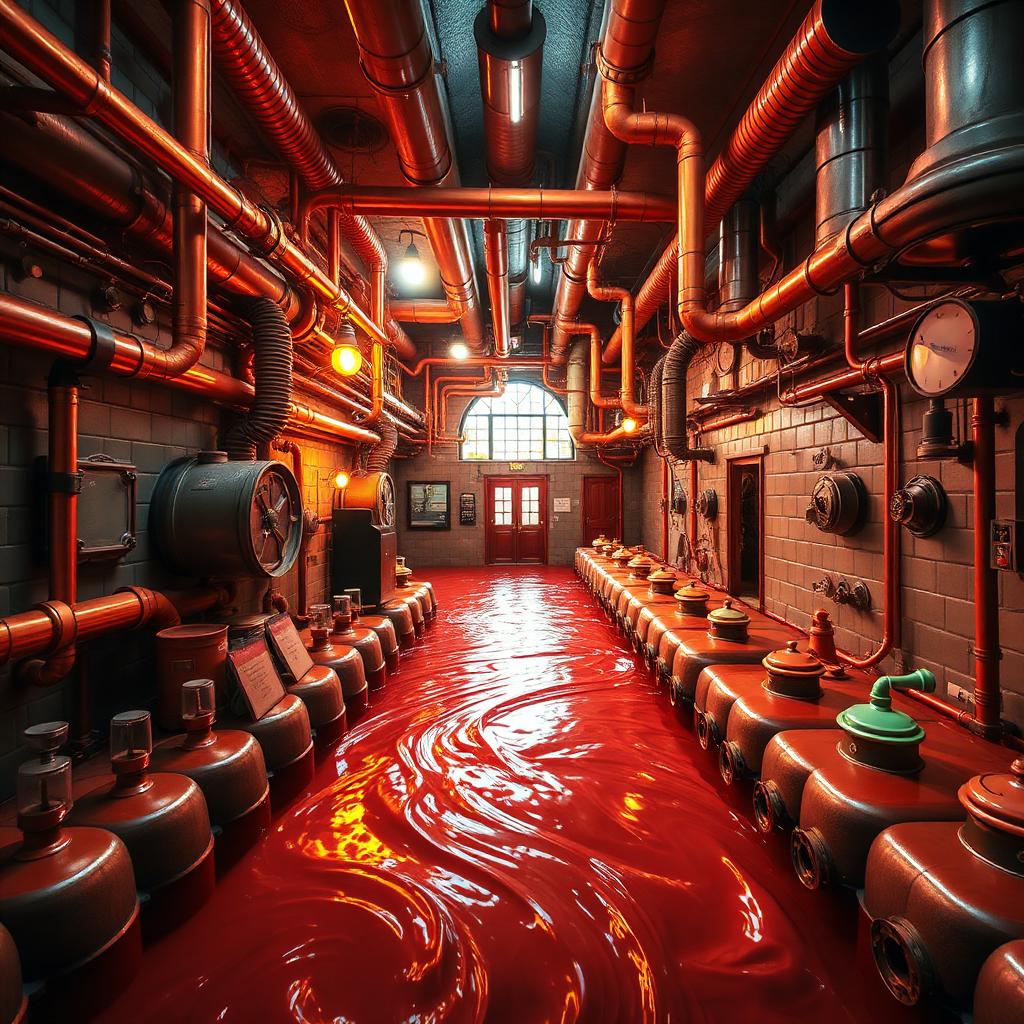
The chocolate room set held around 150,000 gallons of liquid, mixed from water, real cream, and cocoa to get the right colour and viscosity for the river. Under hot studio lights the cream curdled within days. By the third week of filming on that set, the smell on the soundstage was overpowering. Cast members later described it as a mix of spoiled milk and sour cocoa.
The river was practical, not painted. The boat scene through the tunnel was filmed on an actual flowing chocolate substitute, which is why the actors' faces register such genuine discomfort during the more frantic visuals.
The cast
- Gene Wilder as Willy Wonka.
- Peter Ostrum as Charlie Bucket. This was his only film role. He later became a veterinarian in upstate New York.
- Jack Albertson as Grandpa Joe.
- Roy Kinnear as Mr Salt.
- Julie Dawn Cole as Veruca Salt.
- Denise Nickerson as Violet Beauregarde.
- Paris Themmen as Mike Teevee.
- Michael Bollner as Augustus Gloop. The German child actor spoke little English at the time, which is one reason his lines are short.
The songs that carried the film
Pure Imagination became the film's signature piece almost by accident. Bricusse and Newley wrote it as a quiet character introduction, not as a hit. It has since been recorded by Fiona Apple, Maroon 5, Lou Rawls, and hundreds of other artists. The Candy Man, sung by Sammy Davis Jr in his single release, hit number one on the Billboard Hot 100 in 1972, even though the song appears in the film performed by Aubrey Woods.
How Roald Dahl felt about the result
Famously, Dahl hated it. He objected to the casting of Wilder (he wanted Spike Milligan), the changes to the script, and the shift in title from Charlie and the Chocolate Factory to Willy Wonka and the Chocolate Factory. Dahl reportedly refused to let any of his other books be adapted for the rest of his life because of this experience. The next major Dahl feature, Matilda in 1996, came after his death.
Box office and afterlife
The film opened modestly in 1971, earning around 4 million dollars on its initial release, only just covering its budget. Its real success came from television syndication through the late 1970s and 1980s, and from home video in the VHS era. By the 2000s it was firmly fixed as one of the most beloved family films of the 20th century. The 2005 Tim Burton remake with Johnny Depp introduced a new generation but did not displace the original in public affection.
How to watch it in 2026
The 1971 film is available on most major streaming platforms in the United States and the United Kingdom, often included with subscriptions to Max, Prime Video, and Apple TV. A restored 4K UHD physical release was issued for the 50th anniversary in 2021 and remains the best home viewing version. The Munich soundstage that housed the chocolate room was demolished in the 1990s.
Why the original endures
The film works because it commits fully to its own tone. The morality is harsh, the children's fates are unsettling, the songs are sincere, and Wilder plays Wonka as a man who has seen too much. The 2023 prequel Wonka with Timothée Chalamet went the opposite way and softened everything. That is why people keep returning to the original, even half a century later.
Frequently asked questions
Who wrote the screenplay?
Roald Dahl received sole screenplay credit, but David Seltzer was brought in to rewrite large sections without credit. Dahl publicly disowned much of the final shooting script.
Did the children actors get along on set?
By all later accounts, yes. They have reunited multiple times over the years for anniversary events and remain in contact.
Was the gum that turned Violet into a blueberry safe to chew?
It was edible prop gum but tasted terrible. Nickerson reportedly spat hers out between takes.
Is the 2005 Tim Burton version a remake or an adaptation?
It is a fresh adaptation of the book rather than a remake of the 1971 film, which is why some scenes and characters differ noticeably.