Quick Answer
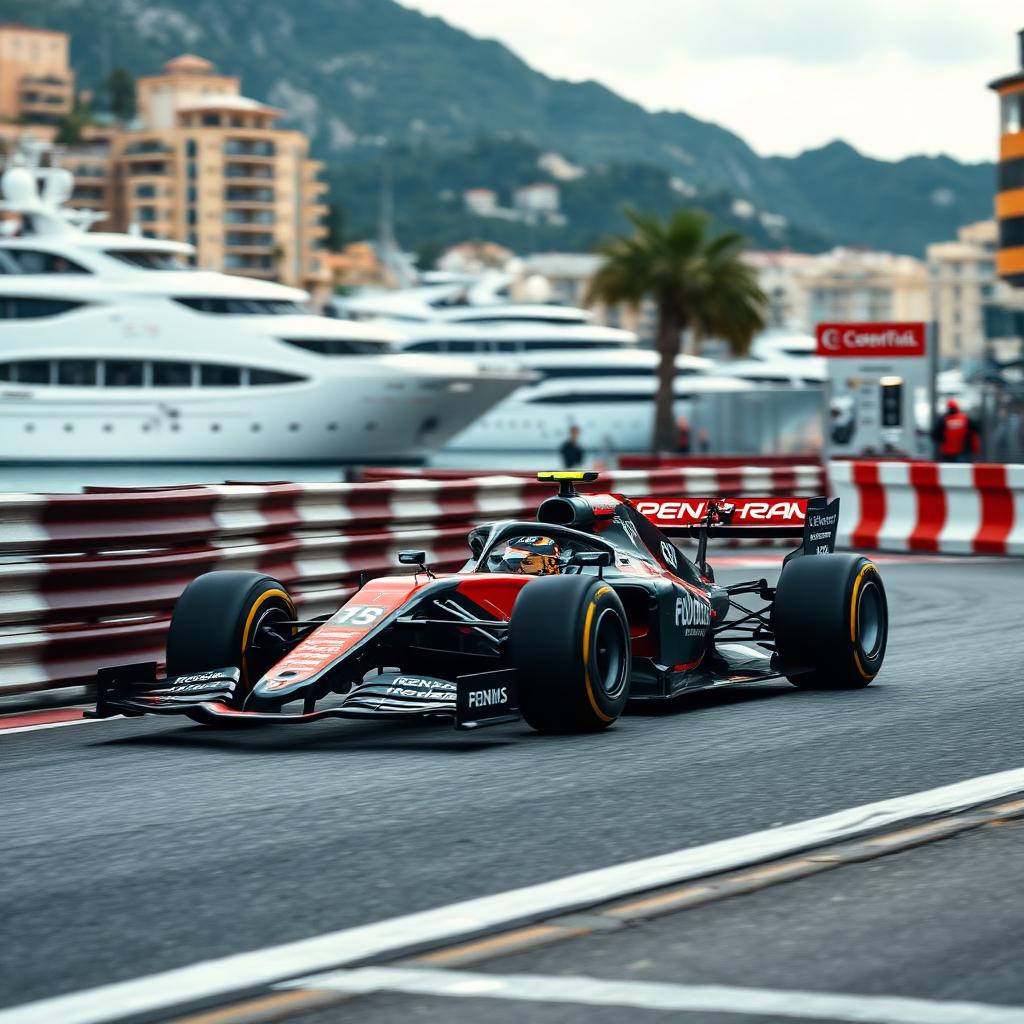
Charles Leclerc took pole position for the 2026 Monaco Grand Prix with a 1:10.270, edging Oscar Piastri's McLaren by 0.154 seconds and Carlos Sainz's second Ferrari by 0.248 seconds.
Lando Norris locked in fourth, with George Russell fifth for Mercedes. Max Verstappen could only manage sixth after brushing the barrier at Sainte Devote on his final hot lap, ending Red Bull's hopes of a front row start.
Around Monaco, pole is worth roughly 90 percent of the race. Overtaking is famously hard, so the grid order set in qualifying usually shapes Sunday's podium.
The Final Top 10 Grid
The session produced one of the tightest Q3 shootouts of the year, with the top four covered by less than three tenths of a second.
- 1. Charles Leclerc. Ferrari. 1:10.270.
- 2. Oscar Piastri. McLaren. +0.154.
- 3. Carlos Sainz. Ferrari. +0.248.
- 4. Lando Norris. McLaren. +0.267.
- 5. George Russell. Mercedes. +0.412.
- 6. Max Verstappen. Red Bull Racing. +0.497.
- 7. Lewis Hamilton. Mercedes. +0.511.
- 8. Sergio Perez. Red Bull Racing. +0.624.
- 9. Yuki Tsunoda. RB. +0.785.
- 10. Fernando Alonso. Aston Martin. +0.810.
How the Session Unfolded
Monaco qualifying always rewards patience and track evolution. The surface gains grip with every lap as rubber goes down, which means the fastest times almost always come at the very end of each segment.
Q1: Track Evolution and Traffic Lottery
The first segment played out exactly as the engineers had warned. Times tumbled in the final three minutes as the track rubbered in. The biggest casualties were drivers caught in traffic on their final flying lap, including one Williams that lost an estimated two tenths to a Sauber that failed to move off the racing line at Mirabeau.
Q2: The Midfield Knockout
Q2 took out the usual mix of midfield drivers, with Haas and Sauber both ending the session outside the top 15. The notable elimination was Esteban Ocon, who was on a lap good enough for Q3 before the yellow flag at the Nouvelle Chicane wiped his time.
Q3: Leclerc Delivers the Lap
The final segment was where the championship picture for the weekend was decided. Leclerc strung together a near perfect first run that gave him provisional pole by just over a tenth. On the final attempt, the Ferrari home driver went purple in two of the three sectors, brushing the barrier exiting the swimming pool with absolute precision rather than panic. The lap held, the home crowd erupted, and Ferrari took its first Monaco pole in this configuration since 2022.
What Went Wrong for Red Bull
The biggest story of the session was not who won pole, but how far Red Bull fell off it. The car's balance over Monaco's harsh kerbs was an open weakness all weekend.
Verstappen had been on a competitive lap before catching the barrier on the exit of Sainte Devote on his final attempt. The contact was light but enough to compromise the rear floor airflow, and the lap finished 0.497 off Leclerc. Perez never looked comfortable, ending eighth.
The team's data showed the RB chassis bouncing aggressively over the kerbs at Tabac and the Nouvelle Chicane, costing measurable time in the rotation phase of those corners. Engineers were already planning ride height adjustments for the race, but Monaco is unique in that there are essentially no parc ferme exceptions, so most of those fixes have to wait for the next event.
Why Leclerc's Pole Matters More at Monaco
Pole position at Monaco is statistically the most valuable starting slot in the F1 calendar. Across the last 20 editions of the race, the pole sitter has won more than 55 percent of the time, far above the championship average.
The reason is structural. The track is too narrow for conventional overtaking, DRS is largely ineffective because there is no real straight to use it on, and the safety car windows that historically reshuffle the race are increasingly being neutralised by virtual safety car management. The race usually plays out exactly as the grid set it up, with strategy decisions on tyre offsets being the only real lever.
For Leclerc personally, the symbolism matters. He grew up in Monaco, was born in the principality, and has a long history of misfortune at his home race. A clean weekend from pole to flag would be one of the more emotionally weighted wins on the calendar.
The Strategy Picture for Sunday
Tyre strategy at Monaco is a one stop conversation. The medium and hard compounds are the realistic options, with the soft used only by drivers starting outside the points and trying to undercut their way forward.
- Front runners are almost certain to start on the medium and pit once for the hard somewhere between laps 30 and 40.
- Midfield gamblers may try the reverse strategy (hard, then medium) to gain track position during a virtual safety car.
- Rain risk is forecast at roughly 30 percent for the final third of the race. Even a brief shower will trigger a flurry of decisions, because intermediate tyres are dramatically slower than slicks on a half wet Monaco surface.
Frequently Asked Questions
Has Leclerc ever won at Monaco?
Yes, breaking a long personal drought at his home race after years of qualifying near the front and failing to convert. He goes into Sunday with the pole and a recent win at the venue, which is the strongest psychological starting point of his career here.
How does qualifying actually decide the race?
It does not literally decide the race, but the pole sitter wins more than half the time. Combined with controlled pit windows and the difficulty of overtaking, the top three on Saturday usually become the top three on Sunday unless something breaks.
Why is overtaking so hard at Monaco?
The track is roughly 3.3 kilometres of narrow city street with almost no straight long enough for a meaningful slipstream. DRS exists but the deployment zones are too short to set up a clean pass on a defending driver.
What was the gap from pole to the back of the grid?
The full grid was covered by under three seconds, which is unusually tight even by F1 standards. Monaco's lap is short, so even a hundredth costs roughly three or four grid slots in the midfield.
When is the Monaco Grand Prix race?
Sunday afternoon local time, with the race scheduled to start at 15:00 CET (14:00 UK time). Broadcast on Sky Sports F1 in the UK and the relevant F1 partner channels in other markets.
The Bottom Line
Leclerc takes pole on home ground, the McLarens split the Ferraris in the top four, and Red Bull starts a difficult Sunday from the third row. Monaco qualifying does most of the work that the race itself cannot, and on current form Ferrari are well placed to convert pole into a home win for one of the sport's most popular drivers.