Quick Answer
The September 2026 full moon reaches peak illumination on Saturday, September 26, 2026 at 12:49 p.m. Eastern Daylight Time, which is 16:49 UTC.
That is the middle of the day in North America, so the best viewing is the two nights around it: moonrise on Saturday evening, September 26, and again on Sunday evening, September 27. To the eye it will look completely full both nights.
This is the Harvest Moon, the full moon closest to the autumnal equinox, which falls on Tuesday, September 22, 2026, four days earlier.
Why This One Is Called the Harvest Moon
Most traditional full moon names are fixed to a month. The Harvest Moon is not. It is defined by its distance from the September equinox, so in some years it lands in October instead. In 2026 the September full moon wins by a comfortable margin.
The name is agricultural and literal. Before mechanised farming and floodlights, the string of bright evenings around this moon let crews keep working after sunset during the most time critical weeks of the year.
The Trick That Makes It Special
On an average night the Moon rises roughly fifty minutes later than it did the night before. Around the Harvest Moon that gap shrinks, in mid northern latitudes often to twenty five or thirty minutes, and further north it shrinks more.
The reason is geometry. Near the September equinox the Moon's orbital path makes a shallow angle with the eastern horizon. Because the path is tilted flat rather than steep, each night's eastward motion translates into a much smaller delay in rise time.
The practical effect is several consecutive evenings with a big bright moon appearing just around sunset, instead of one good night followed by progressively later, more awkward risings.
Why It Looks Orange
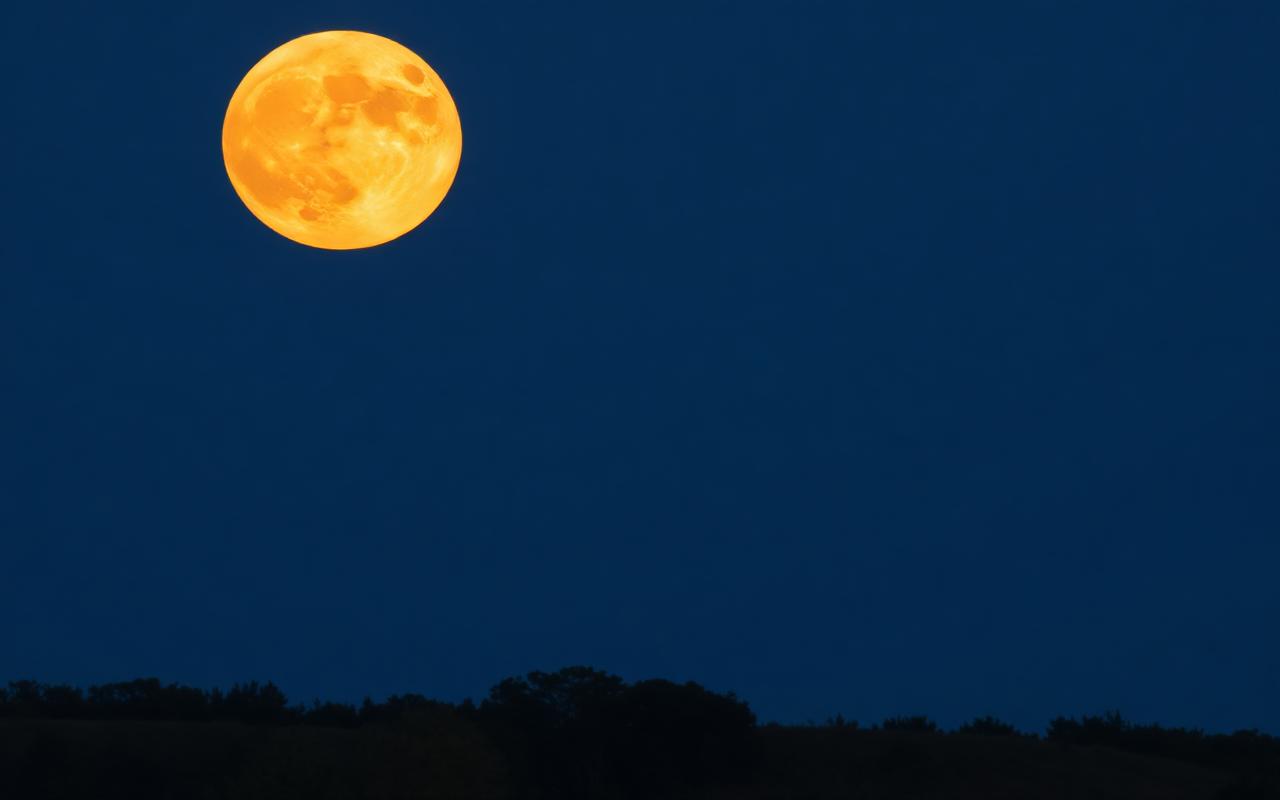
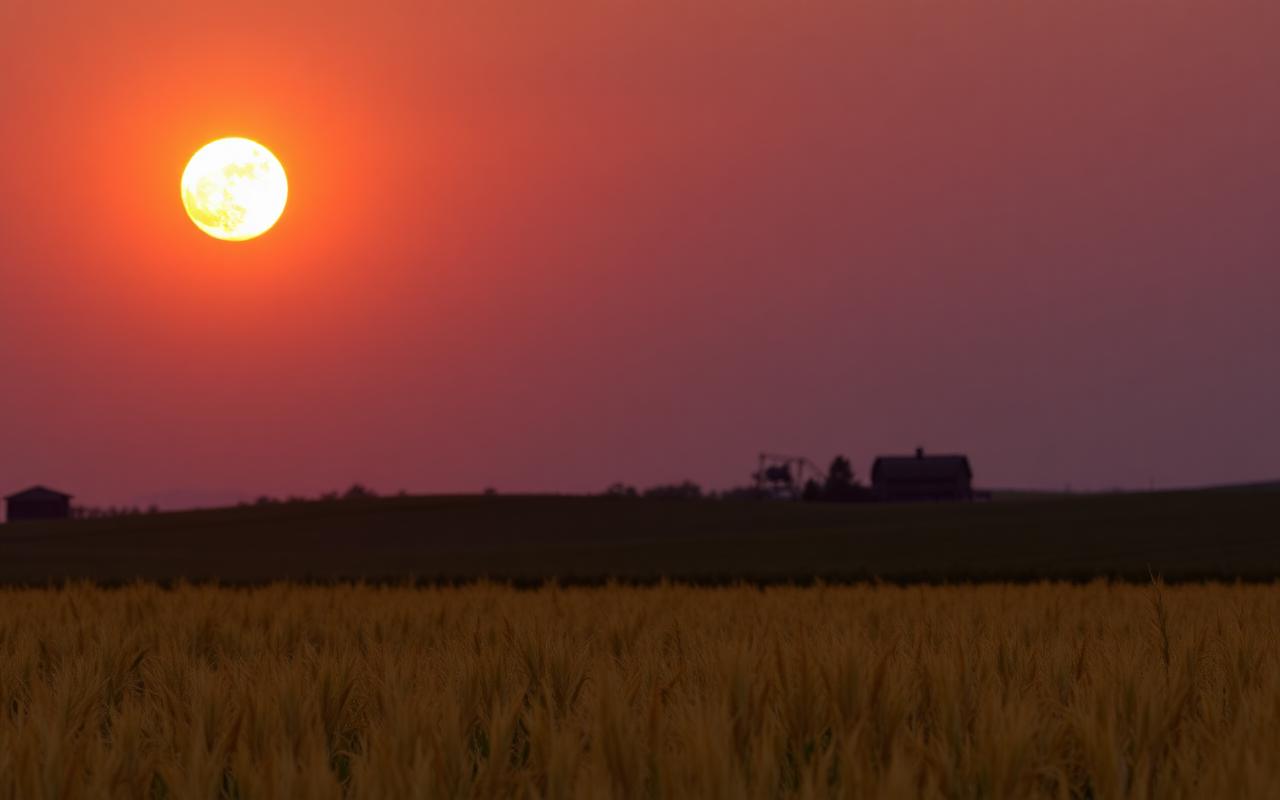
A rising Harvest Moon often looks deep amber or orange. Nothing has changed about the Moon. You are looking at it through a much longer path of atmosphere than when it is overhead, and that thick slice of air scatters short blue wavelengths away while letting reds and oranges through. It is the same physics that makes sunsets red.
Dust, smoke and humidity intensify the effect, so a late summer with wildfire haze produces particularly vivid moonrises. As the Moon climbs, the colour fades to its usual pale grey white.
Why It Looks Enormous
The famous size effect is an illusion, not an optical fact. Photograph the Moon on the horizon and again at the zenith with the same lens and the two discs measure the same.
Near the horizon your brain compares the Moon against trees, buildings and hills at a known distance and concludes it must be huge. High in an empty sky there is nothing to compare it to. The classic test is to hold a thumb at arm's length: it covers the Moon equally well in both positions.
How to Watch It Well
- Check your local moonrise time rather than the peak illumination time. The peak is a single global instant, but the view depends on when the Moon clears your horizon.
- Find an open eastern horizon, ideally with something interesting in the foreground such as a ridgeline, a treeline or a skyline.
- Arrive fifteen minutes before moonrise. The best colour lasts only a few minutes.
- Binoculars beat a telescope for a full moon. A full moon is flatly lit, so craters lose their shadows and detail drops, but the wide bright disc is lovely at low magnification.
- For photographs, use a telephoto lens, manual exposure and roughly the settings you would use for a sunlit landscape. Automatic metering blows out a full moon almost every time.
The Rest of the 2026 Full Moon Calendar
| Month | Traditional name |
|---|---|
| September 2026 | Harvest Moon |
| October 2026 | Hunter's Moon |
| November 2026 | Beaver Moon |
| December 2026 | Cold Moon |
Because the Harvest Moon falls in September in 2026, the October full moon takes the Hunter's Moon name, and the shallow horizon angle trick partly repeats for it as well.
What the Harvest Moon Is Not
It is not a separate kind of moon, it is not necessarily a supermoon, and it does not change the tides in any way a normal full moon would not. If a headline promises a rare once in a lifetime Harvest Moon, treat it as marketing. One happens every single year.
It also does not have a fixed date. The whole point of the name is that it tracks the equinox rather than the calendar.
What Else Is in the Sky That Week
Late September is a good stretch for casual sky watching even without equipment. The nights are getting genuinely dark before bedtime again, and the air is usually steadier than in high summer.
A bright full moon does work against you for anything faint. Galaxies, nebulae and meteor showers all wash out badly under a full moon, so if you want both, plan deep sky observing for the week either side rather than the peak nights.
What the full moon is good for is the opposite kind of session: sitting outside with binoculars, watching the terminator disappear entirely, and picking out the large dark maria that give the Moon its familiar face. Those broad basalt plains are far easier to trace when the disc is fully lit.
The Harvest Moon Beyond North America
The Harvest Moon name is European and North American in origin, but the same September full moon anchors major festivals elsewhere. In China and much of East Asia the Mid Autumn Festival is timed to it, and the moon is the centrepiece of the celebration rather than a backdrop to farm work.
In the Southern Hemisphere the seasons are reversed, so late September brings spring rather than autumn. The shallow horizon angle effect that produces the Harvest Moon's early risings happens there in March instead, around the southern autumn equinox.
None of that changes the astronomy. The full moon occurs at one instant worldwide, and only the local clock time and the seasonal context differ.
Frequently Asked Questions
What date is the September 2026 full moon?
Saturday, September 26, 2026, peaking at 12:49 p.m. Eastern Daylight Time, or 16:49 UTC.
Which nights are best for viewing?
Saturday, September 26 and Sunday, September 27. The Moon looks full to the eye for about a day either side of the peak.
Why is it called the Harvest Moon?
It is the full moon nearest the autumnal equinox, and its early consecutive risings historically extended working light for harvest crews.
When is the 2026 autumnal equinox?
Tuesday, September 22, 2026.
Is the Harvest Moon bigger than other full moons?
No. The apparent size increase near the horizon is a well documented optical illusion.