Quick Answer
A complete vacation packing checklist breaks into six blocks: documents, clothing, toiletries, tech, health and the climate-specific extras for your destination. Pack documents and meds first because losing them ruins a trip; everything else can be replaced on the road.
For a one-week trip, target 7 to 10 clothing items in a single colour family, a quart-size toiletries bag, a phone-and-cables tech pouch, and a small health kit. Almost everyone overpacks by about 40 percent.
1. Documents and Money
- Passport (valid 6+ months past your return date)
- Visa or ETA / ESTA if your destination requires one
- Driving licence and international driving permit if renting a car
- Travel insurance policy (digital and printed copy)
- One credit card and one debit card on different networks (Visa + Mastercard)
- A small amount of destination currency for taxis and tips on arrival
- Digital scans of your passport and insurance saved offline on your phone
2. Clothing Capsule
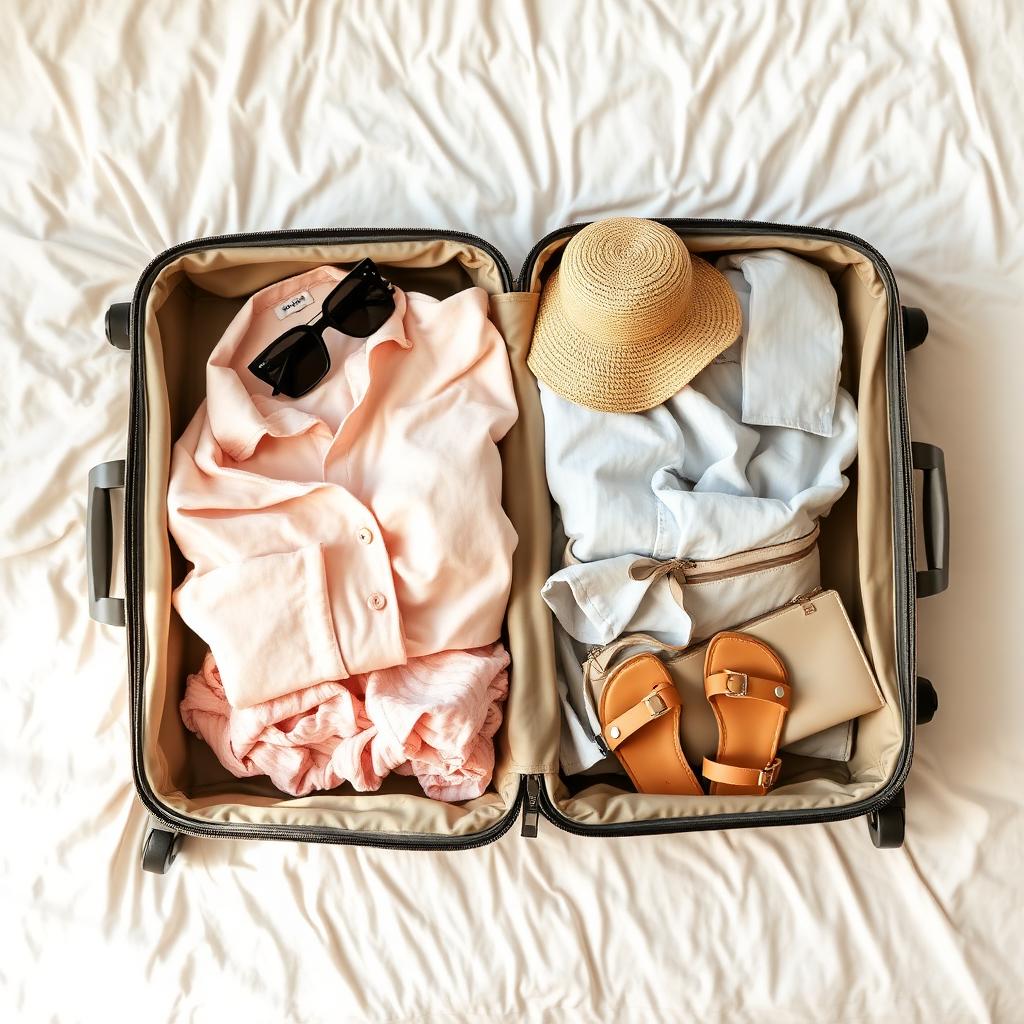
Pick one anchor colour and one accent so every top works with every bottom. A standard 7 to 10 day kit:
- 3 tops (one merino for thermoregulation, two cotton or linen)
- 2 bottoms (one trousers, one jeans, shorts or skirt)
- 1 light layer (cardigan, jumper, packable jacket)
- 1 dressier piece for evenings out
- 5 to 7 pairs of underwear and socks (wash mid-trip)
- 1 sleepwear set
- 1 pair of walking shoes + 1 packable flat, sandal or trainer
Add one swimsuit and a microfibre travel towel if there is any chance of water.
3. Toiletries (TSA-Compliant)
One quart-size clear bag, individual bottles of 100 ml or less. Decant your favourites; do not pack retail sizes for a 7-day trip.
- Toothbrush, toothpaste, floss
- Deodorant (solid travels easier than spray)
- Shampoo, conditioner, body wash (or solid bars)
- Skincare basics: cleanser, moisturiser, SPF 30 plus
- Razor and shave gel
- Hairbrush or comb, hair ties
- Lip balm
- Contact lens supplies if applicable
4. Tech and Cables
- Phone + charging cable
- Power adapter for your destination (Type C for Europe, Type G for the U.K., Type A or B for the U.S., Type I for Australia, Type D for India)
- Portable power bank (under 100 Wh / 27,000 mAh for cabin baggage compliance)
- Headphones or earbuds
- Camera + memory card + charger (if you bring one)
- E-reader (replaces three paperbacks)
- One spare charging cable. Cables fail at the worst times.
5. Health and Safety Kit
- Prescription medication in the original labelled container, plus a copy of the prescription
- Painkiller of choice (paracetamol or ibuprofen)
- Anti-diarrhoeal and oral rehydration sachets
- Plasters and a few antiseptic wipes
- Motion sickness tablets if relevant
- Insect repellent with DEET or picaridin for warm destinations
- Sunscreen (the smaller travel size, even though hotel shops sell it for 4x the price)
6. Climate-Specific Add-Ons
- Beach or tropical: two swimsuits (one always drying), reef-safe sunscreen, sun hat, after-sun, rash vest
- Cold weather or snow: thermal base layers, insulated jacket, beanie, gloves, waterproof boots, ChapStick
- Cities and culture: one smart-casual outfit for nicer restaurants, a small day bag, a refillable water bottle, a packable rain layer
- Hiking or active: moisture-wicking clothing, broken-in trail shoes, blister plasters, electrolyte tabs
Last Things to Pack
Charge everything the night before. Put your passport, wallet and phone in one designated outer pocket and never move them. Do a final 30-second sweep of bedside tables, bathroom shelf and the hotel safe before you leave.
Bottom Line
A good vacation packing checklist is six categories deep, no more. Documents and meds first, a one-colour clothing capsule second, then toiletries, tech, health and the small climate-specific list for your destination. Pack from the checklist instead of by feel and you will leave home with less stuff and more confidence.
Frequently Asked Questions
How early should I start packing?
Draft the list a week out, lay everything on the bed two days out, and pack the bag the night before. Doing all three in the final two hours is how the documents get forgotten.
Should I roll or fold my clothes?
Roll soft knit items (t-shirts, jeans, underwear) for compression. Fold structured items (button-downs, blouses, dresses with shape) to keep the lines crisp. Hybrid packing beats pure rolling or pure folding for almost every trip.
How do I keep my passport safe while travelling?
Carry it in a dedicated zipper pocket against your body when in transit, and lock it in the hotel safe with your spare card the moment you arrive. A digital scan saved offline on your phone covers you if the physical document is lost.
Do I need a power adapter or a converter?
An adapter changes the plug shape; a converter changes the voltage. Almost all modern phone, laptop and camera chargers handle 100 to 240 V automatically, so a plug adapter is all you need. Hair tools, kettles and shavers may need a voltage converter.
What is the most-forgotten item?
Phone charger, prescription medication, sunglasses and a power adapter, in roughly that order. A small printed checklist on the bedside table the morning of departure is the cheapest insurance against any of them.