Quick Answer
The Russian cargo ship Ursa Major sank off the coast of Spain on December 23, 2024, following a series of mysterious explosions. Investigative reporting in May 2026 revealed the vessel was likely carrying secret nuclear reactor components believed to be destined for North Korea.
Evidence strongly suggests the sinking was not an accident. Hydroacoustic data recorded multiple seismic signatures consistent with underwater detonations, and the hull damage profile matches what analysts believe could be a supercavitating torpedo strike.
The short answer
The Russian cargo ship Ursa Major sank off the coast of Spain on December 23, 2024, following a series of mysterious explosions. Investigative reporting in May 2026 revealed the vessel was likely carrying secret nuclear reactor components believed to be destined for North Korea.
Evidence strongly suggests the sinking was not an accident. Hydroacoustic data recorded multiple seismic signatures consistent with underwater detonations, and the hull damage profile matches what analysts believe could be a supercavitating torpedo strike. Intelligence sources cited by CNN have raised the possibility of a rare Western military intervention to prevent nuclear technology transfer.
The ship and its secretive operator
The Ursa Major, previously known as Sparta 3, was a 142 meter Russian-flagged cargo vessel owned by Oboronlogistics, a company with deep, heavily sanctioned ties to the Russian Ministry of Defense. The ship had operated in gray zones before, notably transporting military equipment during Russia's operations in Syria.
In December 2024, the vessel departed St. Petersburg officially bound for Vladivostok. Its declared cargo was routine, non-dangerous merchandise: cranes and manhole covers. The absurdity of shipping such mundane goods via a treacherous, continent-spanning sea route immediately raised suspicions among European intelligence agencies.
The sinking: a catastrophic night off Murcia
As the Ursa Major traveled down Europe's Atlantic coast, NATO naval forces including the Portuguese Navy closely monitored its progress. On December 22, the vessel dramatically slowed in Spanish waters.
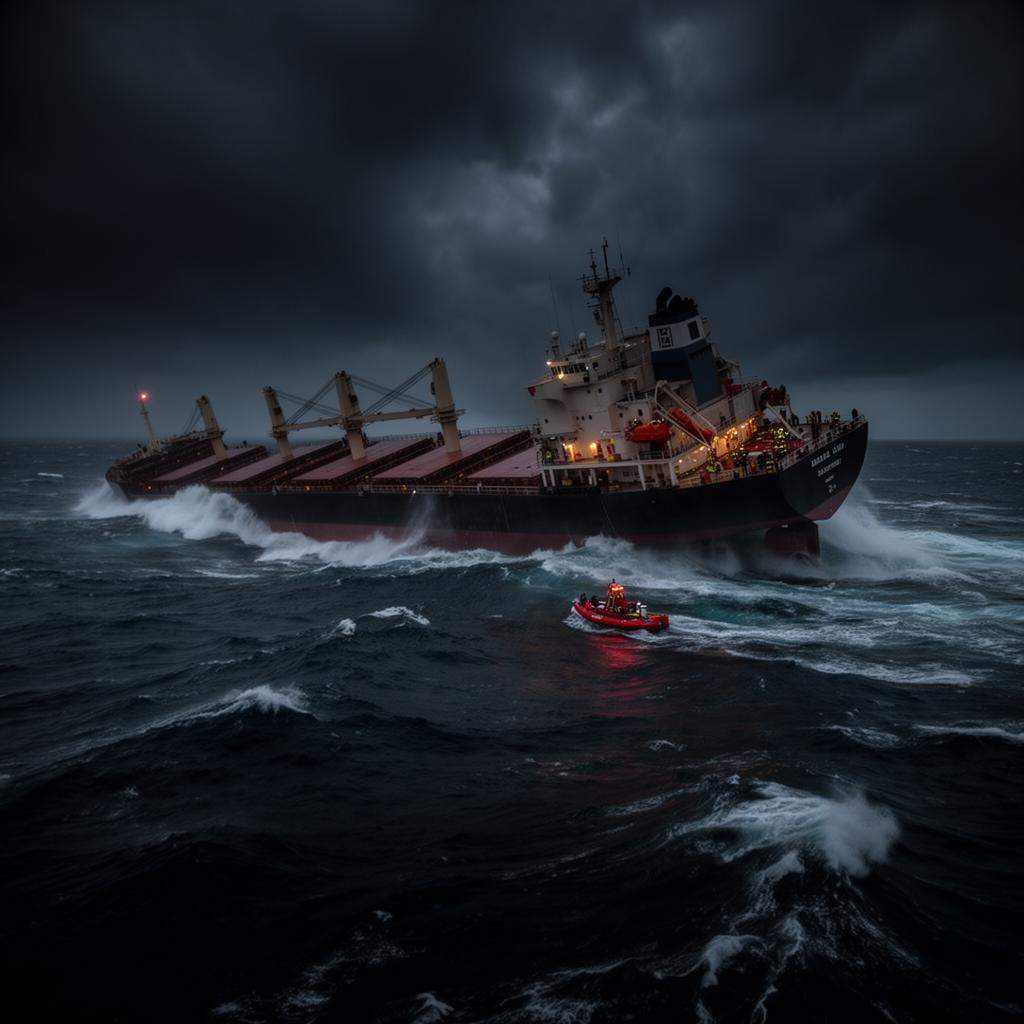
Just before midnight on December 23, catastrophe struck. The ship suffered a series of devastating explosions along its starboard side. Two crew members went missing and were never recovered, and are presumed dead. The remaining 14 sailors abandoned ship and were rescued by Spanish authorities. Within hours, the Ursa Major slipped beneath the waves to a depth of 2,500 meters off the coast of Murcia.
The nuclear cargo revelation
The true nature of the cargo remained hidden until Spanish government documents and investigative journalists blew the story open in 2026.
According to official interrogations, Russian captain Igor Anisimov confessed to Spanish authorities that the ship was secretly transporting components for two nuclear reactors similar to those used in submarines. Even more shockingly, Anisimov indicated his belief that the final destination was not Vladivostok but the North Korean port of Rason.
If accurate, this represents a staggering escalation. The transfer of nuclear submarine technology from Russia to North Korea would violate multiple international sanctions regimes and fundamentally shift the military balance in East Asia.
Evidence of a deliberate attack
The most explosive element of this story is how the ship sank. Multiple lines of evidence point away from mechanical failure:
- Seismic signatures: hydroacoustic data recorded four distinct seismic signatures immediately before the sinking, resembling underwater mine detonations or quarry blasts.
- The hull damage: Spanish investigators noted a precise 50 centimeter by 50 centimeter hole in the hull, with metal bent inward. Defense analysts say this damage profile is consistent with a supercavitating torpedo, a high-tech weapon capable of extreme underwater speeds.
- NATO shadowing: the vessel was under active surveillance by NATO naval forces, suggesting Western intelligence was aware of its cargo long before it sank.
CNN, citing intelligence sources, reported that the sinking may have been a rare and high-stakes intervention by a Western military to forcibly prevent Russia from delivering apocalyptic technology to the North Korean regime.
The ongoing fallout
The wreckage sits at 2,500 meters, effectively unreachable by conventional means. Since the sinking, the site has drawn intense covert attention.
US nuclear sniffer aircraft have conducted flyovers of the area. Russian spy vessels have made highly unusual visits to the region. Spanish authorities have confirmed no radioactive leakage has occurred, but the full truth about what happened that night remains buried with the ship.
The incident has become a Rorschach test for competing geopolitical narratives. Was it an accident at sea? An act of sabotage? Or a clandestine case of nuclear proliferation that was stopped by force?
Frequently Asked Questions (FAQ)
What was the Ursa Major carrying?
Officially, cranes and manhole covers. According to the captain's confession to Spanish authorities, the ship was secretly carrying components for two nuclear submarine reactors believed to be headed for North Korea.
Was the Ursa Major sunk deliberately?
Evidence strongly suggests it. Seismic data, hull damage consistent with a torpedo, and intelligence sources all point toward a deliberate attack rather than an accident.
Who would have targeted the ship?
Intelligence sources have floated the theory of a Western military intervention, though no government has officially claimed responsibility.
The takeaway
The Ursa Major sinking is one of the most explosive unresolved military mysteries of the decade. It sits at the intersection of sanctions evasion, nuclear proliferation, and covert maritime warfare.
I think the detail that will haunt analysts for years is the captain's confession about the cargo and destination. If Russia was genuinely shipping nuclear reactor components to North Korea, and if a Western power intercepted and destroyed that shipment, we may be looking at an act of naval warfare that nobody wants to officially acknowledge. The truth is 2,500 meters down, and it may stay there forever.
Quick recap
The Russian cargo ship Ursa Major sank off Spain in December 2024 following mysterious explosions. New evidence reveals it may have been carrying nuclear reactor components bound for North Korea, and the sinking may have been a deliberate military strike rather than an accident.
The wreck remains unreachable while international investigators, spy vessels, and surveillance aircraft continue circling the area.